French curriculum 5e history — review game: Society, the Church, and political power in the feudal West (11th-15th centuries)

5e — French national curriculum (ages 12–13)

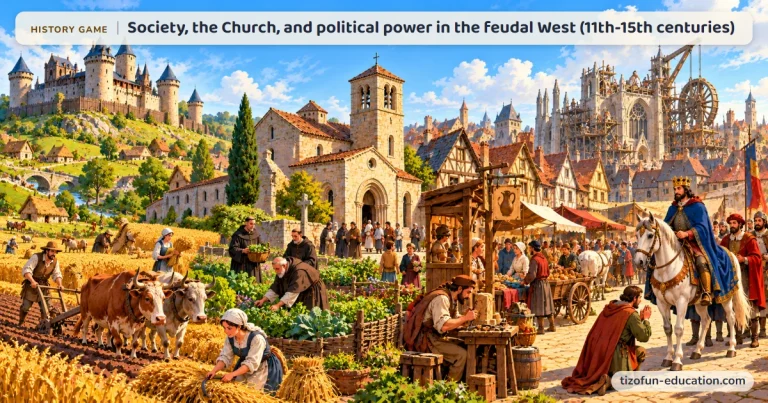
History game “Society, the Church, and political power in the feudal West (11th-15th centuries)”: A medieval landscape brings together a castle, peasants in the fields, a Romanesque church, a town where a Gothic cathedral is being built, and a king’s procession.

History review game, French curriculum 5e: Society, the Church, and political power in the feudal West (11th-15th centuries). Every answer is checked and explained.

Loading the game…

Teaching documentation of the game “History, French curriculum 5e — Society, the Church, and political power in the feudal West (11th-15th centuries)”

About this game

Review the unit of the French history curriculum for 5e (ages 12–13), “Society, the Church, and political power in the feudal West (11th-15th centuries),” with the questions from its lessons: “Lords and peasants”, “The Church at the heart of medieval society”, “The growth of towns”, “The Capetians strengthen royal power” and “The Hundred Years’ War and the monarchical state”.

Review a unit of the French 5e history curriculum

This review game covers a unit of the French history curriculum for 5e: “Society, the Church, and political power in the feudal West (11th-15th centuries).” Its questions come from the 5 lessons of the unit already online: “Lords and peasants”, “The Church at the heart of medieval society”, “The growth of towns”, “The Capetians strengthen royal power” and “The Hundred Years’ War and the monarchical state”.

Each round has 10 questions drawn at random: multiple choice, true or false, fill in the blanks, matching and timelines. After each answer, an explanation recalls what to remember. Hints are free, and you can go back.

The game follows the French national curriculum: 5e is the second year of middle school in France, for students aged 12 to 13. Elsewhere, it works as general knowledge for curious learners of that age. Play it again and you get other questions: it is good practice before a test.
Tip for a successful review

For each question, ask yourself who it is about: the people who farm the fields and their lord, the Church, the townspeople, or the king. Do not mix up what is owed to the lord (the cens, labor service), to the Church (the tithe), and to the king (taxes). Then place each event on a timeline, from the oldest to the most recent. And remember that these Middle Ages never stand still: the countryside, the towns, and the king’s power change step by step. If you get it wrong, read the explanation carefully.