Athens and citizenship — history review game (French curriculum, 6e)

6e — French national curriculum (ages 11–12)

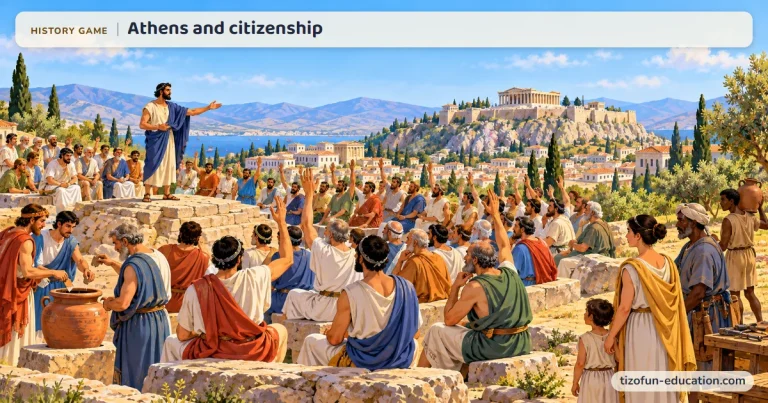
History game “Athens and citizenship”: Below the Acropolis and the Parthenon, a speaker addresses the Athenian citizens gathered in the assembly, who vote by raising their hands; a woman and a girl watch from the side.

History review game on the lesson “Athens and citizenship” from the French curriculum for 6e (ages 11–12). Every answer is checked and explained.

Loading the game…

Teaching documentation of the game “History, French curriculum 6e — Athens and citizenship”

About this game

Review the lesson “Athens and citizenship” from the French history curriculum for 6e (ages 11–12). Its questions are about Athens in the time of Pericles: its great festival in honor of Athena, who is a citizen and who is not, and how the citizens make decisions together in the assembly and in the courts.

Review the lesson “Athens and citizenship”

This review game covers a single lesson of the French history curriculum for 6e: “Athens and citizenship”, from the unit “Founding stories, beliefs, and citizenship in the ancient Mediterranean in the 1st millennium BCE.” Its questions are about Athens in the time of Pericles: its great festival in honor of Athena, who is a citizen and who is not, and how the citizens make decisions together in the assembly and in the courts.

Each round has 10 questions drawn at random from the lesson: multiple choice, true or false, fill in the blanks and matching. After each answer, an explanation recalls what to remember. Hints are free, and you can go back.

The game follows the French national curriculum: 6e is the first year of middle school in France, for students aged 11 to 12. Elsewhere, it works as general knowledge for curious learners of that age. Play it again and you get other questions: it is good practice right after the lesson or before a test.
Tip for a successful review

For each person living in Athens, ask yourself whether they are a citizen or not, and what they can do in the city-state. Then compare with France today: who votes, and how? If you get it wrong, read the explanation carefully: it tells you what to remember.