About this game
Practice comparing two groups of dots: sometimes you look for the one with more, sometimes the one with fewer. Just for practice.
Kindergarten (ages 5–6) - Pre-K (ages 4–5)
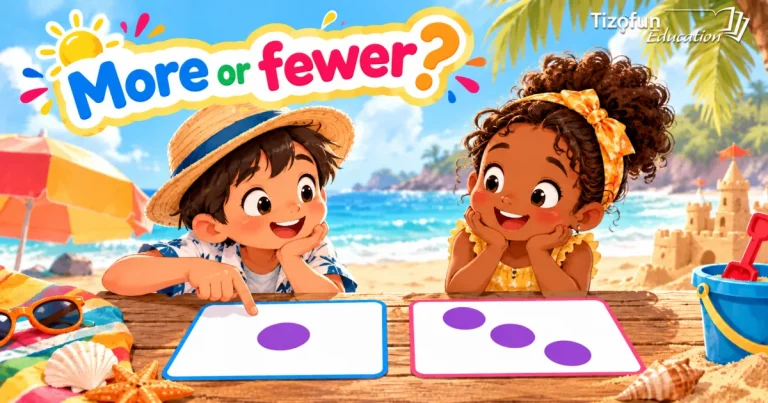
More or fewer? Your child listens to the question, compares two groups of dots and chooses the right one. Free practice for ages 4 to 6.
Loading the game…
Practice comparing two groups of dots: sometimes you look for the one with more, sometimes the one with fewer. Just for practice.
Knowing how to compare is not enough: you also have to listen to the question. In this game, the instruction changes from one time to the next. Sometimes the child looks for the group that has more, sometimes the one that has fewer. This way, they learn not to answer too fast, a useful skill for children aged 4 to 6.
Each question shows two groups of dots. The voice reads the instruction, and the important word appears in bold. Then the child chooses the right group and the game explains the answer. A round has five questions.
It is a practice game: no score goes to a dashboard. So the child can play again as often as they like. If they often get it wrong, ask them to repeat the question before choosing.
At home, play more or fewer with two handfuls of pasta. For example, say: “Show me the pile that has fewer.” Then ask the opposite. Next, let your child ask the question in turn. The game is for ages 4 to 6 and stays free on a computer, tablet or phone.
First, listen carefully to the voice. Does it say “more”? Or does it say “fewer”? Repeat the word out loud. Then touch the dots of each group with your finger and say the numbers. If the voice said more, look for the bigger number. If it said fewer, look for the smaller one. Finally, choose the right group.

Install Tizofun on this device