Habitats: Where Plants and Animals Live
A frog lives in a pond. A camel lives in the desert. Could they swap homes? Let’s find out what a habitat is, visit a forest, a desert, a pond and the ocean, see why each living thing lives where it does, and find out who eats what.
This lesson takes about 15 minutes. You can take a break after each part.
Before you start
Learning objectives
- I can say what a habitat is: the place where a plant or an animal finds what it needs.
- I can compare the plants and animals of a forest, a desert, a pond and the ocean.
- I can explain why an animal or a plant lives in a certain place.
- I can put a short food chain in order, starting with a plant.
What is a habitat?
A home with everything it needs
A habitat is the place where a plant or an animal lives. There it finds what it needs: food, water and shelter.
Plants need their place too
A plant cannot move to find what it needs. It takes water from the soil and gets light from the Sun, right where it grows.
Loading the questions…
Many different habitats
Forest, desert, pond, ocean
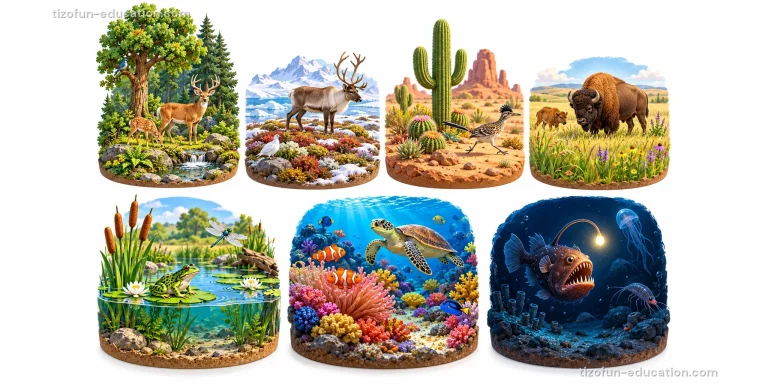
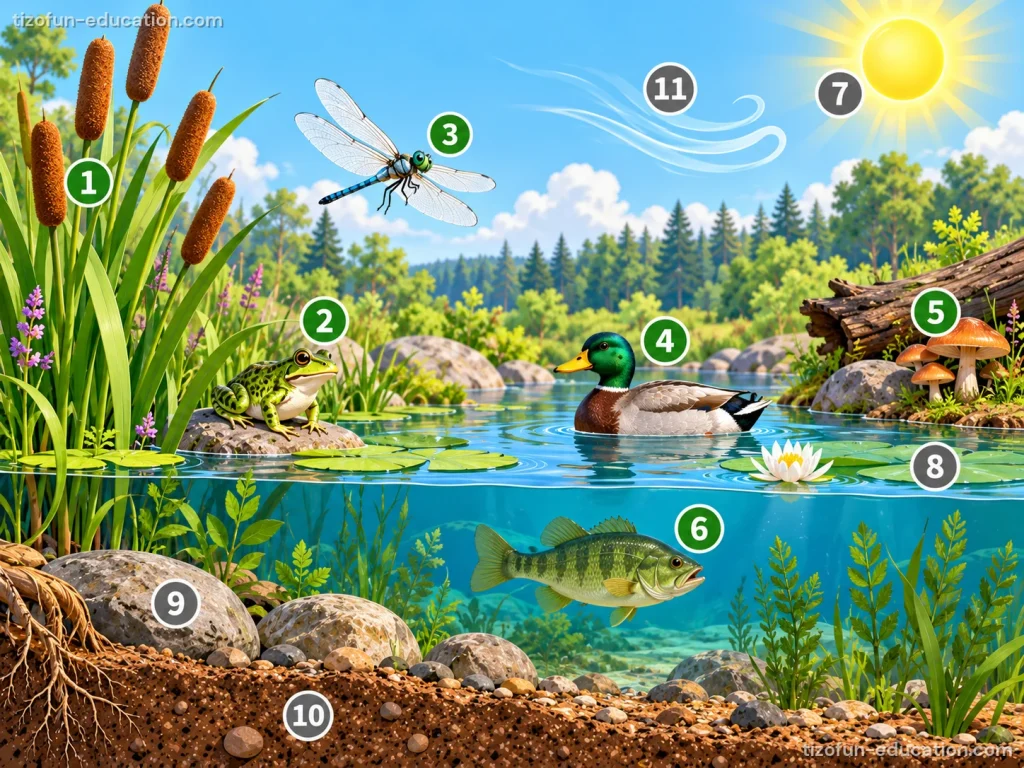
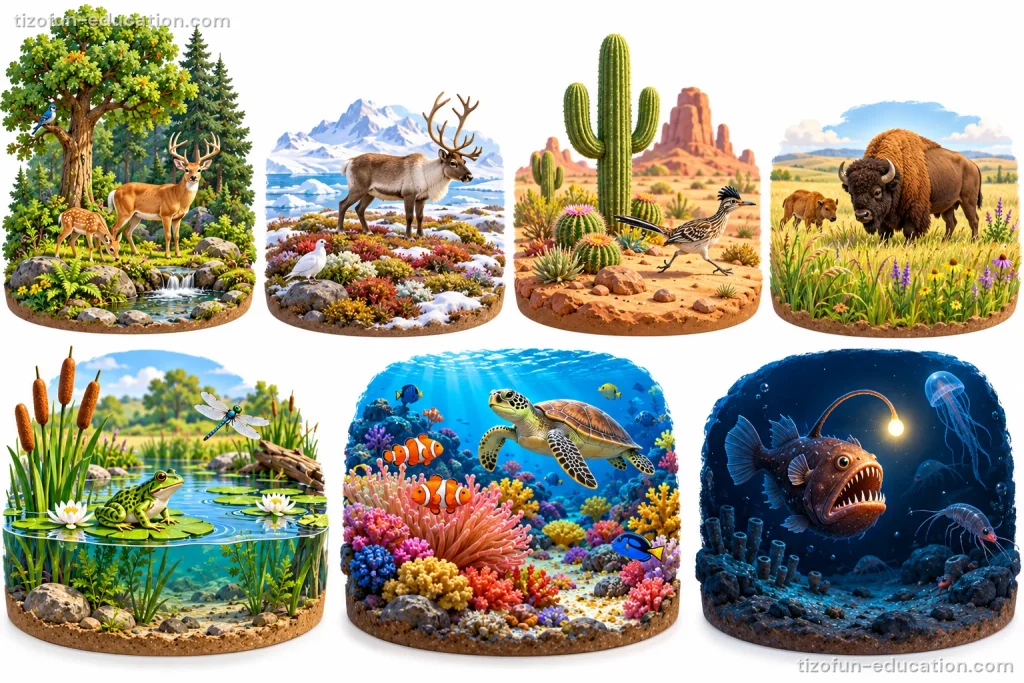
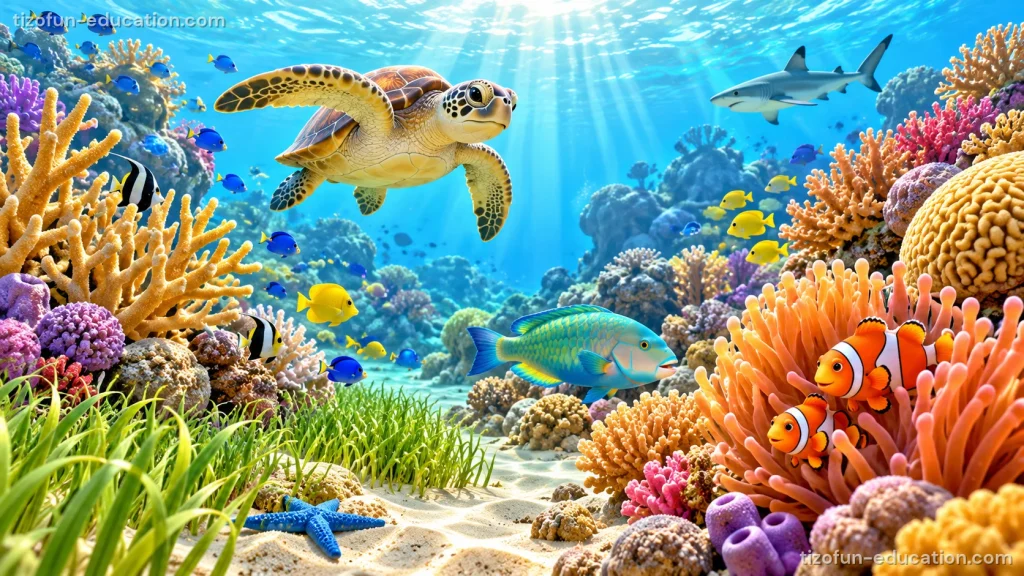
A forest has tall trees, deer, owls and mushrooms. A desert is dry and sunny: cactus plants and lizards live there. A pond has frogs, ducks and water plants. The ocean has fish, crabs, whales and seaweed.
Each habitat has its own living things
You do not find the same plants and animals everywhere. But in one habitat, many different kinds of living things live together.
Loading the questions…
Living where your needs are met
Each one lives where it finds what it needs
Deer eat leaves and buds, so they live in forests. Grass needs a lot of sunlight, so it grows in sunny meadows. A fish needs water all the time, so it lives in water.
Wet or dry, sunny or shady
Some places are wet, others are dry. Some are sunny, others are shady, hot or cold. Each plant and animal lives in a place that suits its needs.
Loading the questions…
Who eats what?
Food comes from the habitat
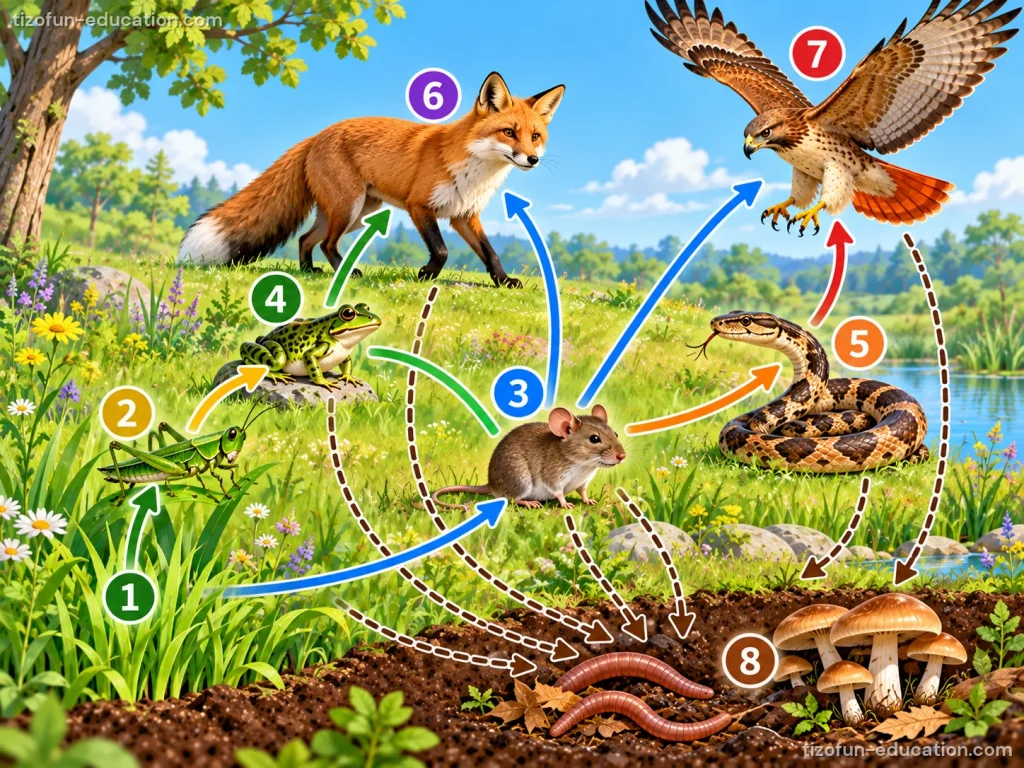
Animals find their food in their habitat. Some eat plants, like the rabbit that eats grass. Some eat other animals, like the fox that eats rabbits.
A food chain
We can draw who eats what with arrows: grass → rabbit → fox. The arrow goes from the food to the one that eats it. This is a food chain. It often starts with a plant.
Loading the questions…
Review game
Final assessment
To master the lesson, you need at least 60% correct answers.
Loading the assessment…
Summary
- A habitat is the place where a plant or an animal finds food, water and shelter.
- A forest, a desert, a pond and the ocean each have their own plants and animals, and many kinds live together.
- Each living thing lives where its needs are met: deer in forests, grass in sunny meadows, fish in water.
- A food chain shows who eats what: grass → rabbit → fox.
A few related activities
 GameHabitats: Where Plants and Animals Live — Review gameReview game for the lesson “Habitats: Where Plants and Animals Live”: 10 questions drawn at random every round.…See the activity
 LessonProperties of Materials: Choosing the Right MaterialA chair, a window and a shoe are made of different materials: wood, glass, metal, cloth, plastic. Each…See the activity
 LessonRocks: Look, Touch and SortPick up a pebble. Is it smooth or rough? Gray or pink? Does it sparkle? Let’s find out…See the activity
