Solids, Liquids, Heating, and Cooling
A spoon keeps its shape. Milk flows. What happens to things when they get warm or cold? Let’s find out!
This lesson takes about 15 minutes. You can take a break after each part.
Before you start
Learning objectives
- I can say if something is a solid or a liquid.
- I can say what heating and cooling do to ice and chocolate.
- I can say if a change can be undone or not.
Solids and liquids
Solids keep their shape
A wooden block, a rock, and a spoon are solids. Put a block in a box, in a bowl, or on the table. It keeps the same shape.
Liquids flow
Water, milk, and juice are liquids. A liquid flows when you pour it. It takes the shape of its container. A container is something that holds things, like a cup, a bottle, or a bowl.
Loading the questions…
Heating and cooling
Heat can melt a solid
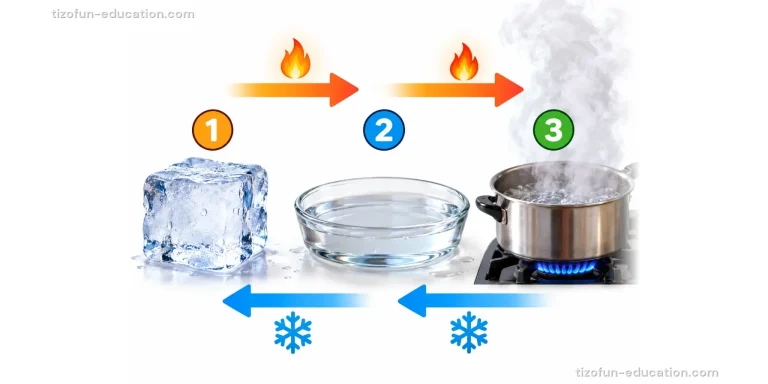
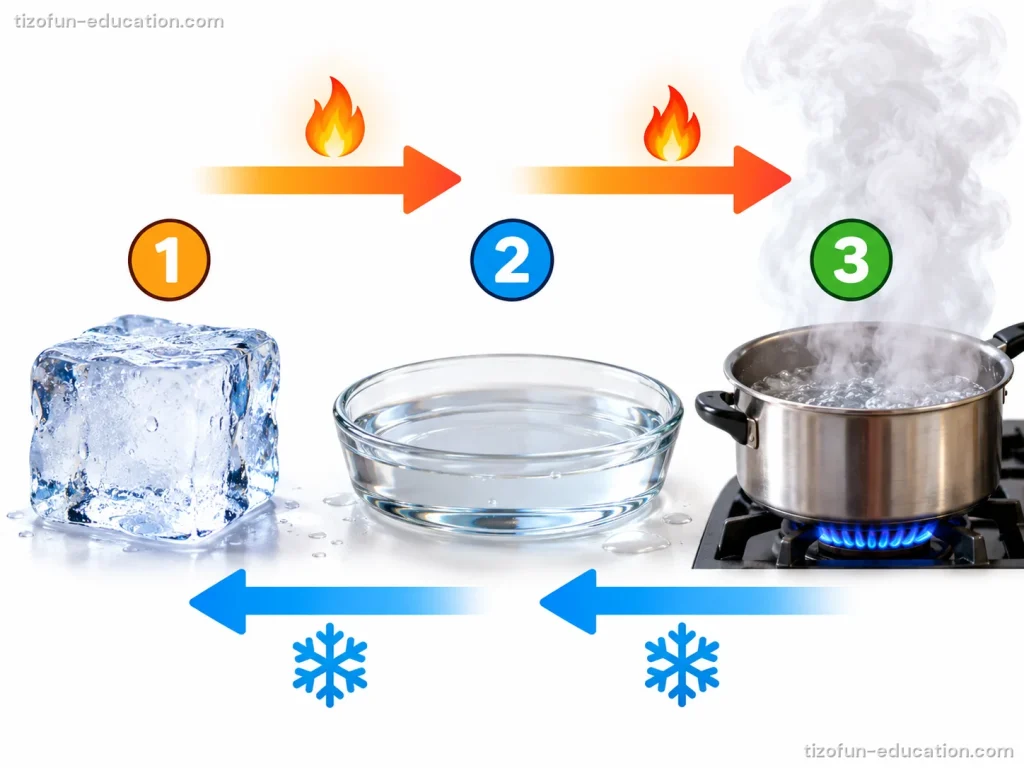
When a solid gets warm enough, it can melt. It becomes a liquid. An ice cube in the sun melts into water. Chocolate in a warm hand gets soft and runny.
Cold can freeze a liquid
When a liquid gets cold enough, it can freeze. It becomes a solid. Water in the freezer turns into ice. Melted chocolate in the fridge gets hard again.
Loading the questions…
Changes we can undo, and changes we cannot
Some changes can be undone
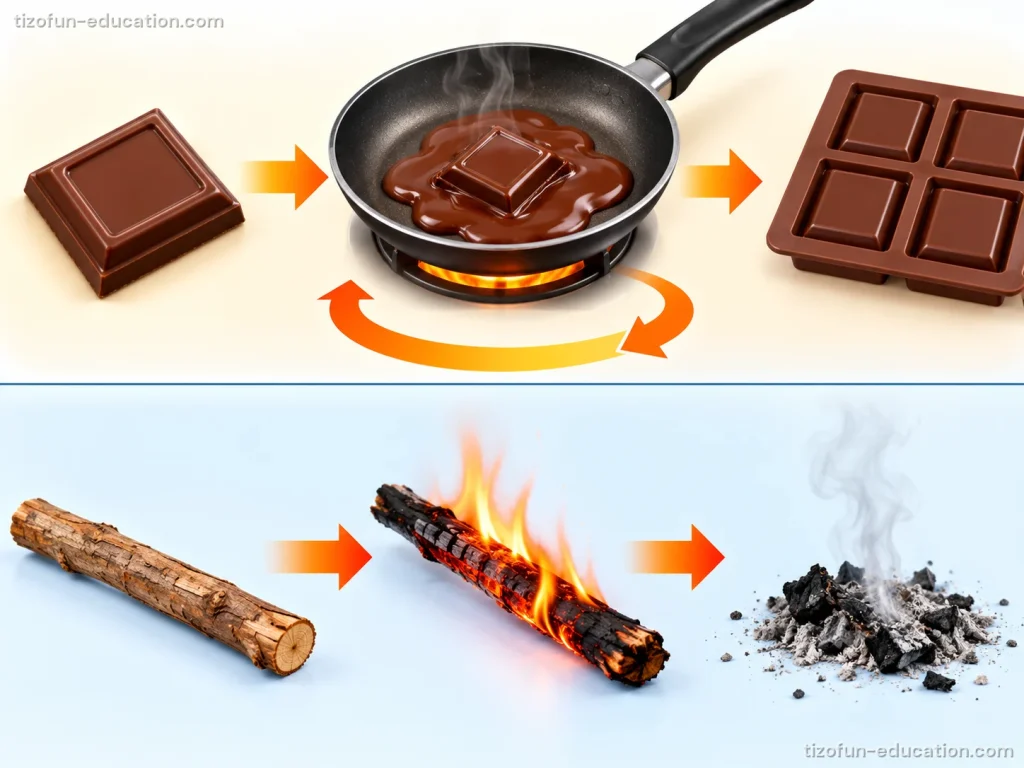
Melted ice can freeze again. Melted butter can get hard again. We can go back to how it was before.
Some changes cannot be undone
A cooked egg never becomes raw again. Toast never turns back into soft bread. Burned paper never comes back. Heating changed them forever.
Loading the questions…
Review game
Final assessment
To master the lesson, you need at least 60% correct answers.
Loading the assessment…
Summary
- A solid keeps its own shape. A liquid flows and takes the shape of its container.
- Heating can melt a solid. Cooling can freeze a liquid.
- Some changes can be undone, like melting ice. Some cannot, like cooking an egg.
A few related activities
 GameSolids, Liquids, Heating, and Cooling — Review gameReview game for the lesson “Solids, Liquids, Heating, and Cooling”: 10 questions drawn at random every round. Free…See the activity
 LessonProperties of Materials: Choosing the Right MaterialA chair, a window and a shoe are made of different materials: wood, glass, metal, cloth, plastic. Each…See the activity
 LessonRocks: Look, Touch and SortPick up a pebble. Is it smooth or rough? Gray or pink? Does it sparkle? Let’s find out…See the activity
