Sun, Moon and Stars: Patterns in the Sky
Every morning the Sun comes up, and every evening it goes down. At night, the Moon and the stars light up the dark sky. The sky changes all day long, but it changes in the same way again and again. Let’s look at these patterns and learn to predict what we will see.
This lesson takes about 15 minutes. You can take a break after each part.
Before you start
Learning objectives
- I can tell how the Sun seems to move across the sky during the day.
- I can tell that day and night follow each other, again and again.
- I can tell that the Moon seems to change shape, and that its shapes come back.
- I can tell when we see the stars, and use patterns to predict what the sky will look like.
The Sun in the day sky
Up, across and down
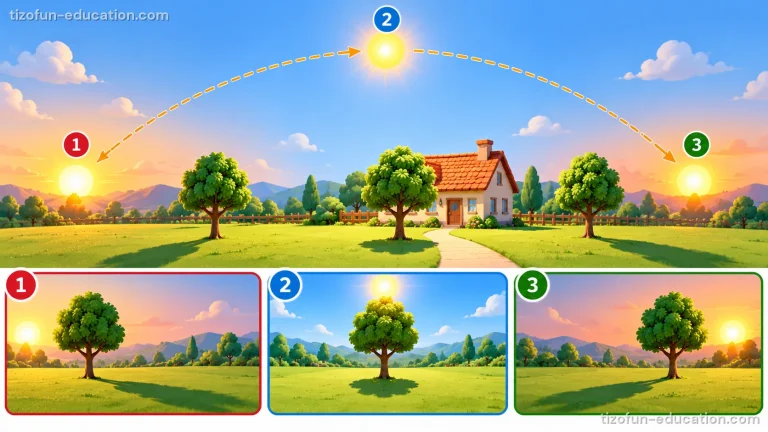
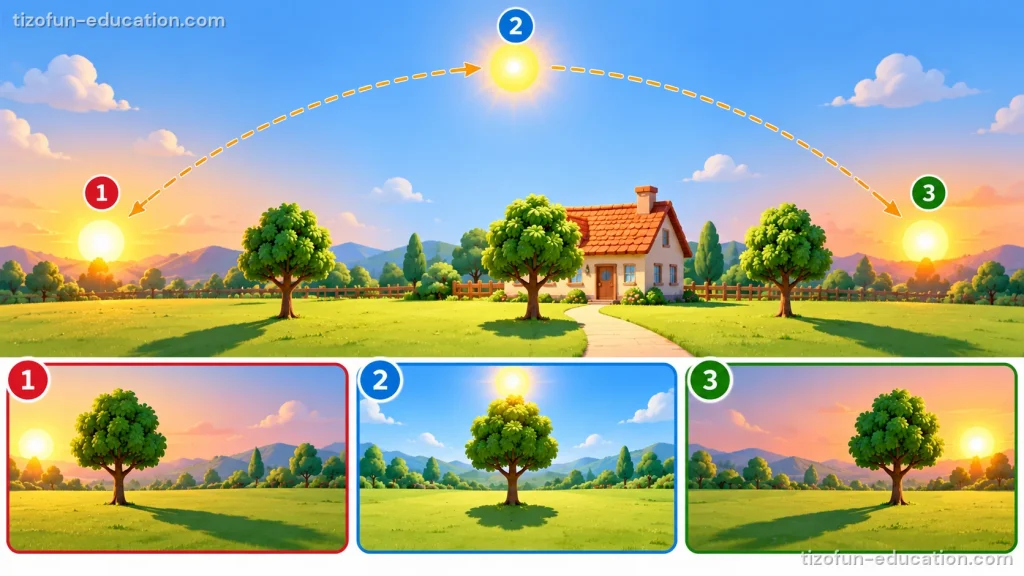
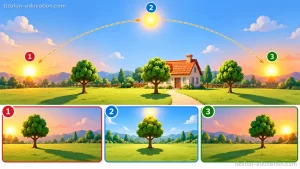
In the morning, the Sun comes up on the east side of the sky. During the day, it seems to move across the sky. In the evening, it goes down on the west side.
Every day the same
The Sun is low in the morning, high at lunchtime and low again in the evening. It does the same thing every day: this is a pattern.
Loading the questions…
Day and night
Day, then night
It is daytime when the Sun is in the sky. When the Sun has gone down, the sky gets dark: it is night.
Again and again
Day and night follow each other in the same order: day, night, day, night. The Sun does not go out at night. It comes up again the next morning.
Loading the questions…
The Moon
Night and day
Like the Sun, the Moon comes up, moves across the sky and goes down. We often see it at night, but sometimes we can also see it in the daytime sky.
Shapes that come back
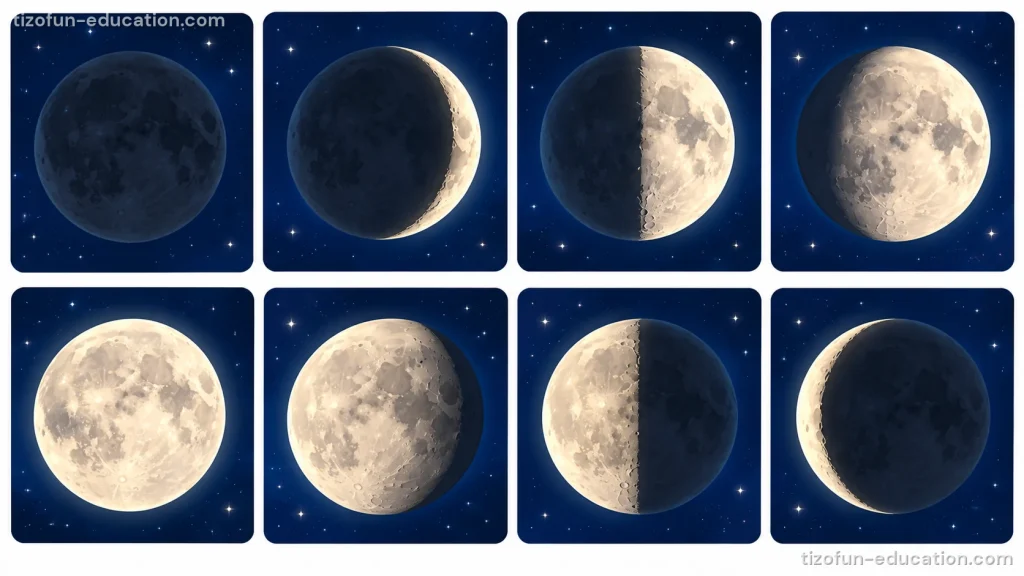
The Moon seems to change shape: sometimes it is big and round, sometimes it is a thin curve. The same shapes come back in the same order, about every month.
Loading the questions…
Stars and patterns in the sky
Stars at night
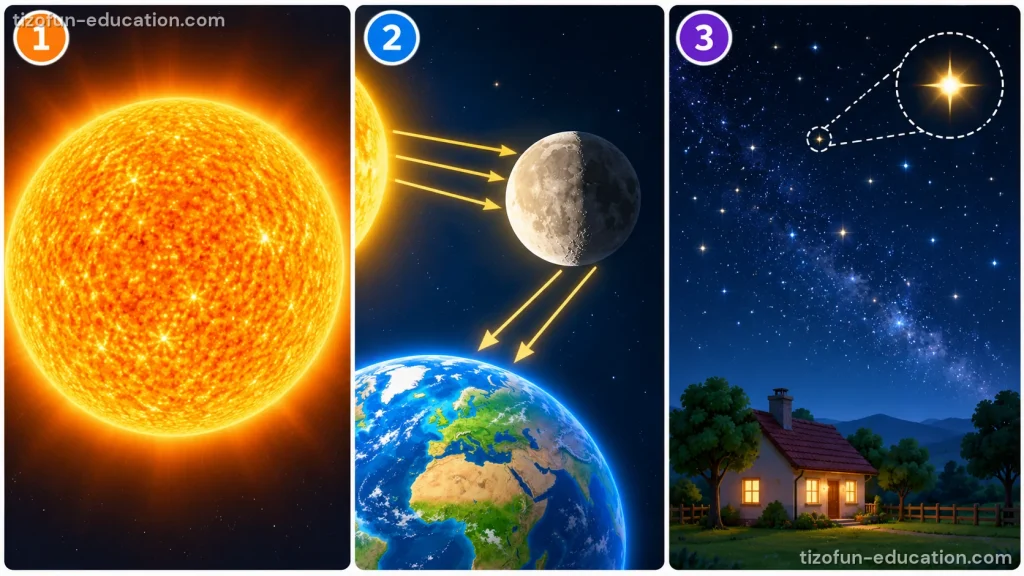
On a clear night, we can see many stars. In the daytime, they are still there, but the light of the Sun is too bright for us to see them.
Watch and predict
To find a pattern, look at the sky again and again and write or draw what you see. When something happens the same way every time, you can predict it.
Loading the questions…
Review game
Final assessment
To master the lesson, you need at least 60% correct answers.
Loading the assessment…
Summary
- The Sun comes up in the east, seems to move across the sky and goes down in the west, every day.
- Day and night follow each other, again and again; the Sun does not go out at night.
- The Moon can be seen at night and sometimes in the day; its shapes come back about every month.
- We see the stars at night; in the day, the Sun is too bright.
- Watching the sky again and again shows patterns that help us predict.
A few related activities
 GameSun, Moon and Stars: Patterns in the Sky — Review gameReview game for the lesson “Sun, Moon and Stars: Patterns in the Sky”: 10 questions drawn at random…See the activity
 LessonAnimal and Plant Parts: How Living Things SurviveA turtle has a hard shell, a rabbit has long ears and a plant has roots. Every part…See the activity
 LessonLike Their Parents, but Not Exactly: Young Plants and AnimalsA puppy grows up to be a dog, and a sunflower seed grows into a sunflower. Young plants…See the activity
