Count Clocks, Fans, Guitars and Blenders, Then Circle 1, 2 or 3
Children notice the alarm clock long before they can read its numbers. This Pre-K count to 3 worksheet with household objects starts from things like that. A clock, two fans, three guitars and two blenders fill the rows, one kind per row. A finger chart at the top shows one, two and three raised fingers above each numeral. Your child counts each row, then circles 1, 2 or 3 among the colored dots. Familiar pictures mean less guessing about what things are, so attention stays on how many.
Fingers as the first number line
Before numerals mean anything, a hand already does. Holding up two fingers shows a quantity that a child can see, feel and check. Educators call this a concrete representation. It builds number sense, the feeling for how big two is next to three.
The chart at the top of this page puts that hand right above the written numeral. So when your child counts the two fans, they can hold up two fingers. Then they look up and find the hand that matches. After that, the 2 in the green dots stops being a squiggle.
The page also keeps the sizes small. The guitars are the only row of three. Everything else is one or two.
What to say at the guitars
Start at the top, with the hands. Hold up one finger together, then two, then three, and say each number out loud.
Next, move row by row with a simple routine, touch and count:
- "Tap the clock. How many clocks?"
- "Show me the fans on your fingers."
- "Find that hand in the chart, then find the dot."
The guitars are where most slips happen. Their long necks all point the same way, so a child may tap one guitar twice and say four. Since four is not even a choice, ask, "Is there a 4 in the orange dots?" That question sends them back to count again, slowly. Finally, the two blenders often bring a small surprise: "Same as the fans."
A hunt through the house
These objects live in most homes, so the hunt is easy. In the kitchen, ask your child to bring you two spoons, then three cups. Count them together on the table. Later, point to a fan or a clock and ask, "How many can you see in this room?"
For a story to share, try Ten Black Dots by Donald Crews. Each page turns a few dots into everyday things, while your child counts them with a finger. That habit of counting everyday objects is what keeps numbers 1 to 3 alive between worksheets.
When the page is done, name the effort: "You showed me every row on your fingers first." It sounds small. It is not.
About this Pre-K count to 3 worksheet with household objects, row by row
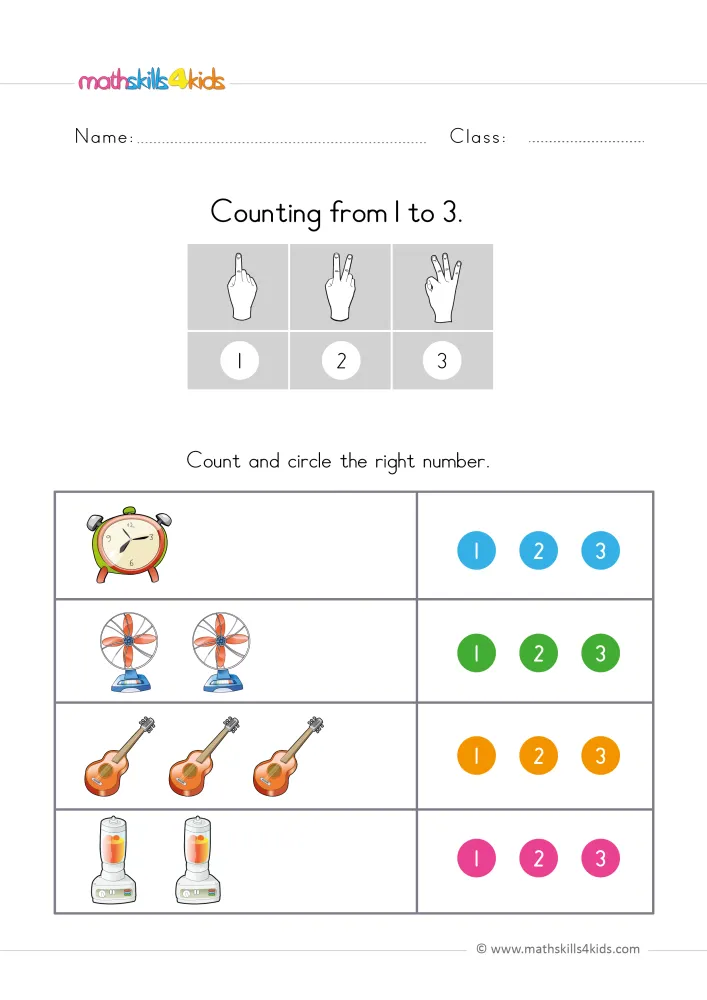
Download the worksheet: Count Clocks, Fans, Guitars and Blenders, Then Circle 1, 2 or 3
 Worksheet3rd Grade Finding Shapes in Everyday Objects Worksheet: 16 Pictures
 Worksheet2nd Grade 3D Shapes in Real Life Worksheet: Tick the Objects That Match
 Worksheet1st Grade Ten Frame Make 10 Worksheet: How Many More?
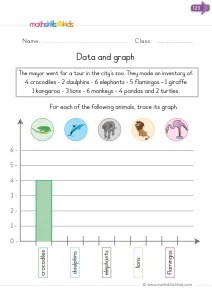 WorksheetKindergarten Make a Bar Graph Worksheet: Count the Zoo, Then Draw Each Bar
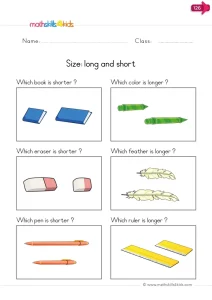 WorksheetKindergarten Comparing Length Worksheet: Longer or Shorter School Supplies?
A few related activities
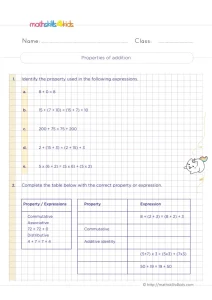 Five number sentences to name, from 8 + 0 = 8 to 5 x (6 + 2). Then…See the activityGrade 1 Math — How many in all?Grade 1 math review game (ages 6–7): how many in all?. Instructions are read aloud, and every answer…See the activity3rd Grade Divide by 1 Worksheet: 20 Facts and the Rule of One
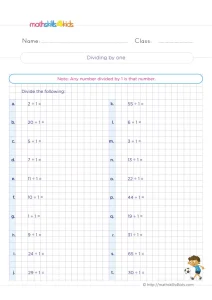 Twenty division facts by 1, from 1 ÷ 1 to 65 ÷ 1. One rule solves them all:…See the activity
