Properties of Materials: Choosing the Right Material
A chair, a window and a shoe are made of different materials: wood, glass, metal, cloth, plastic. Each material has its own properties. Let’s learn to describe materials, sort them, test them, and build new things from small pieces.
This lesson takes about 15 minutes. You can take a break after each part.
Before you start
Learning objectives
- I can describe a material with words like hard, soft, shiny, flexible or transparent.
- I can sort objects by a property and tell materials from nature from materials made by people.
- I can test materials to find the best one for a job.
- I can explain how an object made of small pieces can be taken apart and built into something new.
Describing materials
What is a property?
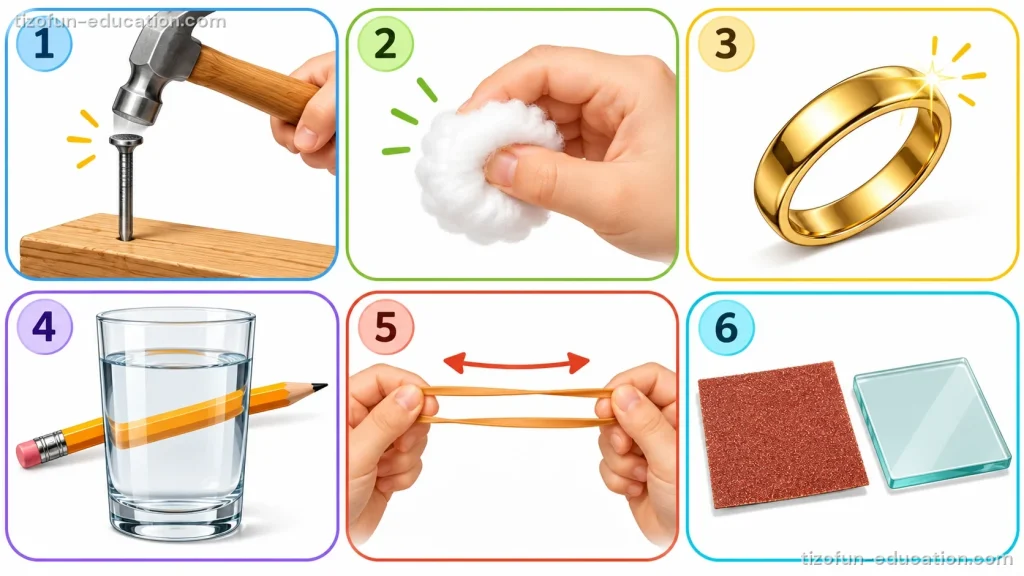
A property is something you can observe about a material: its color, its texture, whether it is hard or soft, shiny or dull, flexible (it bends) or stiff.
Can light go through?
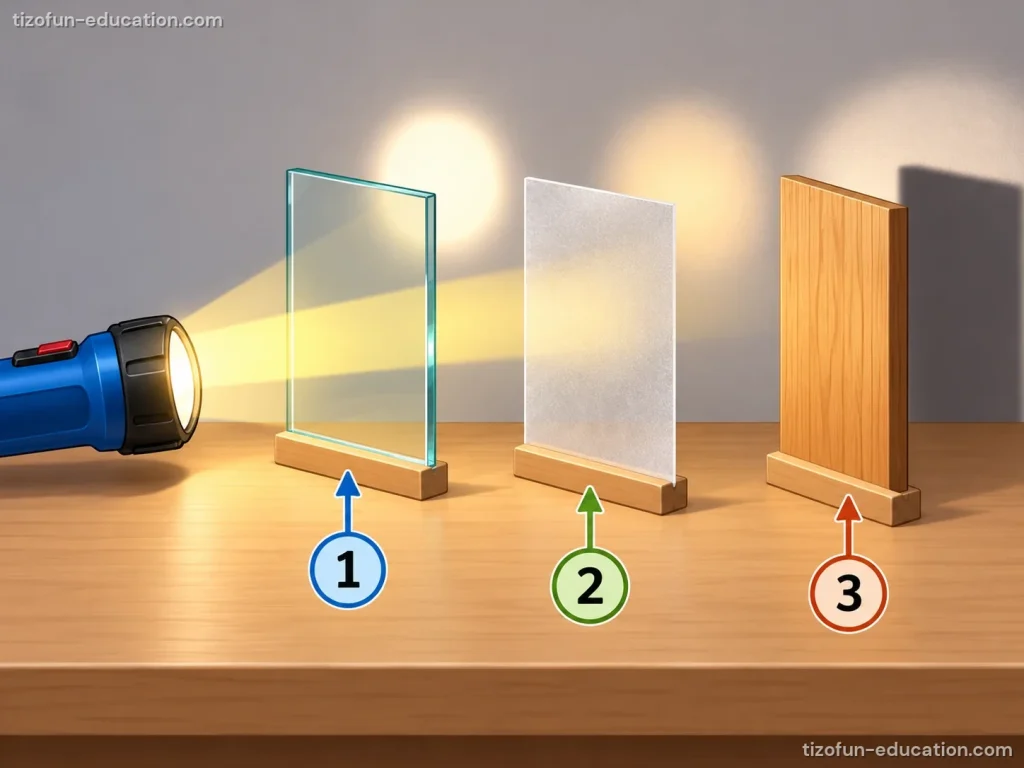
Light goes through a transparent material, like clear glass: you can see through it. A translucent material lets some light through, but things look blurry. An opaque material, like wood, stops the light.
Loading the questions…
Sorting materials
Sorting by properties
We can sort objects into groups by one property: all the hard objects together, all the soft ones together. One object can go into two groups: a drinking glass is hard and transparent.
From nature or made by people?
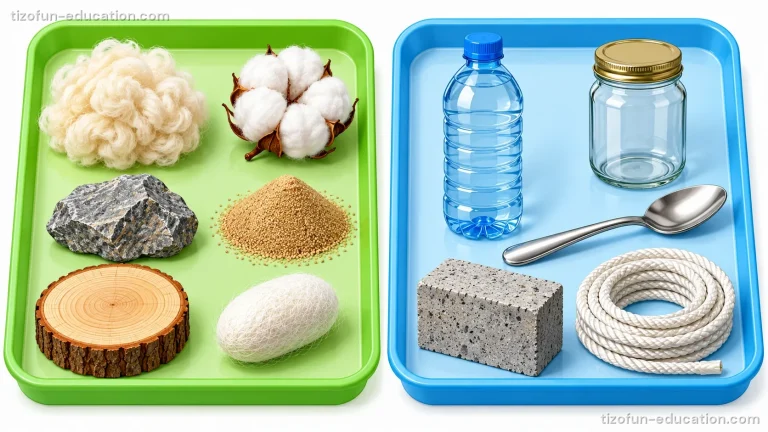
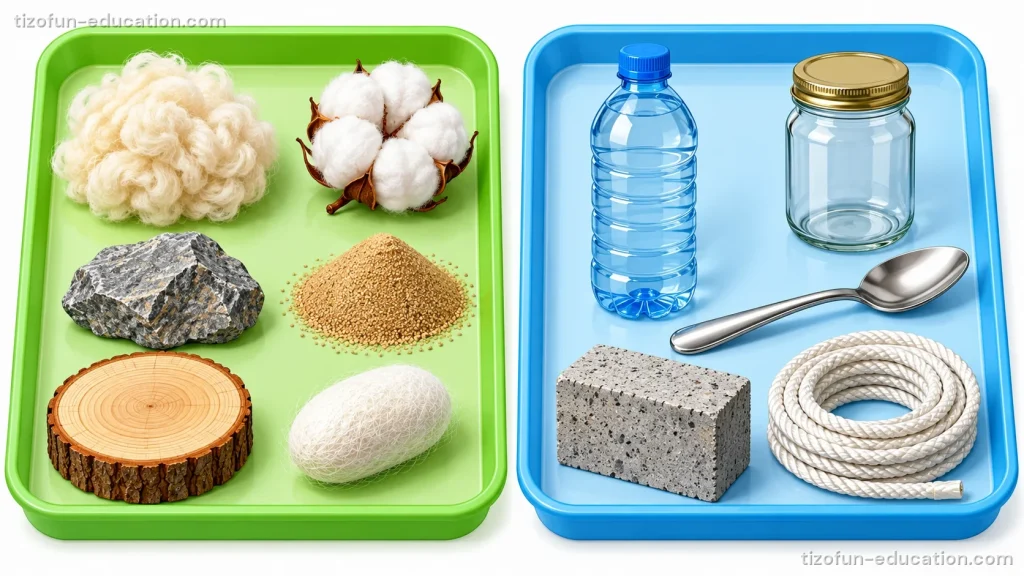
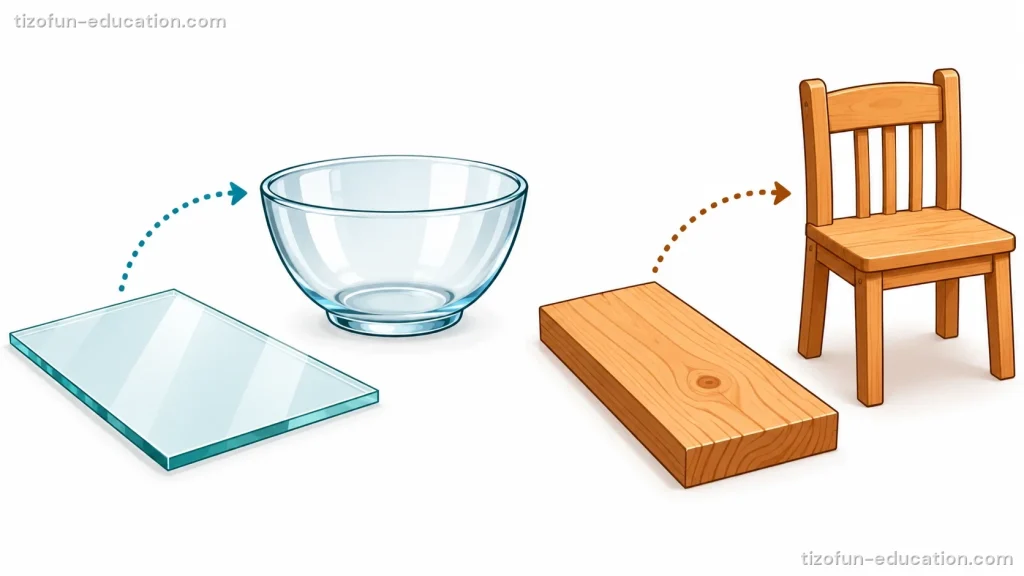
Some materials come from nature: wood from trees, wool from sheep, cotton from a plant, rock and sand from the ground. Other materials are made by people in factories, like plastic and glass. People make glass from sand heated until it melts.
Loading the questions…
The right material for the job
Testing materials
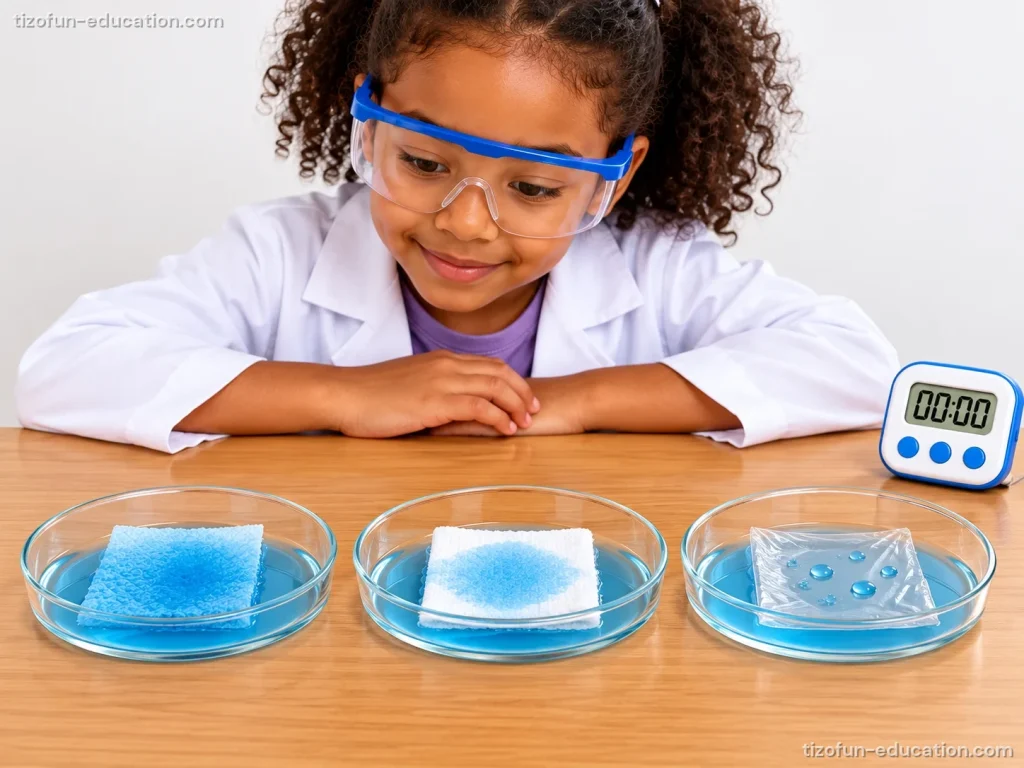
To choose a material, scientists test it. Which material is best to wipe up spilled water? Put the same amount of water in three dishes, add a sponge, a paper towel and a piece of plastic, and wait the same time. Then look: which one soaked up the most water?
Each part has its job
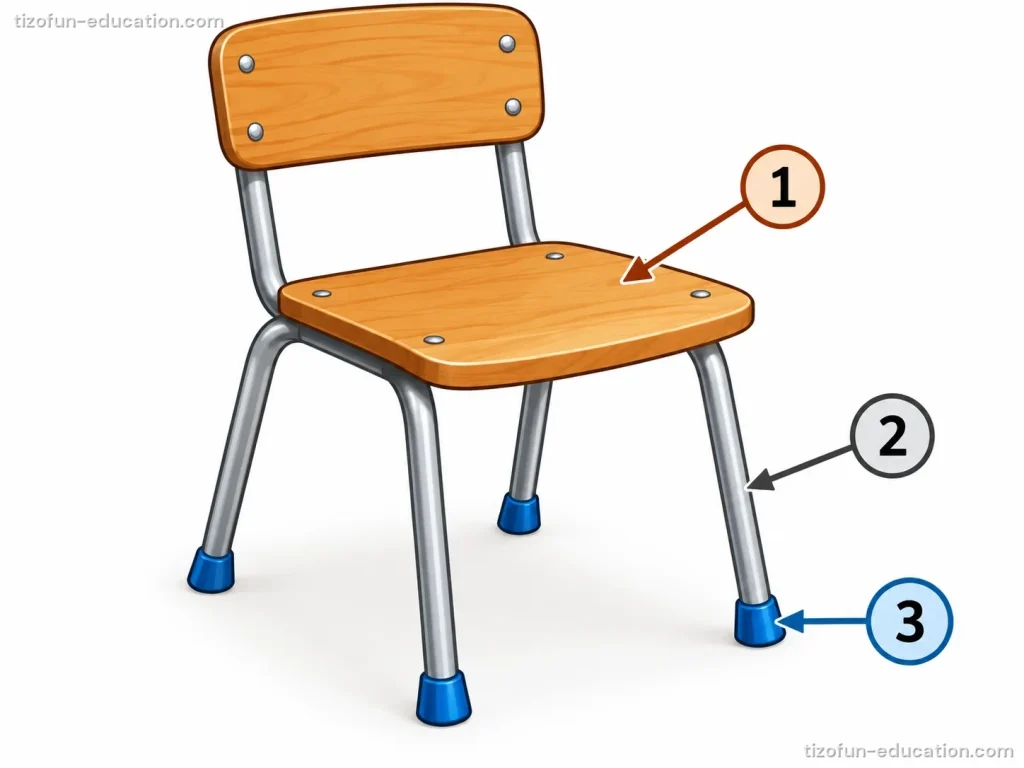
Look at a school chair. The seat is made of wood: it is hard and strong, so you can sit on it. The legs are made of metal: they are strong and hold you up. The feet are made of plastic: they do not scratch the floor.
Loading the questions…
Building from small pieces
Many pieces, one object
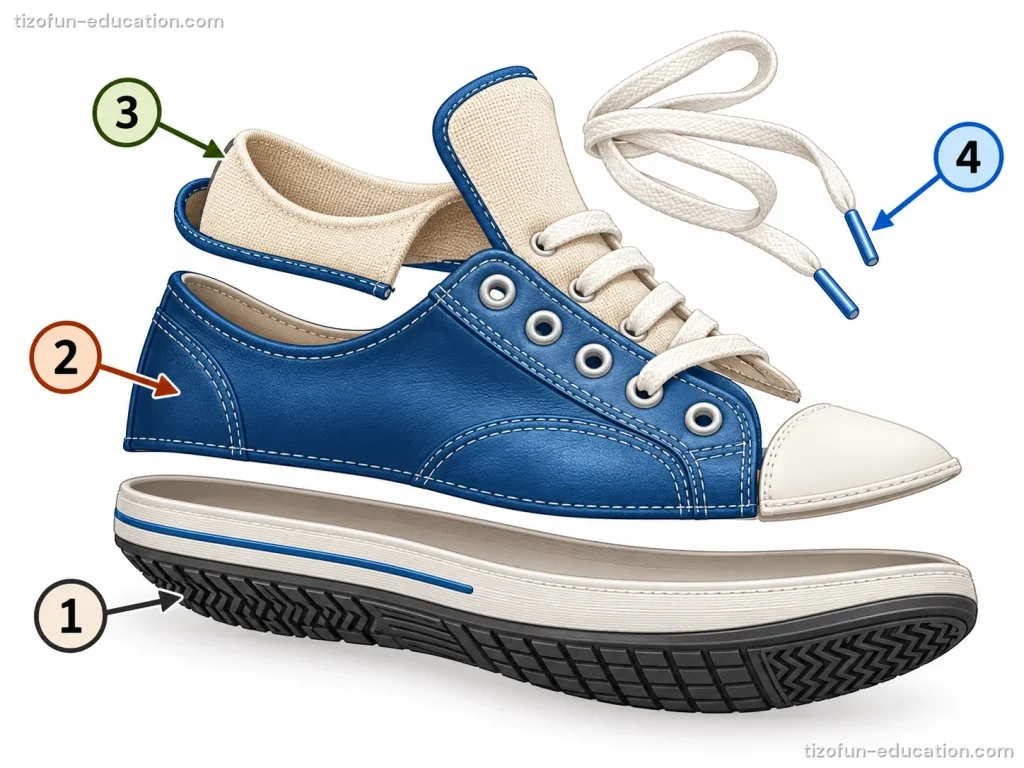
Many objects are made of small pieces put together. A sneaker has a sole, a top, a lining and laces. You can take some objects apart, piece by piece.
Something new from the same pieces
With building blocks, you can build a house, then take it apart and build a boat. The pieces stay the same; only the shape of the object changes.
Loading the questions…
Review game
Final assessment
To master the lesson, you need at least 60% correct answers.
Loading the assessment…
Summary
- A property is something we observe: hard or soft, shiny or dull, rough or smooth, flexible or stiff.
- Light goes through a transparent material, a little through a translucent one, and not through an opaque one.
- Wood, wool, cotton and rock come from nature; plastic and glass are made by people.
- We test materials, the same way each time, to choose the best one for a job.
- Objects made of small pieces can be taken apart and built into new objects.
A few related activities
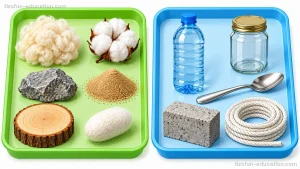 GameProperties of Materials: Choosing the Right Material — Review gameReview game for the lesson “Properties of Materials: Choosing the Right Material”: 10 questions drawn at random every…See the activity
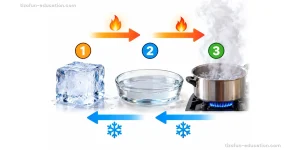 LessonSolids, Liquids, Heating, and CoolingA spoon keeps its shape. Milk flows. What happens to things when they get warm or cold? Let's…See the activity
 LessonRocks: Look, Touch and SortPick up a pebble. Is it smooth or rough? Gray or pink? Does it sparkle? Let’s find out…See the activity
