Weather: Watch It, Record It, Find Patterns
Look out the window. Is it sunny, cloudy, rainy, or windy? Weather changes from day to day. Let’s watch it, draw it on a chart, and find what comes back again and again.
This lesson takes about 15 minutes. You can take a break after each part.
Before you start

Learning objectives
- I can name kinds of weather: sunny, cloudy, rainy, windy, snowy.
- I can record the weather each day on a chart.
- I can tell that a sunny afternoon is usually warmer than the morning.
- I can find a weather pattern by counting days on a chart.
What is the weather like?
Weather words
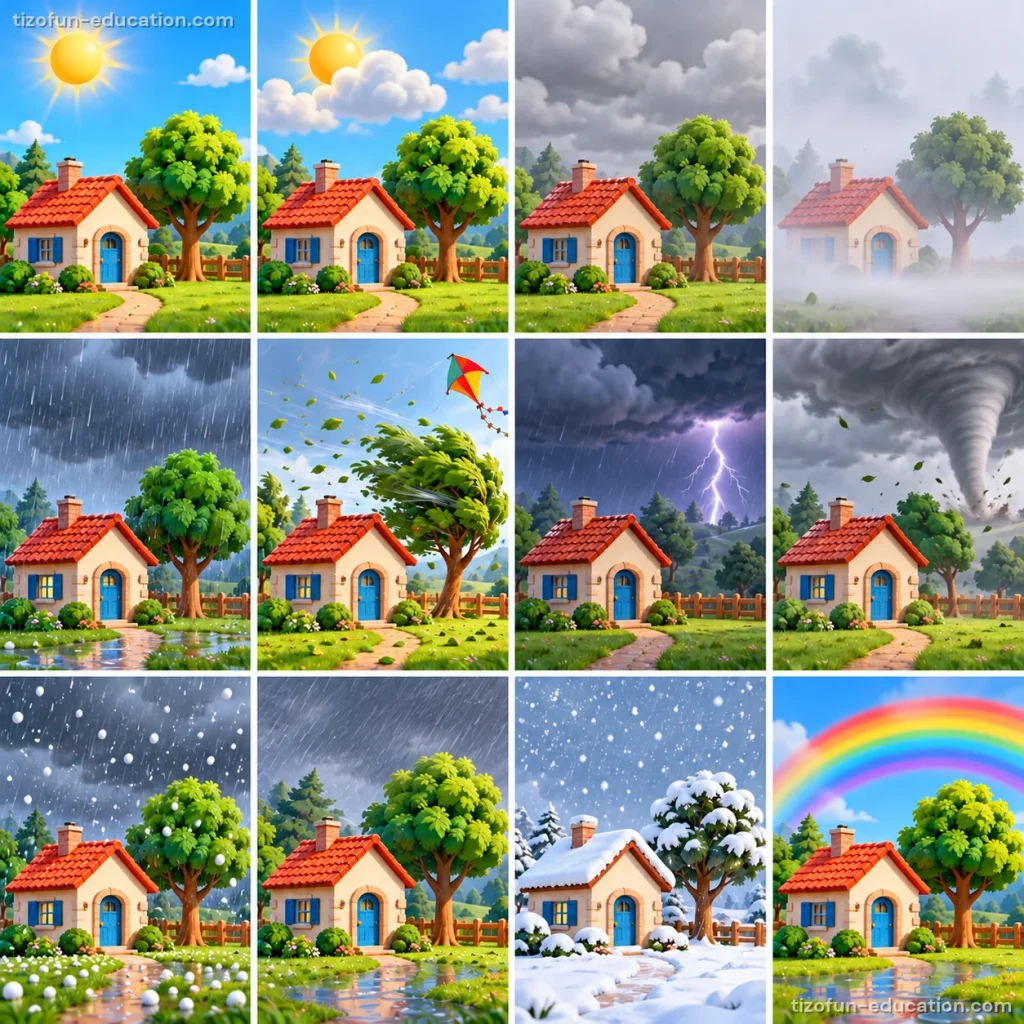
Weather is what it is like outside right now. It can be sunny, cloudy, rainy, windy, or snowy. It can feel warm or cold.
Use your senses
You can see the Sun, the clouds, and the rain. You cannot see the wind, but you can feel it on your face and see what it moves.
Loading the questions…
Watch and record
A weather chart
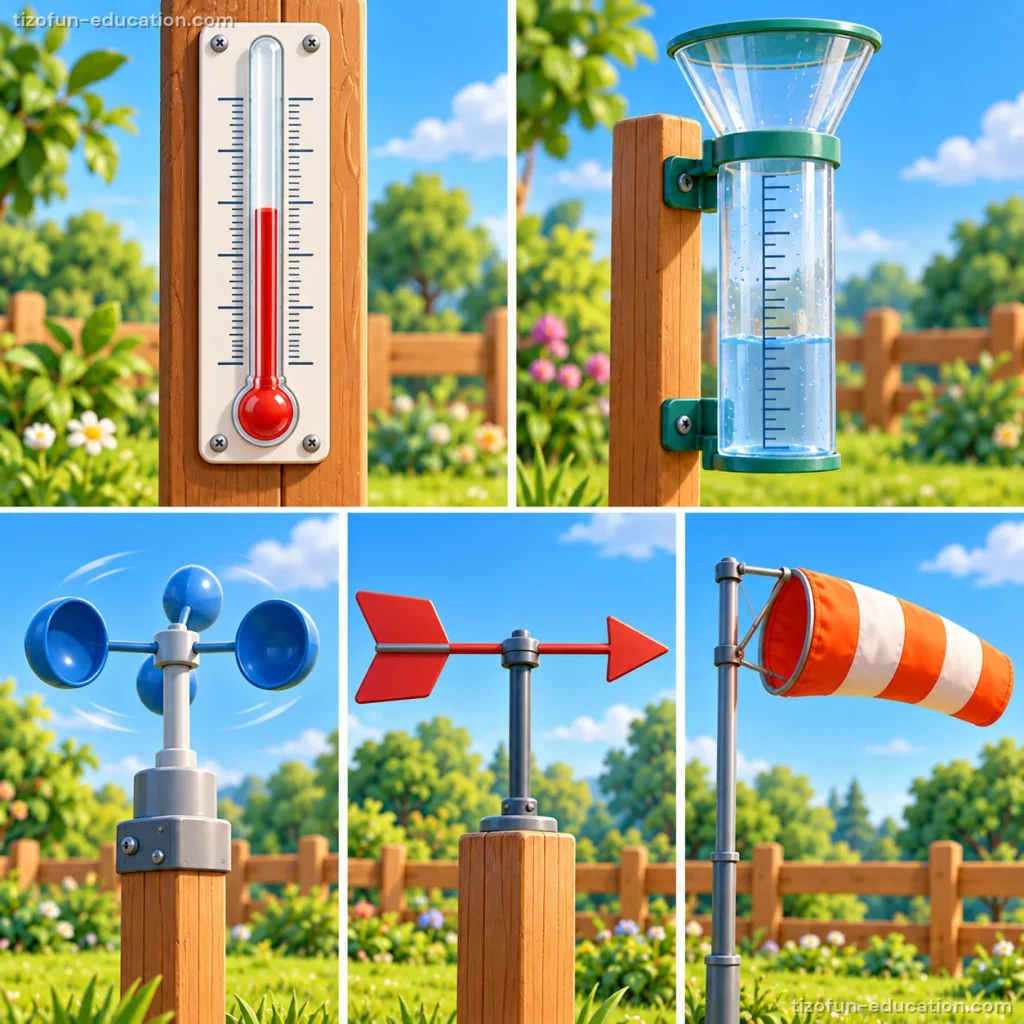
Scientists observe the weather and record it. Your class can do it too: each day, look at the sky and draw one small picture on a weather chart.
One picture a day
A sun for a sunny day. A cloud for a cloudy day. A cloud with raindrops for a rainy day. A snowflake for a snowy day.
Loading the questions…
Warmer and cooler
Morning and afternoon
On a sunny day, the Sun warms the ground and the air. So the morning is usually cooler, and the afternoon is usually warmer.
Feel the difference
You do not need numbers: you can feel if it is warmer or cooler. Your clothes tell you too: a jacket in the morning, no jacket in the afternoon.
Loading the questions…
Find the pattern
Count the days
After many days, look at the whole chart. Count the suns, the clouds, and the rainy days. The biggest number tells which weather came most often.
Weather through the year
Some patterns come back every year. In many places, summer days are warm and winter days are cold, sometimes with snow. We choose our clothes by looking at the weather.
Loading the questions…
Review game
Final assessment
To master the lesson, you need at least 60% correct answers.
Loading the assessment…
Summary
- Weather is what it is like outside right now: sunny, cloudy, rainy, windy, or snowy, warm or cold.
- We see the weather and we feel it. We cannot see the wind, but we see what it moves.
- We record the weather every day on a chart, because it can change from one day to the next.
- On a sunny day, the morning is usually cooler and the afternoon warmer.
- Counting days on the chart helps us find patterns, like warm summers and cold winters in many places.
A few related activities
 GameWeather: Watch It, Record It, Find Patterns — Review gameReview game for the lesson “Weather: Watch It, Record It, Find Patterns”: 10 questions drawn at random every…See the activity
 LessonLiving Things: What They Need and How We Sort ThemA puppy, a sunflower, and you: all of you are alive! What do living things need to stay…See the activity
 LessonPushes and Pulls: Making Things MoveA swing goes up high. A wagon rolls along. A door opens. How do we make things move,…See the activity
