1st Grade Plus or Minus Sign Worksheet: Which Sign Is Missing
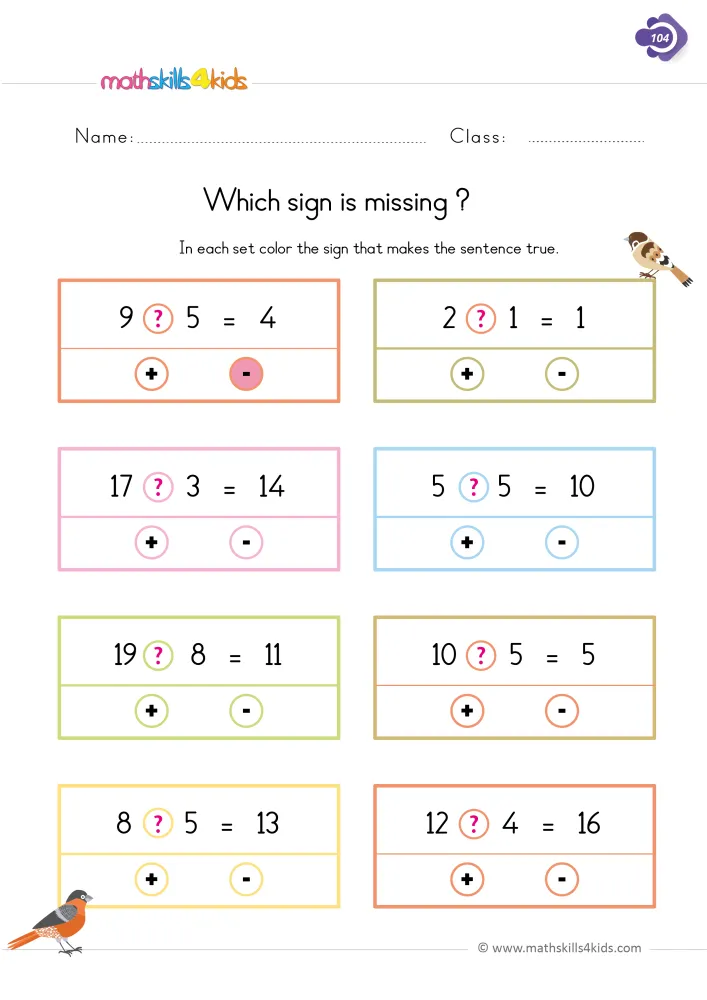
Show a six-year-old 5, 5 and 10 and ask what goes between the fives, and most will say plus without a second thought. Show 10, 5 and 5, and the same child may hesitate. This 1st grade plus or minus sign worksheet is built on that moment. Each of the eight colored boxes holds a number sentence with a small circle and a question mark where the sign should be, such as 17, 3 and 14 or 8, 5 and 13. Under each sentence, two circles show a plus and a minus. Your child colors the one that makes the sentence true. In the first box, the minus is already colored as an example. A second page gives the answer key.
Why the answer tells you the sign
Most early worksheets give the sign and ask for the answer, but this one flips the job. Your child sees all three numbers and must decide which operation connects them. That is real reasoning about addition and subtraction.
The key idea is simple: compare the answer with the first number. If the answer is bigger or smaller, that already points to plus or minus. For example, 12 and 4 make 16, which is more than 12, so something was added.
The page mixes the cases well, since five sentences need a minus and three need a plus, so a child cannot settle into one habit. Also, 10, 5 and 5 checks whether the child truly thinks, because the numbers look so balanced. Each missing sign asks for a reason.
At the table: 10 and 5 make 5
Start with the example in the first box, and ask your child to read it with the sign: "Nine minus five equals four. Is that true?"
The brown box, with 10, 5 and 5, is the likely trip. A child may color the plus because 5 and 5 feel like a pair that adds up. Instead of correcting, ask, "Is the answer bigger or smaller than 10?" Let your child point to the 10, then to the 5 at the end.
The yellow box, with 8, 5 and 13, works the other way, and some children pick minus out of habit. Ask, "Did we end up with more than 8?" Saying the full true number sentence aloud helps your child check alone.
Plus or minus on the hopscotch grid
Choosing a sign gets easier when your child has felt it. At the table, put seven blocks down, then secretly add or remove two, and let your child say which sign you used. While you shop, put five apples in a bag, take out one, and ask, "Plus or minus?"
Also, Hopscotch makes the signs physical. Chalk a grid from 1 to 10, call out a move like "forward 3" or "back 2," and ask your child to name the sign before hopping.
These short games make signs feel like choices, not symbols. Finally, check the page with the answer key and praise the effort: "You compared the numbers before you colored."
About this 1st grade plus or minus sign worksheet and its answer key
Download the worksheet: 1st Grade Plus or Minus Sign Worksheet: Which Sign Is Missing
 Worksheet3rd Grade Addition and Subtraction Problems: 3 Stories
 Worksheet3rd Grade Addition Properties Worksheet: Commutative, Associative, Identity
 Worksheet3rd Grade Count Coins and Bills Worksheet: 8 Money Totals
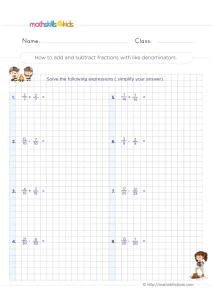 Worksheet3rd Grade Adding and Subtracting Like Fractions Worksheet: Eight Sums
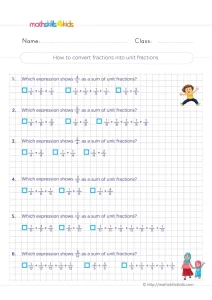 Worksheet3rd Grade Writing Fractions as Unit Fraction Sums Worksheet: Tick One
A few related activities
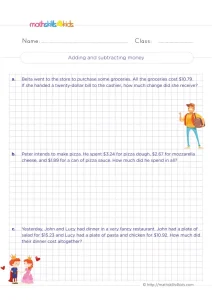 Three money word problems about groceries, a pizza and a dinner out. Children find the change from a…See the activity3rd Grade Cups, Pints and Gallons Worksheet
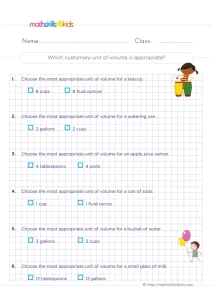 Six everyday containers, from a teacup to a bucket of water. Your child ticks the more sensible unit…See the activity3rd Grade Two-Step Multiply and Divide Problems: 3 Stories
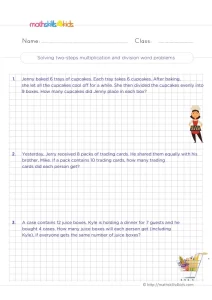 Three stories about cupcakes, trading cards and juice boxes. Your child multiplies to find a total, then divides…See the activity
