3rd Grade Cups, Pints and Gallons Worksheet
How much does a teacup hold, and how much does a bucket hold? This 3rd grade cups pints and gallons worksheet starts from the size of each container, so your child pictures it before naming a unit. It uses customary units: tablespoons, fluid ounces, cups, pints and gallons. For each of the six containers, two amounts are offered, and only one is sensible. A watering can, for example, holds about 2 gallons, not 2 cups. The second page is an answer key that ticks the right box and says why the other unit is too big or too small.
Picture the container first
Before reading the two choices, ask your child to picture the container. Then they can hold their hands apart to show its size. A small glass of milk fits in one hand, so 12 tablespoons is sensible, while 12 gallons would fill a bathtub. In the same way, a can of soda holds about 1 cup, not 1 fluid ounce.
After that, saying the size out loud helps your child reject the unit that does not fit.
From the smallest unit to the largest
Next, line the units up from small to large: tablespoon, fluid ounce, cup, pint, gallon. Two tablespoons make one fluid ounce, and eight fluid ounces make one cup. Likewise, two cups make one pint, and eight pints make one gallon. So a teacup holds about 8 fluid ounces, a juice carton about 4 pints and a bucket of water about 3 gallons.
This order of capacity units is useful later, when your child compares or converts amounts.
After the page: measuring in the kitchen
To begin, compare the six answers with the answer key on page two. Then fill a measuring cup with water and pour it into a mug, a glass and a bottle. Ask which ones hold more than a cup and which hold less. Finally, read the labels on a milk jug or a juice carton together, because they often show both customary units and liters.
About this cups, pints and gallons worksheet and its answer key page
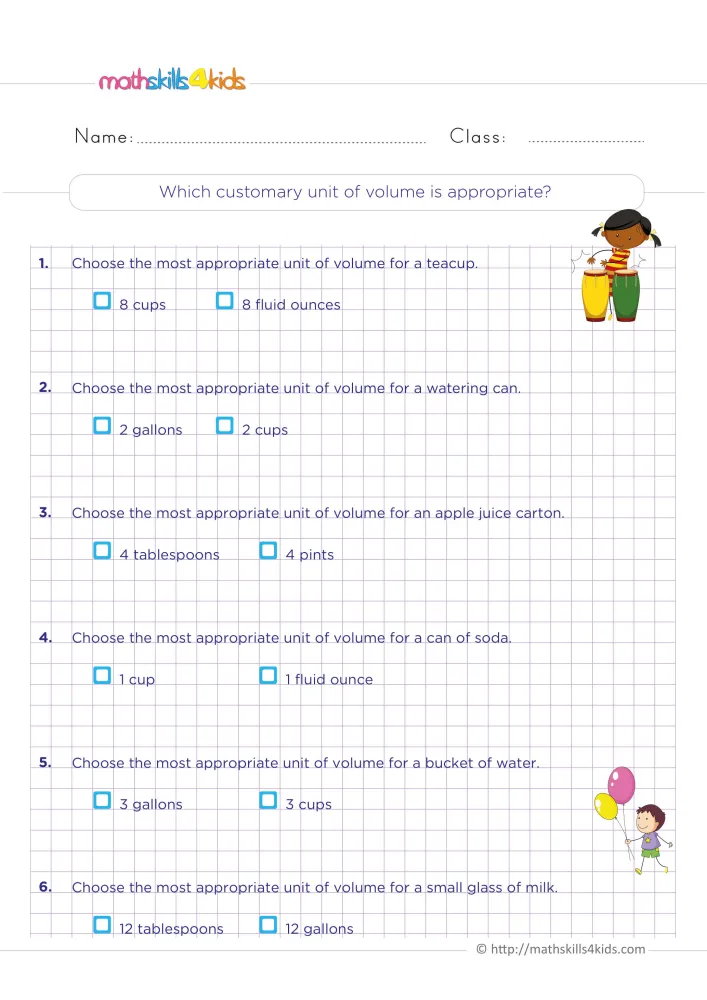
Download the worksheet: 3rd Grade Cups, Pints and Gallons Worksheet
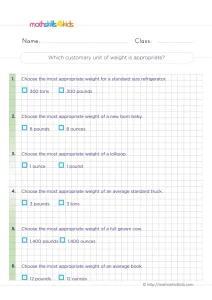 Worksheet3rd Grade Customary Units of Weight Worksheet: Ounces, Pounds, Tons
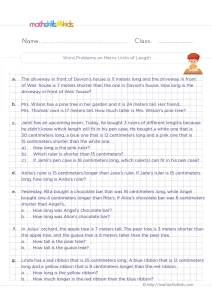 Worksheet2nd Grade Meters and Centimeters Word Problems Worksheet: Longer, Shorter, Taller
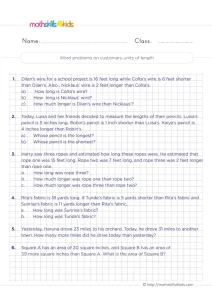 Worksheet2nd Grade Customary Units Word Problems Worksheet: Feet, Inches, Yards, Miles
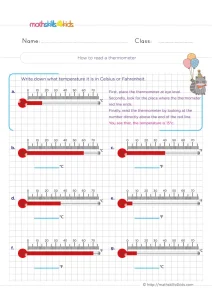 Worksheet2nd Grade Celsius and Fahrenheit Thermometer Worksheet: Read Where the Red Line Ends
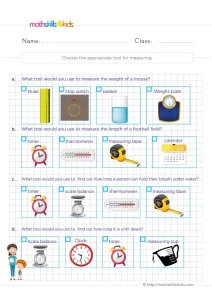 Worksheet2nd Grade Choose a Measuring Tool Worksheet: Weight, Length or Time?
A few related activities
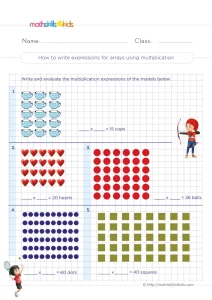 Five arrays of cups, hearts, balls, dots and squares. Your child writes the multiplication expression for each one…See the activity3rd Grade 1 Times Table Worksheet: 18 Column Facts and the Identity Rule
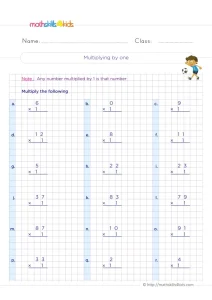 Eighteen column facts times 1, from 0 × 1 to 91 × 1. One rule solves them all:…See the activity3rd Grade Reading a Data Table Worksheet: 2 Tables
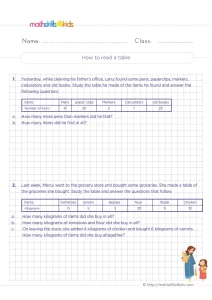 Two small tables, one of office items and one of groceries in kilograms. Your child finds the numbers,…See the activity
