2nd Grade Estimating Sums Worksheet: Round Each Number, Then Add
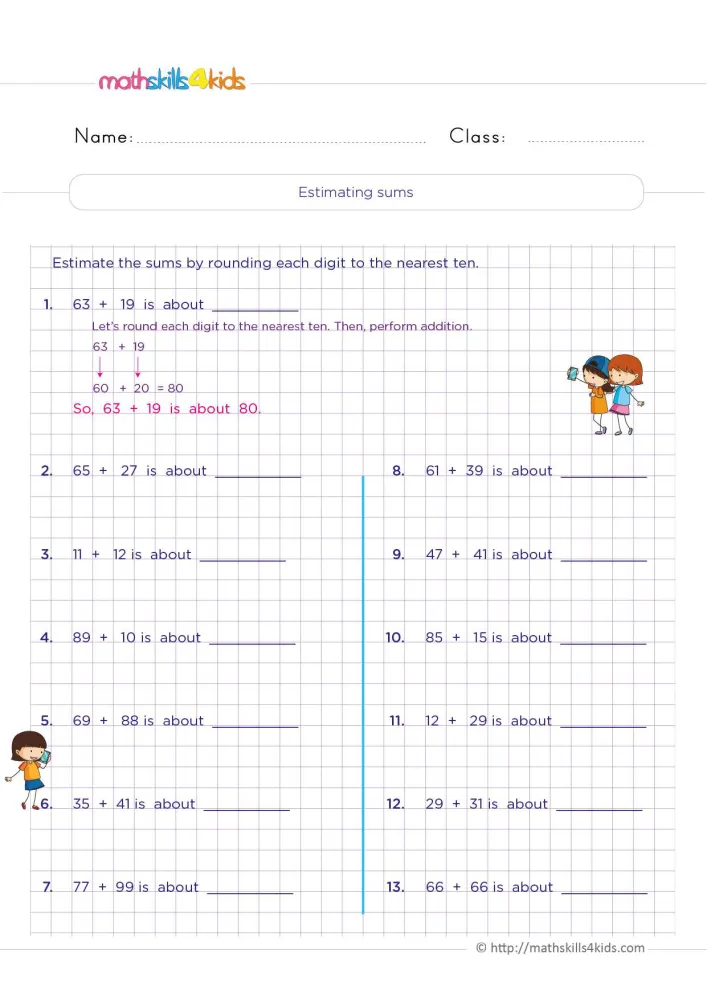
Give a seven-year-old 77 + 99 and ask for a quick answer. Most will reach for paper and start carrying. Yet a fast, close answer is just a few steps away. This 2nd grade estimating sums by rounding worksheet teaches those steps. A worked example opens the page: 63 + 19 becomes 60 + 20, which makes about 80. Twelve more sums follow in two columns, all with two-digit numbers, from 11 + 12 to 66 + 66. Your child rounds each number to the nearest ten, adds the tens, and writes the result on the line. Several sums include a 5 in the ones place, which tests the rule. A second page gives the answer key.
Why round first and add second
Adding tens is easy: 70 + 30 takes a second. So rounding turns a hard sum into an easy one, and the answer lands close to the real total. That is an estimated sum.
Estimation is a checking tool. When your child later adds 77 + 99 exactly, knowing the answer should be near 180 catches a wrong carry immediately.
The page practices one clear rule: round each number to the nearest ten. Look at the ones digit. If it is 5 or more, round up. If it is 4 or less, stay with the lower ten.
The numbers are chosen to test that rule. 65 + 27, 35 + 41 and 85 + 15 all include a number ending in 5. Getting those right shows your child really applies the rule rather than guessing.
At the table: the fives and 85 + 15
Start with 11 + 12. It rounds to 10 + 10 with no surprises.
Then try 65 + 27. Many children round 65 down to 60 because it feels closer to the start. Point to the ones digit and ask, "What does the rule say about a 5?"
Next comes 85 + 15, where both numbers end in 5. Some children round one up and the other down. Ask, "Did both numbers follow the same rule?"
Watch also for exact answers. A careful child may add 63 + 19 and write 82. That is correct arithmetic, but not an estimate. Tap the word about in the question.
Finally, try some mental math out loud. For example, your child says, "Seventy plus a hundred," before writing anything. Saying the tens keeps the numbers small.
Grocery totals and a book of guesses
Estimating sums is a shopping skill. At the store, pick two items, such as a box of cereal at $3.89 and milk at $2.15, and ask your child to round each to the nearest dollar before adding. Then compare with the receipt.
Scores work too. After a board game, round each player's points to the nearest ten and add them up together.
For a story, Great Estimations by Bruce Goldstone shows photos of jelly beans, toys and popcorn in groups of 10 and 100, then asks readers to estimate larger piles. While you browse, point to a page and make your guesses side by side.
Finally, check the page with the answer key and praise the rounding: "You looked at every ones digit." That habit makes estimating easy.
About this 2nd grade estimating sums by rounding worksheet and key
Download the worksheet: 2nd Grade Estimating Sums Worksheet: Round Each Number, Then Add
 Worksheet3rd Grade Addition and Subtraction Problems: 3 Stories
 Worksheet3rd Grade Addition Properties Worksheet: Commutative, Associative, Identity
 Worksheet3rd Grade Count Coins and Bills Worksheet: 8 Money Totals
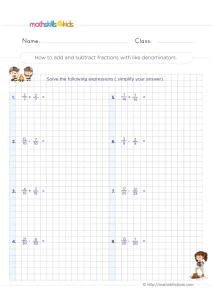 Worksheet3rd Grade Adding and Subtracting Like Fractions Worksheet: Eight Sums
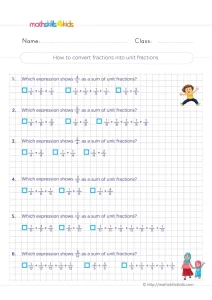 Worksheet3rd Grade Writing Fractions as Unit Fraction Sums Worksheet: Tick One
A few related activities
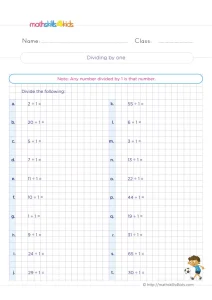 Twenty division facts by 1, from 1 ÷ 1 to 65 ÷ 1. One rule solves them all:…See the activity3rd Grade Multiplication Properties Worksheet: Zero, Identity, Commutative
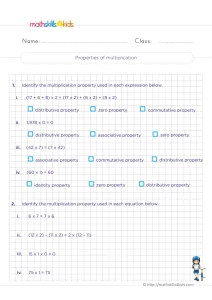 Tick the right property for four equations, from 1,978 x 0 = 0 to (60 x 1) =…See the activity3rd Grade 8 Times Table Worksheet: 12 Column Facts and a Doubling Trick
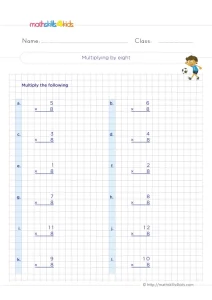 Twelve column facts times 8, from 1 × 8 to 12 × 8, in a mixed order. Double…See the activity
