2nd Grade Two-Digit Addition Without Regrouping Worksheet: 24 Column Sums
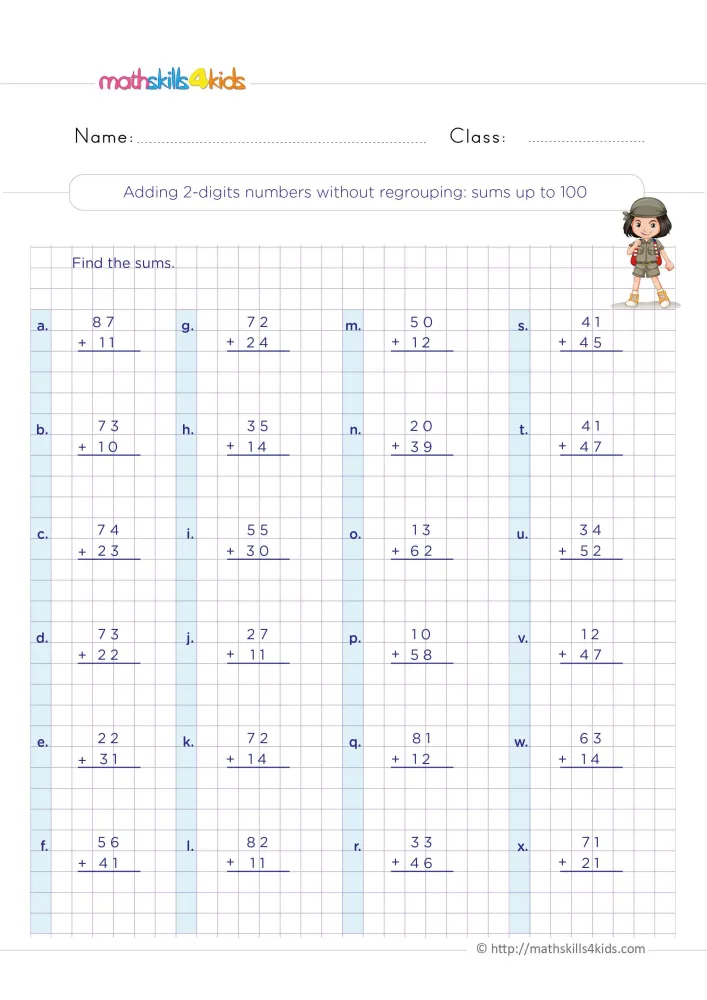
Watch a seven-year-old meet 87 + 11 for the first time and you may see eyes widen at the big numbers. Then something nice happens: they notice that 7 + 1 and 8 + 1 are easy. This 2nd grade two-digit addition without regrouping worksheet builds on that moment. Twenty-four vertical addition problems fill the page in four columns, labeled a to x. Every problem adds two two-digit numbers, and no column of ones ever passes nine, so the work stays clean. All are sums up to 100, from 38 to 98. A young explorer with a backpack watches from the corner. A second page gives the answer key.
Why columns keep tens and ones apart
Column addition works because each column holds one place value. The ones sit on the right, the tens on the left, and you add the ones first. When nothing carries over, each column is a simple fact your child already knows.
That is the point of this page. For example, 74 + 23 becomes 4 + 3 and 7 + 2, two small facts that build a big answer. So the work strengthens place value and basic facts at the same time.
Several problems include a zero, like 73 + 10 or 20 + 39. They show that adding a ten changes only the tens digit. Noticing that pattern is a small but genuine discovery. Zeros are clues.
At the table: lining up and starting right
Before the first sum, ask, "Which column do we start with?" Pointing to the ones column every time builds the habit.
The slip to watch for is mixing columns, for example adding the 7 in 87 to the tens digit of 11. If an answer looks odd, ask whether 87 plus a little bit can be less than 87. Your child can then check the columns.
The zero problems are another test. In 50 + 12, some children write 512 or forget the 2. Point to each column and say the place name aloud: ones, then tens. Also try covering the tens column with a finger while your child adds the ones. One column at a time.
Scorecards, prices and Hopscotch
Two-digit sums show up whenever you keep score. In a family board game, add each round to the total on paper, written in columns. At the store, add two prices like 23 cents and 45 cents for a snack.
Also, draw a Hopscotch grid with two-digit numbers in the squares, such as 12, 31 and 45. Your child hops on two squares, then adds them in chalk next to the grid.
Once you finish the page, check the sums with the answer key together. Then praise the care: "You started with the ones every single time. That kept every answer neat."
About this 2nd grade two-digit addition without regrouping worksheet
Download the worksheet: 2nd Grade Two-Digit Addition Without Regrouping Worksheet: 24 Column Sums
 Worksheet3rd Grade Addition and Subtraction Problems: 3 Stories
 Worksheet3rd Grade Divide by 3 Worksheet: Long Division Without Remainders
 Worksheet3rd Grade Divide by 2 Worksheet: Long Division with Even Numbers
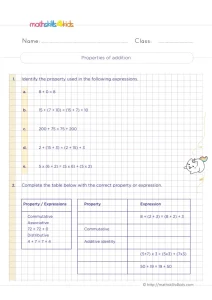 Worksheet3rd Grade Addition Properties Worksheet: Commutative, Associative, Identity
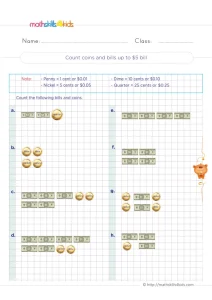 Worksheet3rd Grade Count Coins and Bills Worksheet: 8 Money Totals
A few related activities
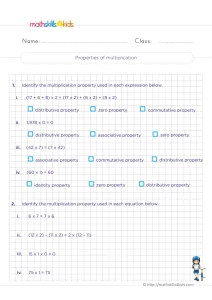 Tick the right property for four equations, from 1,978 x 0 = 0 to (60 x 1) =…See the activity3rd Grade 8 Times Table Worksheet: 12 Column Facts and a Doubling Trick
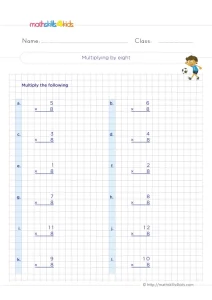 Twelve column facts times 8, from 1 × 8 to 12 × 8, in a mixed order. Double…See the activity3rd Grade Change and Total Cost Worksheet: Money Word Problems
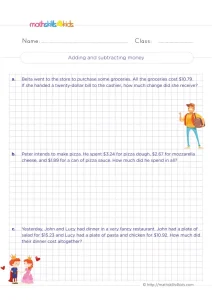 Three money word problems about groceries, a pizza and a dinner out. Children find the change from a…See the activity
