2nd Grade Subtraction With Borrowing Worksheet: 15 Column Problems
Give a seven-year-old 37 - 9 in a column and you will often see them write 32. They look at the ones, see 7 and 9, and subtract the smaller from the bigger without a second thought. This 2nd grade subtraction with borrowing worksheet is built to catch that habit early. Fifteen problems of vertical subtraction, labeled a to o, each take a one-digit number from a two-digit number. In every one, the top ones digit is too small, so your child has to trade a ten for ten ones before subtracting. Problems such as 30 - 8 and 70 - 6 start with zero ones. Three friends wave from the corner. A second page gives the answer key.
Why borrowing is really trading
The word borrowing suggests something you give back, which confuses children. Many teachers prefer regrouping: one ten breaks into ten ones, and the total stays the same.
Take 61 - 5. There is only one loose one, so you trade one of the six tens. Now there are 5 tens and 11 ones, so 11 - 5 is easy. However, the number is still 61, simply written in a more useful way.
The page practices this one move fifteen times, which is how it becomes automatic. The zero problems, like 90 - 9, are the strongest test, because your child must regroup before there is anything to take from. Understanding beats memorizing.
At the table: the 7 and 9 trap
Start with problem a. Point to the ones column and ask, "Can we take 9 from 7?"
If the answer comes out 32, do not correct it right away. Instead, ask whether 37 take away 9 should be more or less than 30. A quick estimate shows something went wrong.
The zero problems need a slower pace. For 10 - 7, some children write 17. Hold up ten fingers, fold down seven, and count what you have. Also, have your child cross out the tens digit and write the new one above it, so every trade leaves a mark. Finally, check by adding on two problems: 28 + 9 should give 37 again.
Dimes, pennies and Chutes and Ladders
Trading a ten is easy to show with money. Put three dimes and seven pennies on the table and ask your child to pay nine cents. As a result, they will need to swap a dime for ten pennies, which is regrouping in your hand.
Also, Chutes and Ladders gives natural practice. When a token slides from 47 down to 38, ask your child to figure out how many squares it dropped.
Once you finish the page, check the fifteen answers with the key. Then praise the method: "You traded a ten every time. That is how big numbers work."
About this 2nd grade subtraction with borrowing worksheet and its key
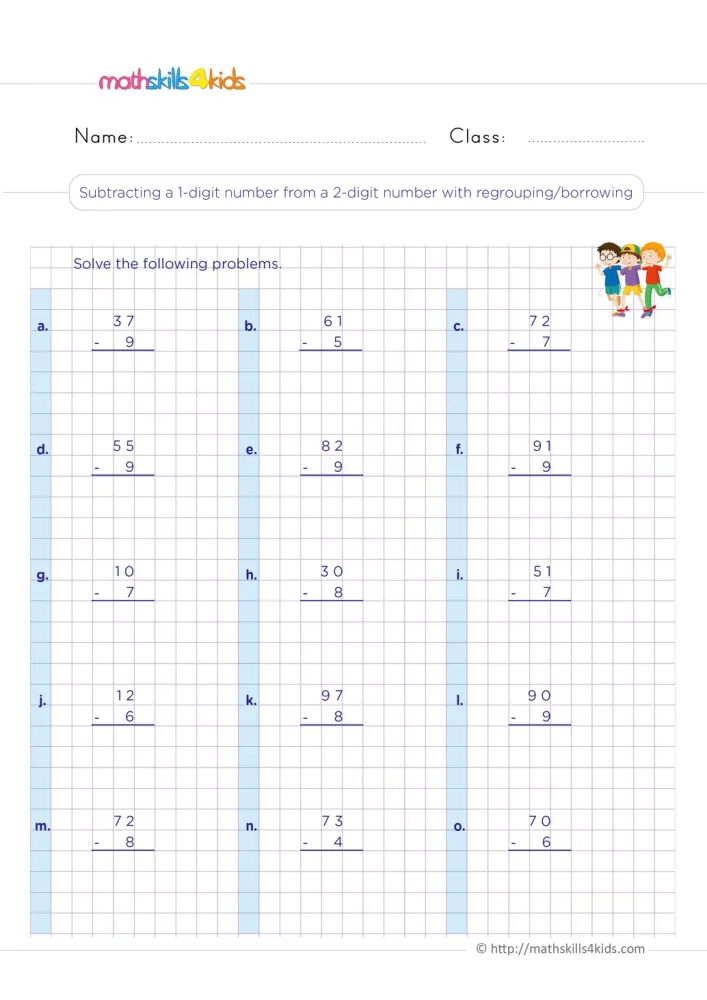
Download the worksheet: 2nd Grade Subtraction With Borrowing Worksheet: 15 Column Problems
 Worksheet3rd Grade Addition and Subtraction Problems: 3 Stories
 Worksheet3rd Grade Divide by 3 Worksheet: Long Division Without Remainders
 Worksheet3rd Grade Divide by 2 Worksheet: Long Division with Even Numbers
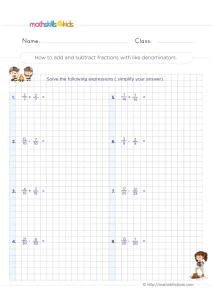 Worksheet3rd Grade Adding and Subtracting Like Fractions Worksheet: Eight Sums
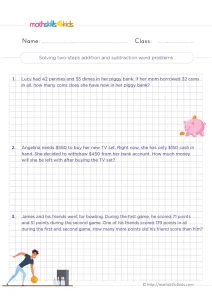 Worksheet3rd Grade Two-Step Add and Subtract Word Problems Worksheet: 3 Stories
A few related activities
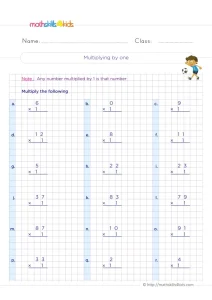 Eighteen column facts times 1, from 0 × 1 to 91 × 1. One rule solves them all:…See the activity3rd Grade Reading a Data Table Worksheet: 2 Tables
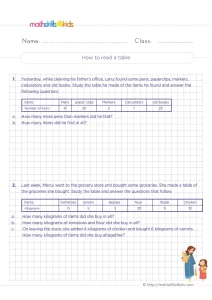 Two small tables, one of office items and one of groceries in kilograms. Your child finds the numbers,…See the activity3rd Grade Expressions for Arrays Worksheet: Write Each Product
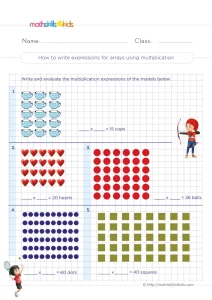 Five arrays of cups, hearts, balls, dots and squares. Your child writes the multiplication expression for each one…See the activity
