2nd Grade Base Ten Blocks Addition Worksheet: Add 3-Digit Numbers with Models
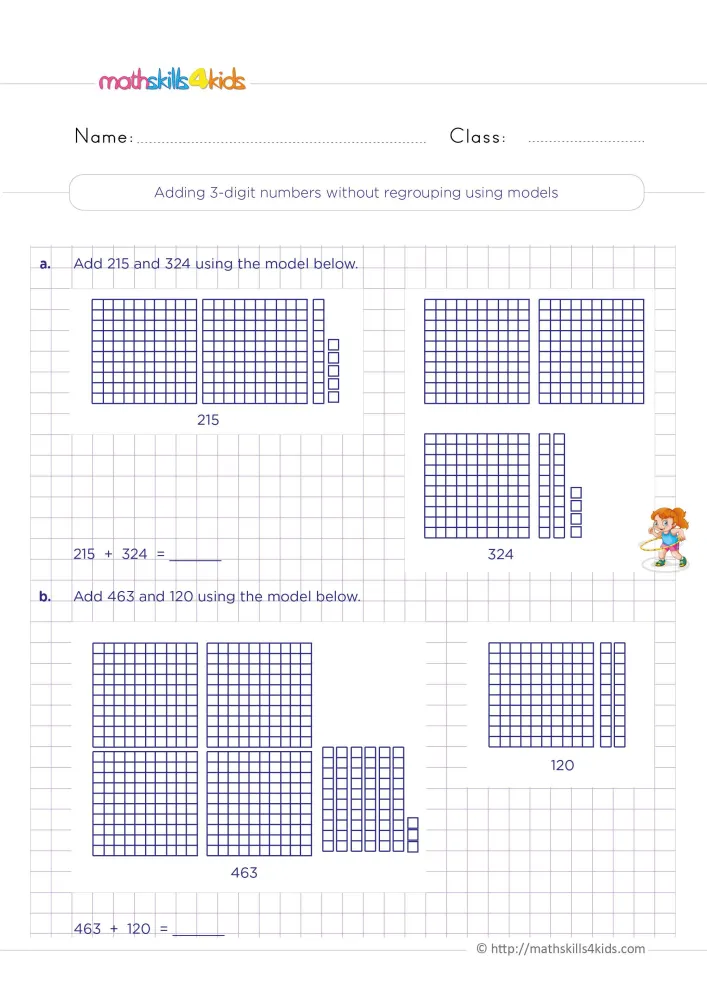
Put a flat of a hundred squares next to a single cube and ask a seven-year-old which one is worth more. The answer is obvious to the eye, and that is exactly the point. This 2nd grade base ten blocks addition worksheet lets the drawing carry the meaning of each digit. There are only two problems, 215 + 324 and 463 + 120, but each number is drawn in full: big square flats for hundreds, tall rods for tens, small cubes for ones. A girl with a hula hoop keeps an eye on the second problem. Your child counts the pieces place by place, then writes the sum on the line. A second page gives the answer key.
Why drawing the blocks beats rushing the digits
A 3 in 324 means three hundreds, yet on paper it looks just like the 3 in 463, where it means three ones. Base ten blocks remove that doubt, because a hundred is a big square and a one is a tiny cube.
This page uses 3-digit numbers that add without regrouping, which keeps the focus on place value. For example, 215 + 324 gives 5 hundreds, 3 tens and 9 ones, and no column goes past nine. So your child can focus on one idea only: like pieces join like pieces.
The answer key then lays the total in a small hundreds, tens and ones chart. That chart is the bridge from the drawing to written column addition later on.
At the table: counting rods and cubes in 463
The first problem is gentle. Ask your child to touch each flat in 215 and 324 and say, "One hundred, two hundred..." before moving to the rods.
The second problem is where counting slips. The number 463 has six thin rods packed close together, and a child may count five or seven. Instead of naming the right number, say, "Let's tap each rod once with your pencil."
Also watch the 120 drawing. It has a flat and two rods but no cubes at all. Some children still write a digit in the ones place, so ask, "How many small cubes do you see here?"
Finally, check that the sum matches the pieces. Count them again together.
After the page: build it with real things
You do not need a box of base ten blocks to keep going. Bundle drinking straws in tens with a rubber band, and line up ten bundles to make a hundred. Then build 215 on the table and add a second number beside it.
A board game helps too. Chutes and Ladders has a board of one hundred squares, so it shows the size of a hundred at a glance. While you play, ask how many full rows of ten your marker has passed.
When the page is finished, point at the hundreds, tens and ones chart in the answer key and praise the method: "You counted every rod. That is careful work."
About this 2nd grade base ten blocks addition worksheet and its key
Download the worksheet: 2nd Grade Base Ten Blocks Addition Worksheet: Add 3-Digit Numbers with Models
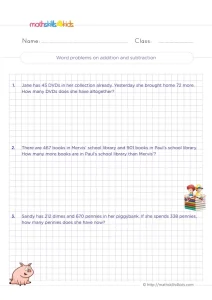 Worksheet3rd Grade Addition and Subtraction Problems: 3 Stories
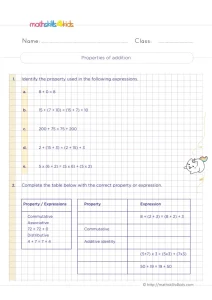 Worksheet3rd Grade Addition Properties Worksheet: Commutative, Associative, Identity
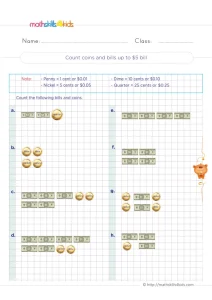 Worksheet3rd Grade Count Coins and Bills Worksheet: 8 Money Totals
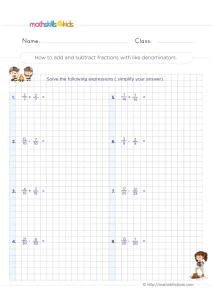 Worksheet3rd Grade Adding and Subtracting Like Fractions Worksheet: Eight Sums
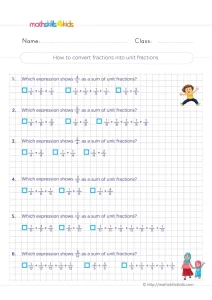 Worksheet3rd Grade Writing Fractions as Unit Fraction Sums Worksheet: Tick One
A few related activities
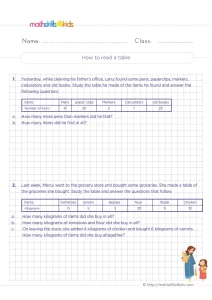 Two small tables, one of office items and one of groceries in kilograms. Your child finds the numbers,…See the activity3rd Grade 1 Times Table Worksheet: 18 Column Facts and the Identity Rule
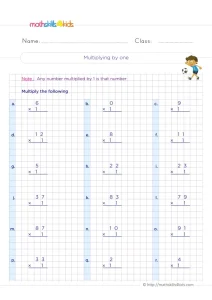 Eighteen column facts times 1, from 0 × 1 to 91 × 1. One rule solves them all:…See the activity3rd Grade Expressions for Arrays Worksheet: Write Each Product
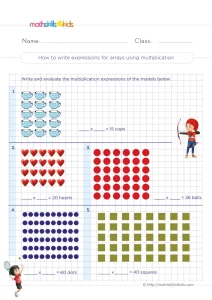 Five arrays of cups, hearts, balls, dots and squares. Your child writes the multiplication expression for each one…See the activity
