2nd Grade Mixed 10s and 100s Sums Worksheet: Multiples of 10 or 100
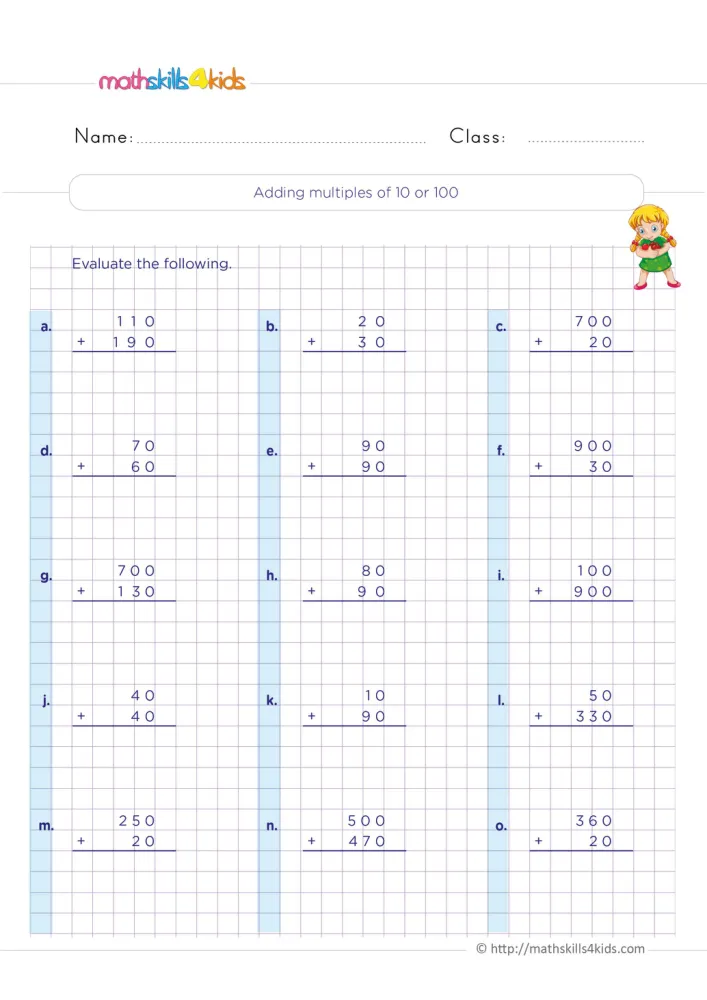
Write 700 + 20 for a seven-year-old and the most common answer is 900. The 2 slid under the 7, and the tens became hundreds without anyone noticing. This 2nd grade mixed 10s and 100s sums worksheet is made to catch that slip early. Fifteen sums sit in three columns on grid paper, and the numbers keep changing size: 20 + 30 sits right next to 700 + 20, while 500 + 470 waits near the bottom. A girl holding a bunch of cherries watches from the corner. Every number is one of the multiples of 10 or of 100, set out as column addition. A second page gives the answer key.
Why the size of each number matters here
When both numbers are the same size, like 40 + 40, adding feels easy. The real learning on this page comes when sizes differ, as in 900 + 30 or 360 + 20. At that point a child has to ask which place each digit lives in before adding anything at all.
That question is place value, and it is therefore the main idea of second grade arithmetic. As a result, tens join tens, hundreds join hundreds, and nothing jumps between them by accident.
The page also trains mental math. Since every number ends in zero, 80 + 90 can be read as 8 tens plus 9 tens, which makes 17 tens. Seeing 170 that way is a quiet win.
At the table: item c and its neighbors
Item c, 700 + 20, is where the slip usually happens. If your child writes 900, do not correct it. Point to the 2 and ask, "Is this two hundreds or two tens?"
Let them touch each column on the grid, right to left, and name it: ones, tens, hundreds. Then read the sum again, slowly, so that most children can fix it on their own.
Item f, 900 + 30, and item m, 250 + 20, carry the same trap. However, item g, 700 + 130, asks for both places at once, so it deserves a slower look.
Finally, for the pairs of tens, like 80 + 90, a child may stall. Try, "Eight tens and nine tens. How many tens?" Short questions keep the focus on the idea.
After the page: tens and hundreds out loud
Money works well for this. Lay out a few ten-dollar and hundred-dollar bills from a play set, then ask your child to add two piles while touching each bill as they count.
For a game, draw a Hopscotch grid in chalk and write 10, 20, 50, 100 or 200 in the squares. Then the child adds the numbers they land on and says the running total out loud at each hop.
Also, when you read prices at the store, round them to a ten and add two together. Once you finish the answer key, praise the checking itself: "You looked at every column before adding." That habit counts more than speed.
About this 2nd grade mixed 10s and 100s sums worksheet and its key
Download the worksheet: 2nd Grade Mixed 10s and 100s Sums Worksheet: Multiples of 10 or 100
 Worksheet3rd Grade Addition and Subtraction Problems: 3 Stories
 Worksheet3rd Grade Divide by 1 Worksheet: 20 Facts and the Rule of One
 Worksheet3rd Grade 1 Times Table Worksheet: 18 Column Facts and the Identity Rule
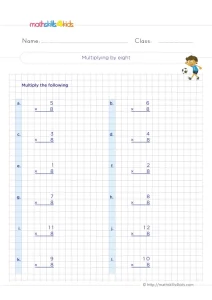 Worksheet3rd Grade 8 Times Table Worksheet: 12 Column Facts and a Doubling Trick
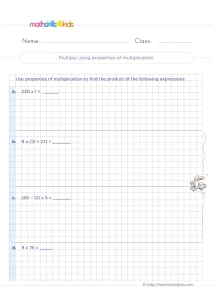 Worksheet3rd Grade Multiplication Worksheet: Find Products Using Properties
A few related activities
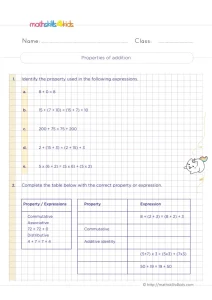 Five number sentences to name, from 8 + 0 = 8 to 5 x (6 + 2). Then…See the activity3rd Grade Multiplication Properties Worksheet: Zero, Identity, Commutative
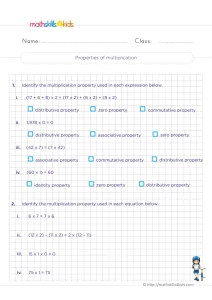 Tick the right property for four equations, from 1,978 x 0 = 0 to (60 x 1) =…See the activity3rd Grade Count Coins and Bills Worksheet: 8 Money Totals
 Eight sets of $1 and $5 bills with pennies, nickels, dimes and quarters. Children find each total in…See the activity
