Magnets: Pull, Push and What They Attract
A note held on the fridge, a cabinet door that clicks shut, a machine that sorts cans: magnets are everywhere. Let’s find out how distance and the way a magnet faces change its force, how magnets can solve a problem, and which materials a magnet attracts.
This lesson takes about 10 minutes. You can take a break after each part.
Before you start
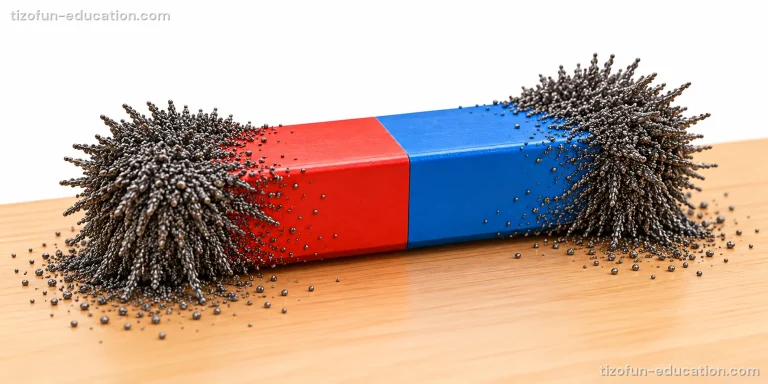
Learning objectives
- I can explain how distance and the way magnets face change their pull or push.
- I can use magnets to solve a simple problem, like keeping a door closed.
- I can tell which materials a magnet attracts, and say that it does not attract all metals.
Pull or push?
Two poles, two forces
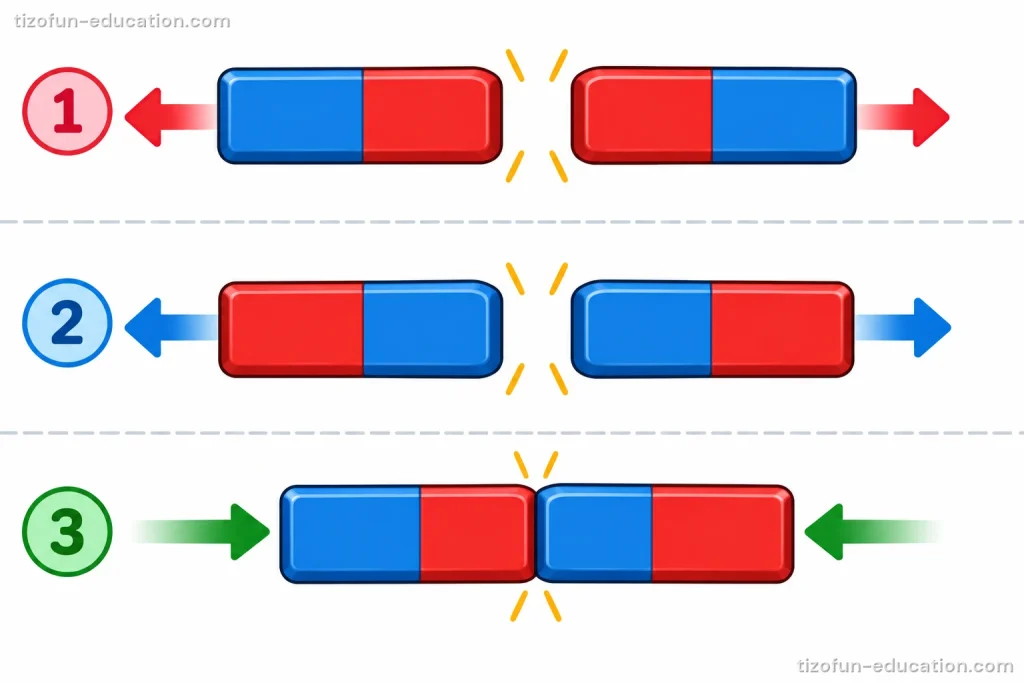
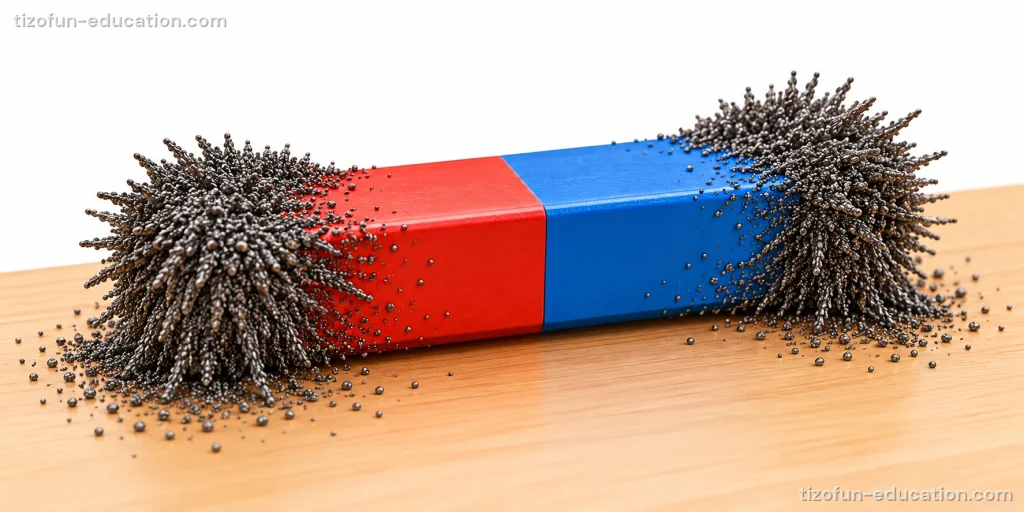
Every magnet has two ends called poles: a north pole and a south pole.
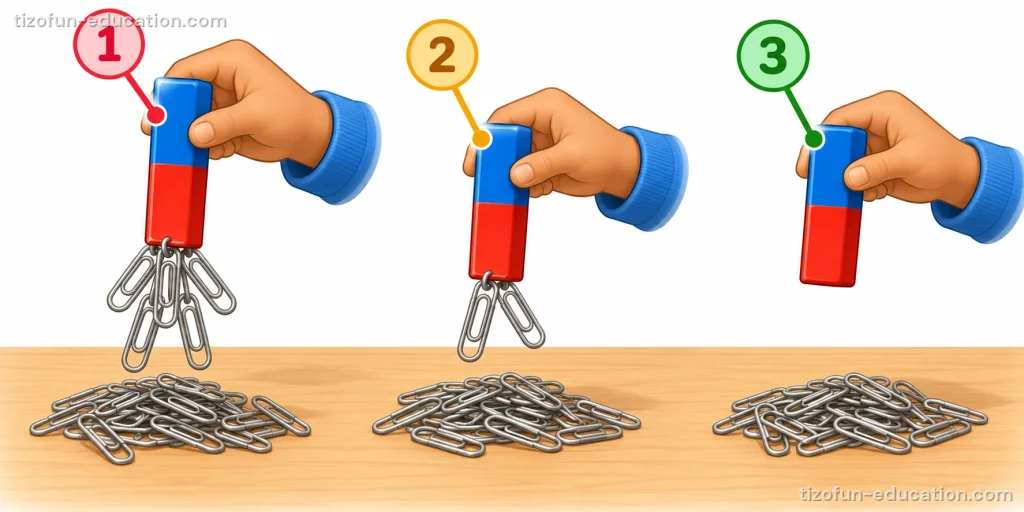
Different poles attract (pull together). The same poles repel (push apart). A magnet acts without touching, and its force gets stronger when it gets closer.
Loading the questions…
Solving problems with magnets
Magnets at work
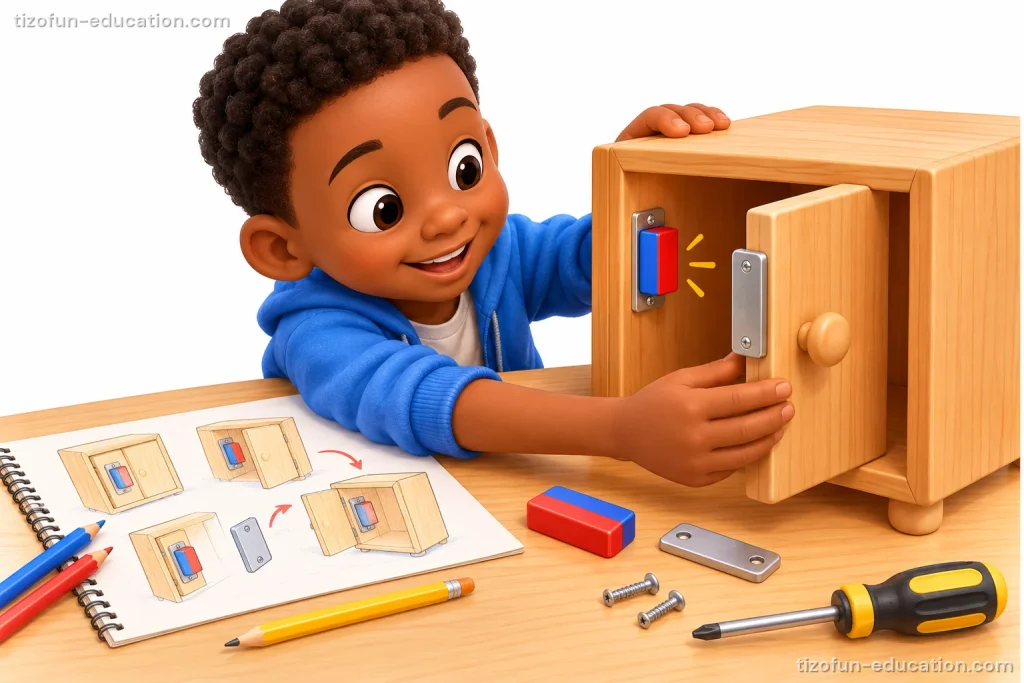
Engineers use magnets to solve problems. A magnetic latch keeps a cabinet door closed. A big magnet sorts steel cans from aluminum cans at a recycling center.
To find the best design, we test each solution the same way and compare the results.
Loading the questions…
What does a magnet attract?
Not all metals
A magnet attracts objects made of iron or steel: a nail, a paper clip, a steel can. It does not attract wood, plastic, glass or paper.
Careful: a magnet does not attract all metals. An aluminum can, a copper coin or a gold ring does not stick to a magnet.
Loading the questions…
Review game
Final assessment
To master the lesson, you need at least 60% correct answers.
Loading the assessment…
Summary
- Every magnet has a north pole and a south pole.
- Different poles attract; the same poles repel. A magnet acts without touching, more strongly when it is closer.
- Magnets can solve problems, like a door latch or a can sorter; a fair test compares two designs.
- A magnet attracts iron and steel, but not all metals.
A few related activities
 GameMagnets: Pull, Push and What They Attract — Review gameReview game for the lesson “Magnets: Pull, Push and What They Attract”: 8 questions drawn at random every…See the activity
 LessonForces and Motion: Balance, Patterns and GravityA tug-of-war rope that does not move, a swing that goes back and forth, an apple that falls…See the activity
 LessonAnimal Life Cycles and Living in GroupsA caterpillar that becomes a butterfly, a tadpole that becomes a frog, geese that fly in a V:…See the activity
