Animal Life Cycles and Living in Groups
A caterpillar that becomes a butterfly, a tadpole that becomes a frog, geese that fly in a V: animals change as they grow, and many of them live together. Let’s find out what every life cycle has in common, how some animals change shape completely, and how living in a group helps animals survive.
This lesson takes about 10 minutes. You can take a break after each part.
Before you start
Learning objectives
- I can say the steps that every animal life cycle shares: birth, growth, having young and death.
- I can put the stages of a butterfly’s life cycle in order and compare it with a grasshopper’s.
- I can explain how living in a group helps some animals survive.
Every animal has a life cycle
Born, grow, have young, die
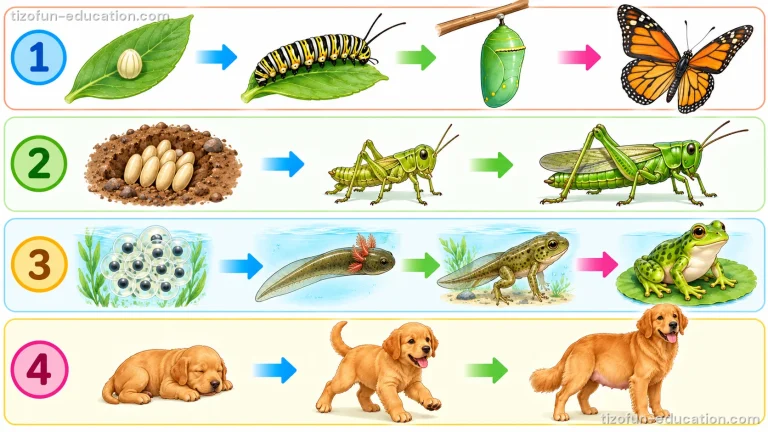
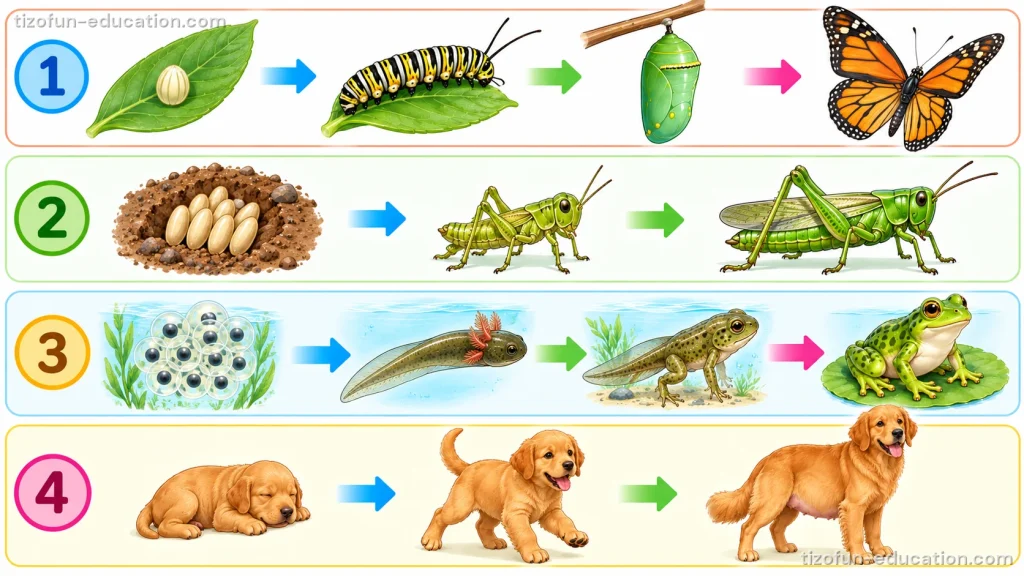
Every animal has a life cycle: it is born, grows, can have young and dies.
But life cycles are not all the same: a puppy looks like a small dog, but a tadpole looks nothing like a frog!
Loading the questions…
Big changes: from caterpillar to butterfly
Changing shape, or just growing
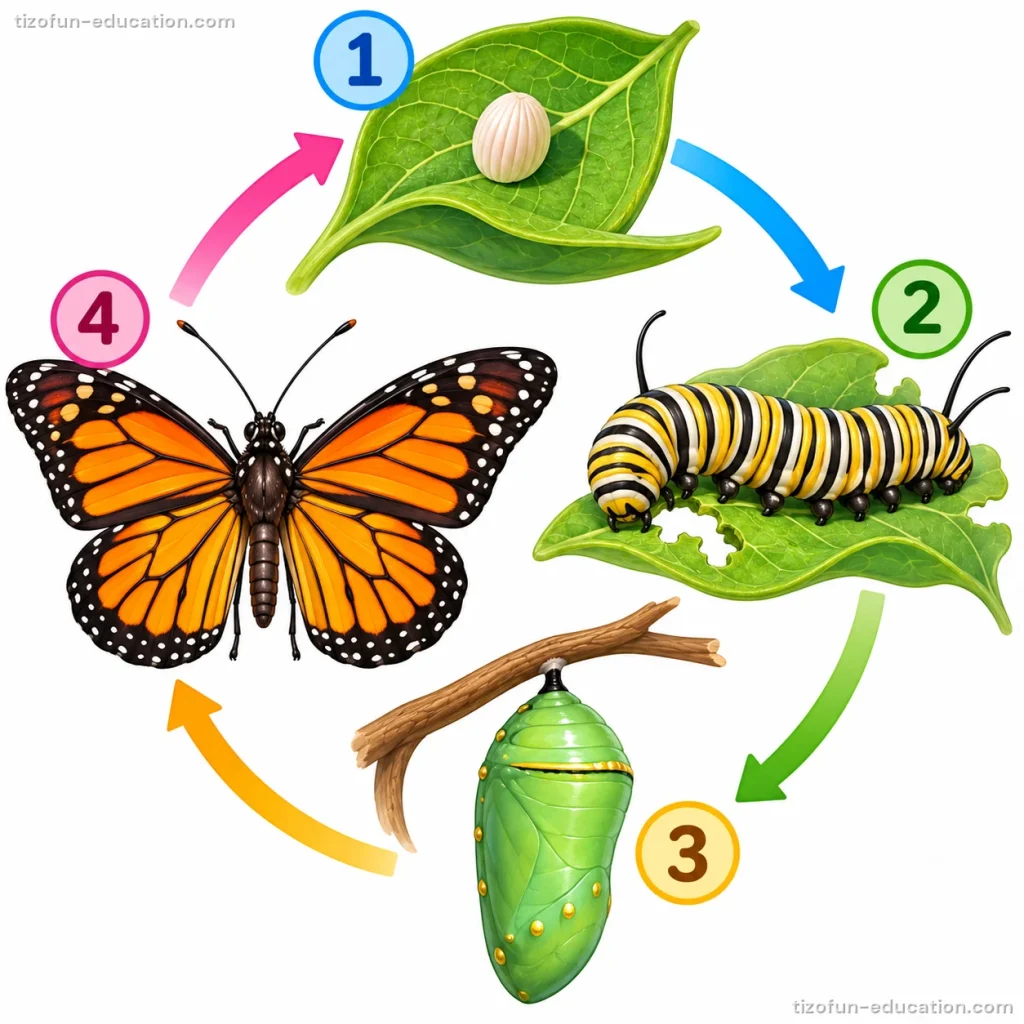
Some animals change shape completely. A monarch butterfly goes from egg to caterpillar, then chrysalis, then butterfly. This big change is called metamorphosis.
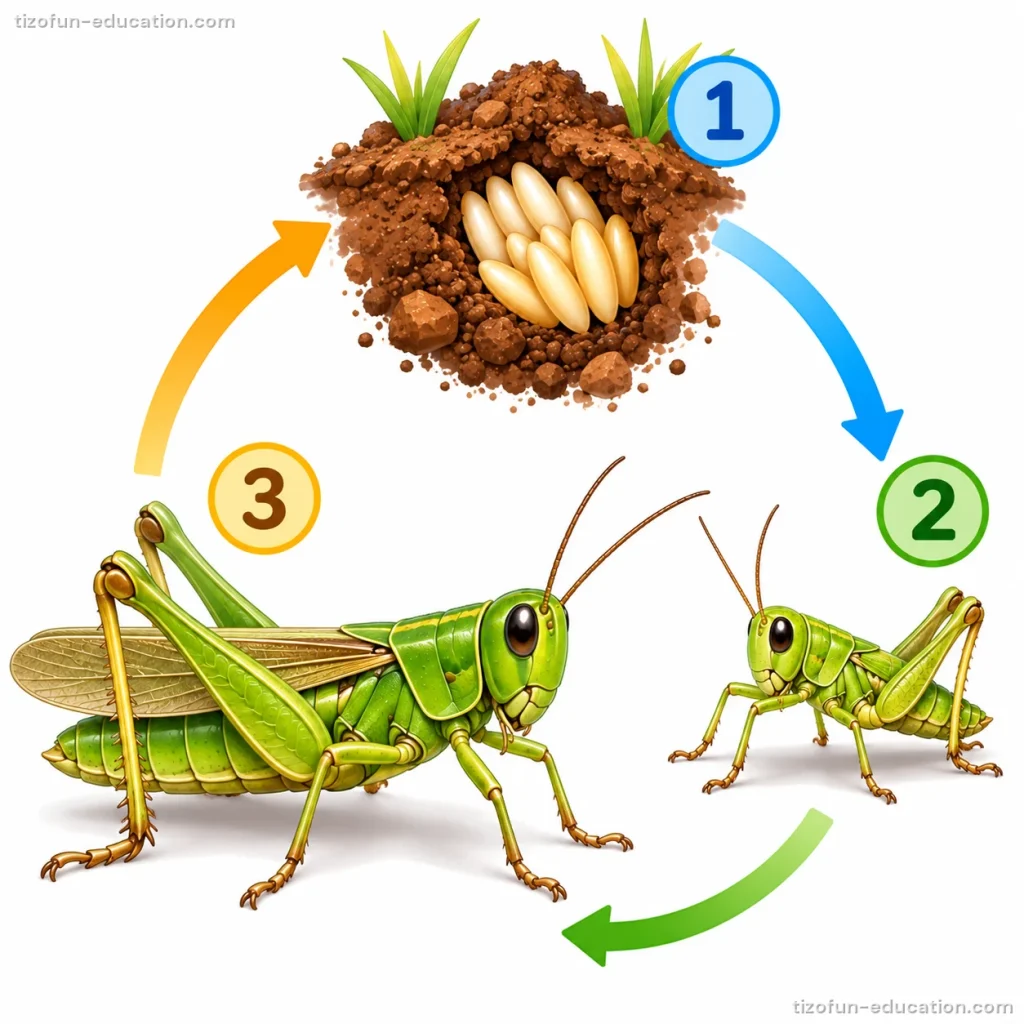
Other insects do not. A young grasshopper already looks like its parents: it grows bigger, and its wings grow too.
Loading the questions…
Living in groups
Together, they survive better
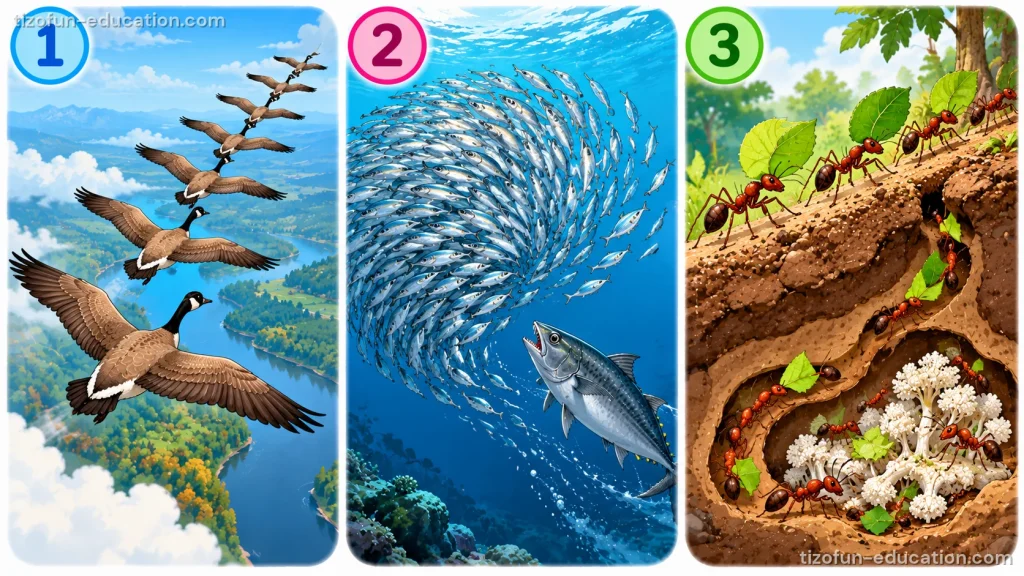
Many animals live in groups.
Small fish swim in a school to escape hunters. Geese fly in a V and take turns in front. Ants share the jobs of the colony.
Loading the questions…
Review game
Final assessment
To master the lesson, you need at least 60% correct answers.
Loading the assessment…
Summary
- Every animal has a life cycle: it is born, grows, can have young and dies.
- Life cycles are different: a butterfly changes completely (egg, caterpillar, chrysalis, butterfly), a grasshopper or a puppy simply grows.
- Many animals live in groups: schools of fish, geese in a V, ant colonies.
- A group helps its members survive: finding food, staying safe and sharing the work.
A few related activities
 GameAnimal Life Cycles and Living in Groups — Review gameReview game for the lesson “Animal Life Cycles and Living in Groups”: 8 questions drawn at random every…See the activity
 LessonInherited Traits and the EnvironmentWhy does a puppy look like its parents, but not exactly? Why is a flamingo pink? Some traits…See the activity
 LessonWeather and ClimateSunny, rainy, windy… How do scientists measure the weather? And how do they know what weather to expect…See the activity
