Mountains, Rivers and a Changing Earth
Look out of the window: do you see hills, a river, maybe mountains far away? The land has many shapes, and it changes. Some changes are fast, some are very slow. Let’s name the shapes of land and water, find them on a map, and see how people protect the land.
This lesson takes about 12 minutes. You can take a break after each part.
Before you start
Learning objectives
- I can name shapes of land and water: mountain, hill, valley, plain, river, lake, ocean.
- I can tell fast changes of the land (earthquake, eruption, landslide) from slow ones (erosion).
- I can compare solutions that slow down erosion by water or wind.
Shapes of land and water
Shapes of the land
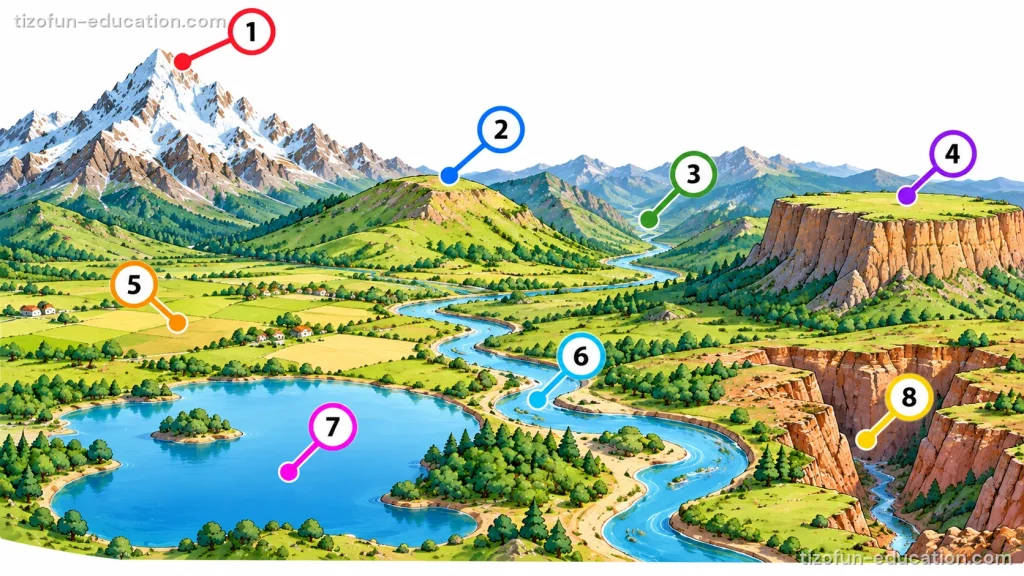
The land has different shapes called landforms. A mountain is very high land. A hill is lower and rounder. A valley is low land between hills or mountains. A plain is wide, flat land.
Water on Earth
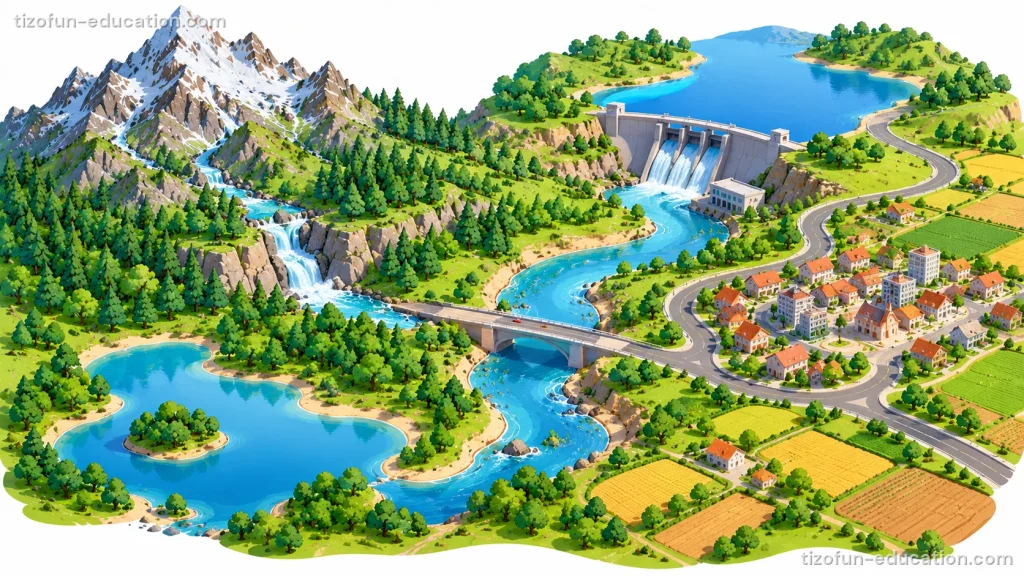
A river is water that flows across the land. A lake is water with land all around it. The ocean is a huge body of salty water. A map shows a place seen from above: water is often blue.
Loading the questions…
Fast changes and slow changes
Fast changes
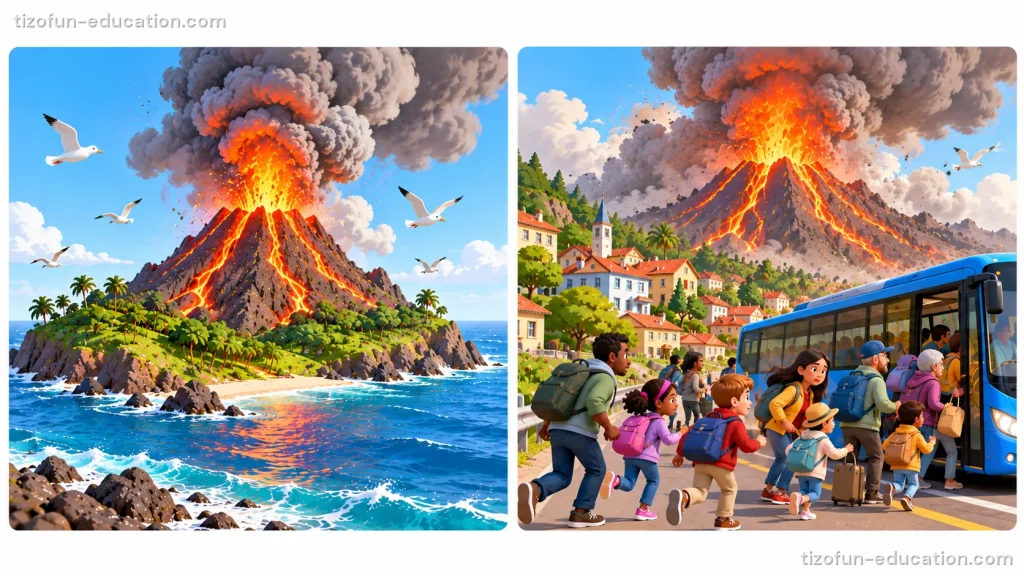
Some changes happen fast, in minutes or hours. In an earthquake, the ground shakes. A volcano can erupt: hot lava flows out, then cools and becomes new rock. In a landslide, rocks and soil slide down a hill.
Slow changes
Other changes are slow: they take many, many years. Water and wind carry away tiny bits of rock and soil, little by little. This is erosion. A river can dig a deep canyon this way.
Loading the questions…
Slowing down erosion
Holding the soil
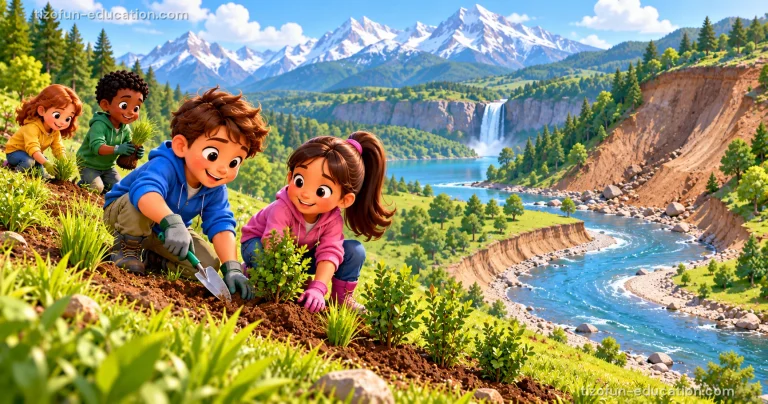
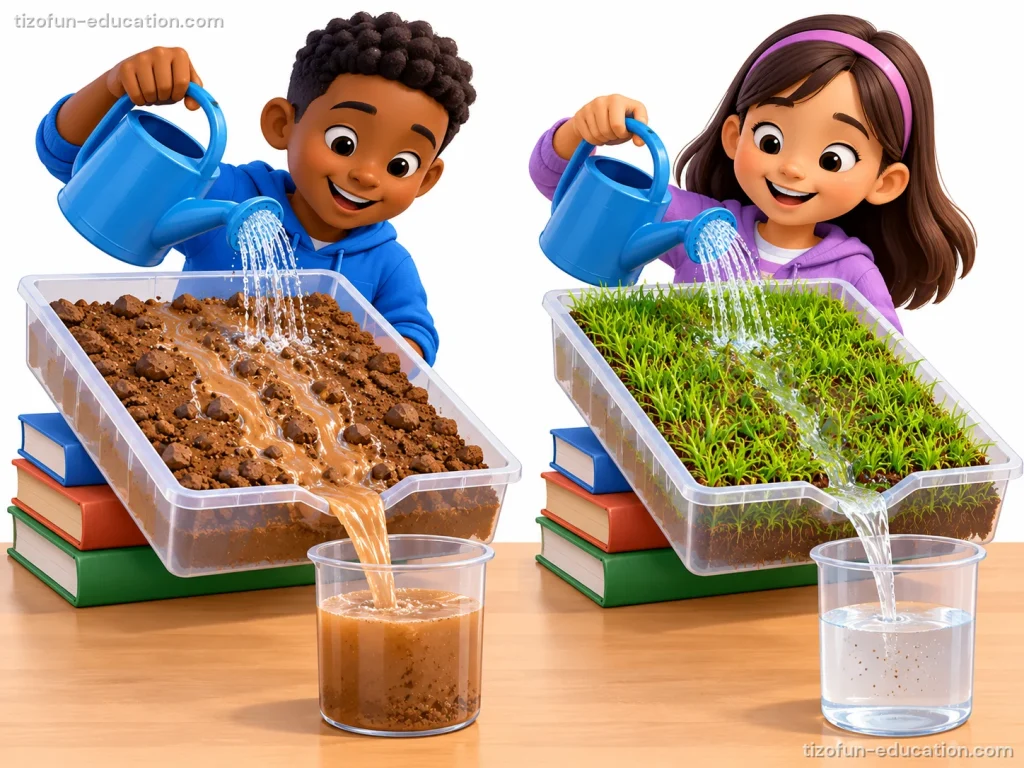
People can slow down erosion. The roots of grass and trees hold the soil, so the rain carries away less of it. Big rocks or walls along a river protect its banks.
Stopping the wind
A row of trees or a fence along a field slows the wind, so it blows away less soil and sand. To choose a solution, we compare: which one keeps the most soil in place?
Loading the questions…
Review game
Final assessment
To master the lesson, you need at least 60% correct answers.
Loading the assessment…
Summary
- Landforms are shapes of the land: mountain, hill, valley, plain. Rivers, lakes and the ocean are water.
- A map shows a place seen from above; water is often blue.
- Earthquakes, eruptions and landslides change the land fast; erosion by water and wind changes it slowly.
- Plants, walls and rows of trees slow down erosion; we compare solutions to choose the best one.
A few related activities
 GameMountains, Rivers and a Changing Earth — Review gameReview game for the lesson “Mountains, Rivers and a Changing Earth”: 8 questions drawn at random every round.…See the activity
 LessonSolids, Liquids, Heating, and CoolingA spoon keeps its shape. Milk flows. What happens to things when they get warm or cold? Let's…See the activity
 LessonThink Like an Engineer: Solve a ProblemA cup that falls, pencils that roll away, a bridge that breaks: every day, people meet small problems.…See the activity
