1st Grade Teen Number Addition Worksheet: Add the Ones, Keep the Ten
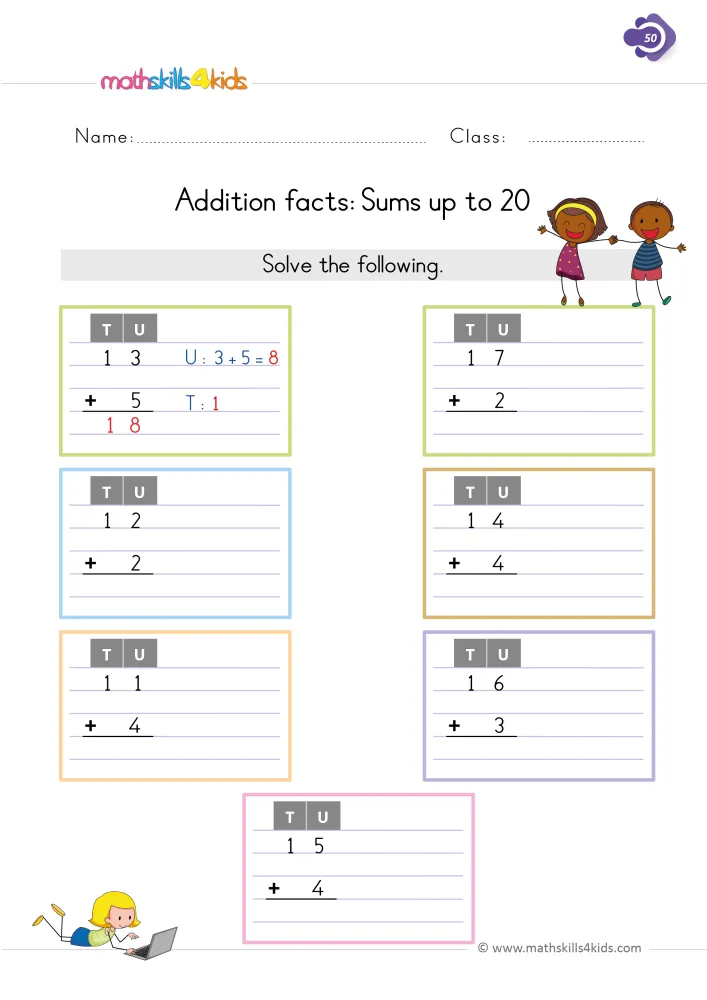
Show a six-year-old 12 + 2, and some will count on from twelve while others freeze at the two-digit number. Both reactions make sense, because teen numbers are new territory. This 1st grade teen number addition worksheet offers a calmer path. Seven vertical sums sit in colored boxes, each with a small header for tens and ones above the digits. The first box is a worked example, 13 + 5, with a note in the margin: add the ones, 3 + 5, then bring down the ten. The six sums after it follow the same pattern, from 11 + 4 to 17 + 2. No sum needs regrouping, and every total stays within the sums to 20. A second page gives the answer key.
Why the ten stays put
A teen number is one ten and some ones: 14 is a ten and four ones. Once your child sees that, adding a small number becomes easy. Only the ones change, while the ten waits in its column.
This is place value at work, and the page makes it visible. Each box has a header for tens and ones, so the digits line up under the right column. In the worked example, the note beside the sum splits the job in two. First the ones column, 3 + 5 = 8. Then the tens, which stay at 1.
So the facts your child already knows to 10 now help with teen numbers. For example, 4 + 4 helps with 14 + 4. That link matters.
At the table: which column does it go in?
Start with the worked example. Cover the margin note and ask your child to explain, in their own words, how 13 + 5 was solved.
The likely slip comes in a box like 12 + 2. A child who adds every digit they see may add the 2 to the ten as well, and write a number in the thirties. Instead of correcting, point to the small header and ask, "Which column does the 2 live in?"
That question is often enough. Then let your child tap the ones digits first and say the small fact out loud before writing anything.
Also, notice that the bottom number sits under the ones only. Running a finger straight down the column helps a lot. Slow is fine.
A ten in the egg box, ones on the side
Teen numbers come alive with things you can bundle. Fill an empty egg box with ten small toys, put three more beside it, and ask how many there are. Next, add two more loose ones and let your child find the new total without recounting the box.
Also, bundles of ten straws held by a rubber band work the same way. While you build numbers like 15 or 17, ask which part changes when you add.
For a story, Chicka Chicka 1, 2, 3 by Bill Martin Jr. sends numbers racing up an apple tree, well past ten. Read it slowly and pause on the teens. Once you finish the page, name the effort: "You kept the ten in its own column."
About this 1st grade teen number addition worksheet and its answer key
Download the worksheet: 1st Grade Teen Number Addition Worksheet: Add the Ones, Keep the Ten
 Worksheet3rd Grade Addition and Subtraction Problems: 3 Stories
 Worksheet3rd Grade Addition Properties Worksheet: Commutative, Associative, Identity
 Worksheet3rd Grade Count Coins and Bills Worksheet: 8 Money Totals
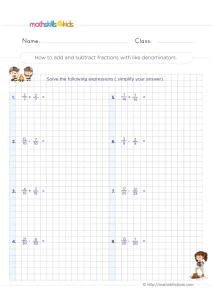 Worksheet3rd Grade Adding and Subtracting Like Fractions Worksheet: Eight Sums
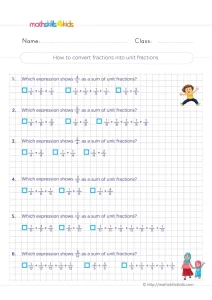 Worksheet3rd Grade Writing Fractions as Unit Fraction Sums Worksheet: Tick One
A few related activities
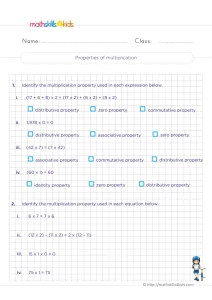 Tick the right property for four equations, from 1,978 x 0 = 0 to (60 x 1) =…See the activity3rd Grade 8 Times Table Worksheet: 12 Column Facts and a Doubling Trick
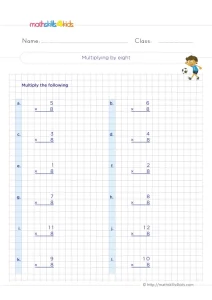 Twelve column facts times 8, from 1 × 8 to 12 × 8, in a mixed order. Double…See the activity3rd Grade Change and Total Cost Worksheet: Money Word Problems
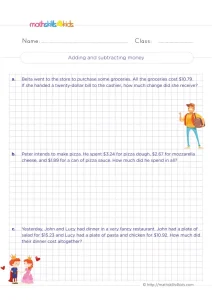 Three money word problems about groceries, a pizza and a dinner out. Children find the change from a…See the activity
