2nd Grade Count the Groups Worksheet: How Many Groups, How Many in Each
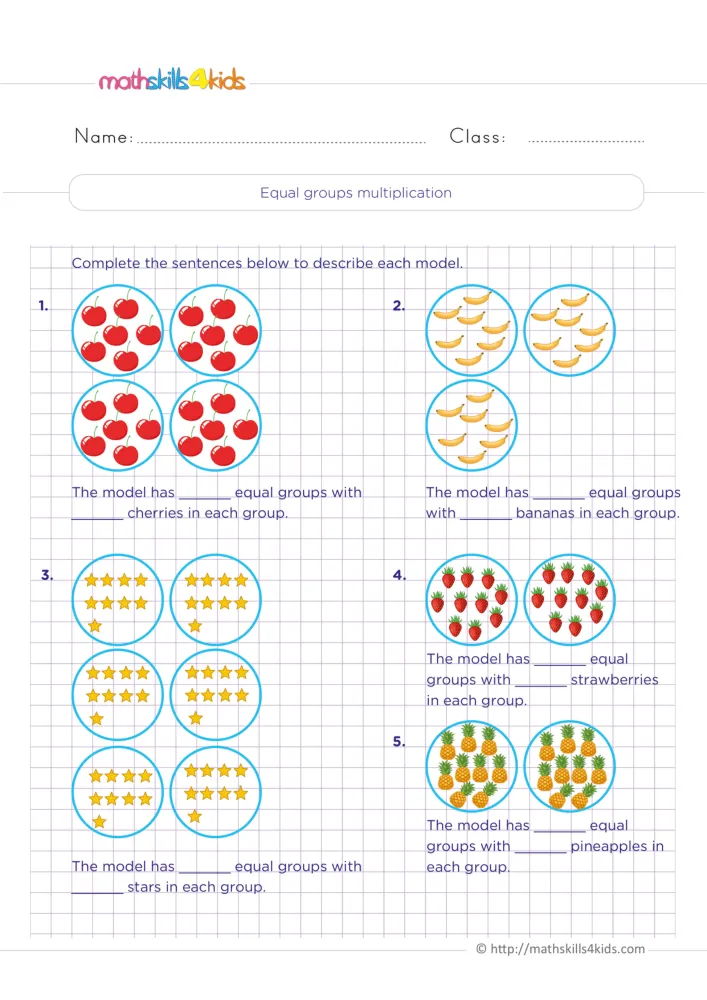
Set out four plates with six cherries on each, and a seven-year-old will probably count every cherry, one by one, all the way to twenty-four. That works, but there is a smarter way to see it. This 2nd grade count the groups worksheet trains that second look. Five models fill the page, each made of blue circles holding the same number of items: cherries, bananas, stars, strawberries and pineapples. Under each model, your child completes one sentence: the model has so many equal groups with so many items in each group. That sentence is the bridge to multiplication. A second page gives the answer key.
Why groups come before multiplying
In second grade, multiplication does not start with times tables. It starts with a way of seeing: a collection made of equal groups can be described by two numbers, how many groups and how many in each.
This page asks for exactly those two numbers and nothing more. For example, the bananas sit in three circles of seven, so the sentence needs a 3 and a 7. Later, that same picture becomes 7 + 7 + 7, which is repeated addition, and finally 3 × 7.
So the page lays the ground for multiplication without rushing to the symbol. A child who can say "three groups of seven" with confidence already understands what the times sign will mean. Words first, symbols later.
At the table: groups or items?
Start with the cherries. Ask, "How many circles?" Then, "Pick one circle. How many cherries inside?" Let your child tap each one.
The most common slip on this page is swapping the two numbers. A child may write 7 groups for the bananas, because 7 is the number they just counted. Instead of correcting, read the sentence back slowly: "The model has 7 equal groups?" and point to the circles. The mismatch usually jumps out.
Model 3 is the largest, with six circles of stars arranged in uneven rows. Suggest a light tick on each item while counting one circle. Then ask, "Do the other circles match?" Checking just two of them is enough.
Snack plates and a hungry caterpillar
Equal groups are easy to build at home. At snack time, ask your child to put the same number of grapes or crackers on each plate, then describe it: "Three plates, five on each." Also, look at egg cartons, muffin trays or a pack of yogurts, which are all equal groups in disguise.
For reading time, "The Very Hungry Caterpillar" by Eric Carle lines up fruit day by day. Pause on the strawberries and ask, "If each day had four, how many groups would we have?"
When the page is finished, praise the checking: "You counted the groups and the items separately. That is exactly what multiplying means."
About this 2nd grade count the groups worksheet and its answer key page
Download the worksheet: 2nd Grade Count the Groups Worksheet: How Many Groups, How Many in Each
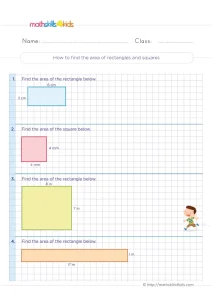 Worksheet3rd Grade Area with Length and Width Worksheet
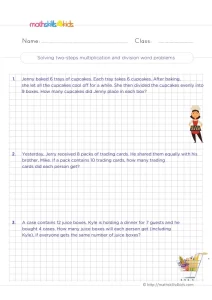 Worksheet3rd Grade Two-Step Multiply and Divide Problems: 3 Stories
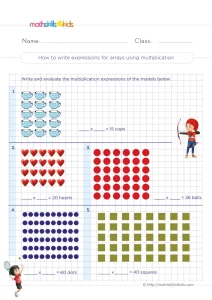 Worksheet3rd Grade Expressions for Arrays Worksheet: Write Each Product
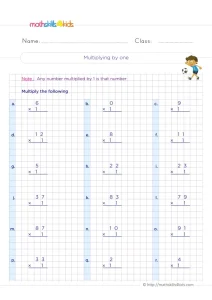 Worksheet3rd Grade 1 Times Table Worksheet: 18 Column Facts and the Identity Rule
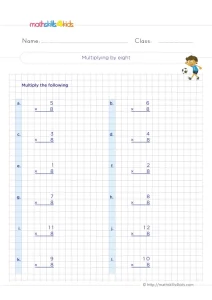 Worksheet3rd Grade 8 Times Table Worksheet: 12 Column Facts and a Doubling Trick
A few related activities
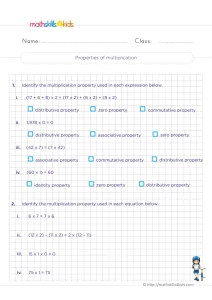 Tick the right property for four equations, from 1,978 x 0 = 0 to (60 x 1) =…See the activity3rd Grade Multiplication Worksheet: Find Products Using Properties
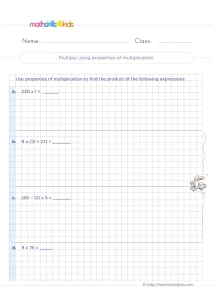 Work out four products, from 230 x 1 to 9 x 75, with the identity, distributive and commutative…See the activity3rd Grade How Much Money in All Worksheet: 3 Word Problems
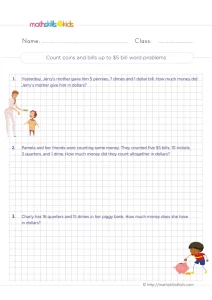 Three money word problems with pennies, nickels, dimes, quarters and $1 and $5 bills. Children find each total…See the activity
