2nd Grade Rounding Worksheet: Nearest Ten or Hundred, Four Choices Each
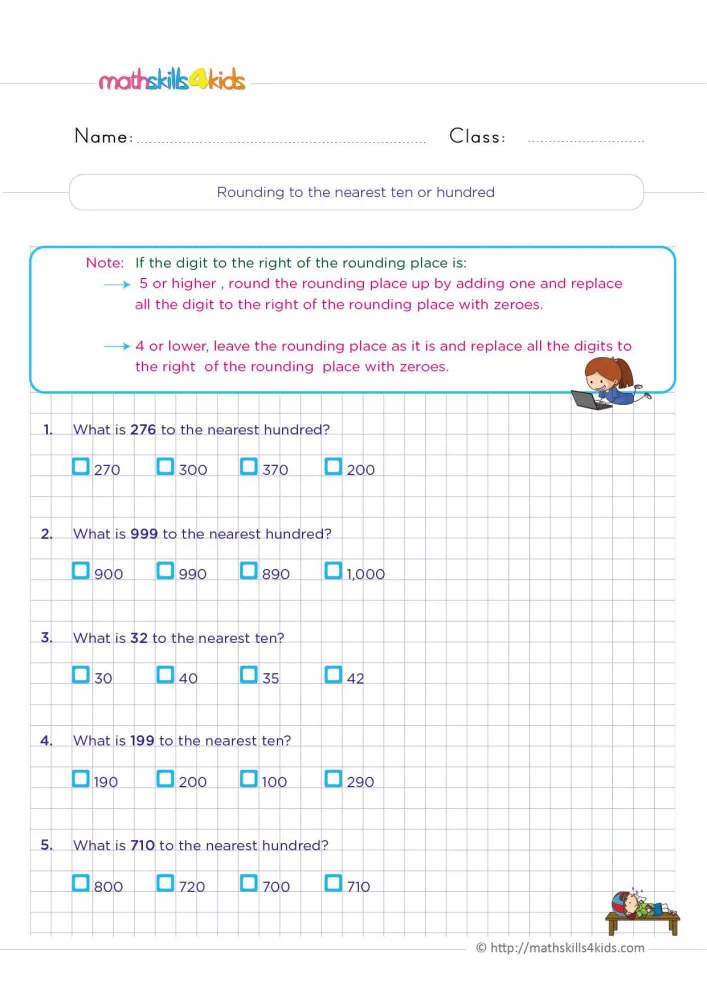
Ask a seven-year-old to round 999 to the nearest hundred and watch the face. Nine hundred feels safe, but a thousand is right there, one step away. This 2nd grade rounding to the nearest ten or hundred worksheet is built around moments like that. A blue box at the top gives the rule in two lines: look at the digit to the right of the rounding place, then round up for 5 or more and stay put for 4 or less. Five questions follow, from 32 to 999, each with four answer boxes to tick. Three ask for the nearest hundred, two for the nearest ten. A second page gives the answer key.
Why rounding is really about distance
Rounding asks one simple question: which friendly number is closer? 276 sits between 200 and 300, and it is much nearer to 300. The rounding rule in the blue box is a shortcut for that distance check.
The rule only works if your child knows which digit to look at. For the nearest hundred, it is the tens digit. For the nearest ten, it is the ones digit. However, mixing those up is the most common mistake.
This page tests that switch. Question 4 asks for 199 to the nearest ten, not the nearest hundred, so the 9 in the ones place decides. Question 2, 999, makes a round-up ripple through every place.
Rounding prepares estimation in sums and differences. It also makes big numbers feel manageable, so it is worth the practice.
At the table: 999 and 199
Start with question 3, 32 to the nearest ten. It builds confidence quickly.
Then go to question 2. Many children tick 900 because the number begins with 9. Ask, "Is 999 closer to 900 or to 1,000?" Let them count up from 999 and see how short the trip is.
Question 4 hides a different trap. Some children read nearest hundred and tick a choice that ends in two zeros for the wrong reason. Point to the word ten and ask, "Which digit does the rule look at?"
Also, a number line helps. For example, draw a short line from 270 to 280, mark 276, and let your child tap the closer end. Seeing the distance makes the rule make sense.
Prices, ages and a hopscotch line
Rounding shows up whenever someone says about. At the store, pick a price like $2.76 and ask whether it is closer to $2 or $3. On a drive, round the distance on a road sign to the nearest ten.
You can also play a version of Hopscotch. Chalk a line of squares numbered 20 to 30, call out a number like 26, and let your child jump to it, then hop to the closer ten. Moving the body fixes the idea of closer.
Short games work best. A few rounds after school are plenty.
Finally, check the multiple choice answers with the answer key together. Praise the reasoning: "You checked which digit to look at every time." That step is the heart of rounding.
About this 2nd grade rounding to the nearest ten or hundred worksheet
Download the worksheet: 2nd Grade Rounding Worksheet: Nearest Ten or Hundred, Four Choices Each
 Worksheet3rd Grade Rounding to Estimate Differences Worksheet: 3 Stories
 Worksheet3rd Grade Checking Reasonable Estimates Worksheet: Two-Step Problems
 Worksheet3rd Grade Estimating Sums in Stories Worksheet: Round, Then Add
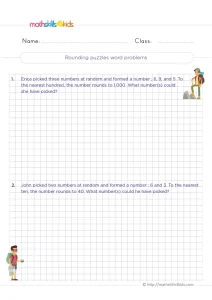 Worksheet3rd Grade Rounding Puzzles Worksheet: Which Number Was Picked?
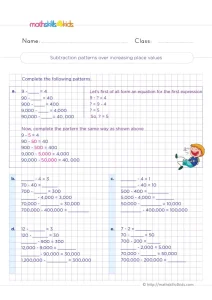 Worksheet3rd Grade Subtraction Patterns Worksheet: Over Increasing Place Values
A few related activities
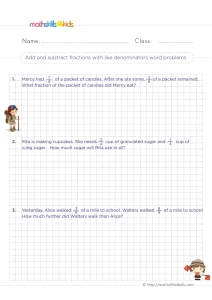 Three short stories about candies, cupcakes and a walk to school. Your child adds or subtracts fractions with…See the activity3rd Grade Divide by 3 Worksheet: Long Division Without Remainders
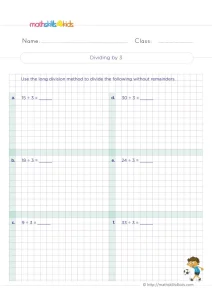 Six numbers from 9 to 33 to divide by 3 with the long division method. Each one is…See the activity3rd Grade Flat and Curved Faces Worksheet: Circles, Squares, Triangles
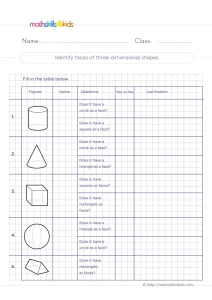 A table of five solid shapes, from a cylinder to a triangular prism. Name each one, answer yes…See the activity
