Read the Tags and Fill Each Bag With Up to Five Drawn Shapes
Five squares is a lot to draw for a small hand, and even more to keep track of. This Pre-K represent numbers 1 to 5 with shapes worksheet puts that task in the top right bag. The other three tags ask for three circles, one triangle and four moons. Your child reads each tag, draws the shapes inside the bag, then counts them again. Since five is the largest number in the series, the page also works as a final check. It shows whether number representation holds up all the way to five.
Arranging shapes so the eye can count them
Young children can recognize small groups at a glance, without counting. Teachers call this skill subitizing, and arrangement makes a big difference. For example, a child sees the five dots on a die faster than five dots thrown anywhere.
That is why this page rewards organized drawing. Five squares scattered across a bag are hard to recount. However, when your child places them like the five on a die, four corners and one in the middle, you can check them in a second. The same goes for the four moons, which fit neatly as two rows of two.
So the bag is more than a container. Order makes counting visible.
The five-square bag, one square at a time
Start with the triangle bag. One triangle gives a quick win and a calm start. Next, show your child a die and ask, "Can you draw your squares like the five?" These dice patterns give the hand a plan.
The likely slip comes in the five-square bag. Children often draw squares in a line, run out of room near the curved edge, and stop at four. If the bag holds four, do not count for them. Instead, ask, "Point to each square. What does the tag say?" Then let them find space for the last one.
When all four bags are done, ask, "Which bag has the most?" Many children point straight to the squares, sometimes before counting. That quick glance is a small sign of growing number sense.
Fours and fives around the house
After the sheet, show one number in many ways. Take four: four claps, four steps, four fingers, four moons on a napkin. Then ask, "Are these all four?" This talk moves your child from numeral to quantity and back again. Keep each turn short.
Also, look for neat groups in daily life. Eggs in a carton, buttons on a coat or windows on a building often sit in tidy rows. While you walk, ask your child to tap each one and count. If you want to read further, Douglas Clements and Julie Sarama have written widely on subitizing in young children.
Used at the end of a counting unit, this page also makes a quick assessment. Finally, name what you saw: "You planned your squares like a die. That made them easy to check."
About this Pre-K represent numbers 1 to 5 with shapes worksheet, tag by tag
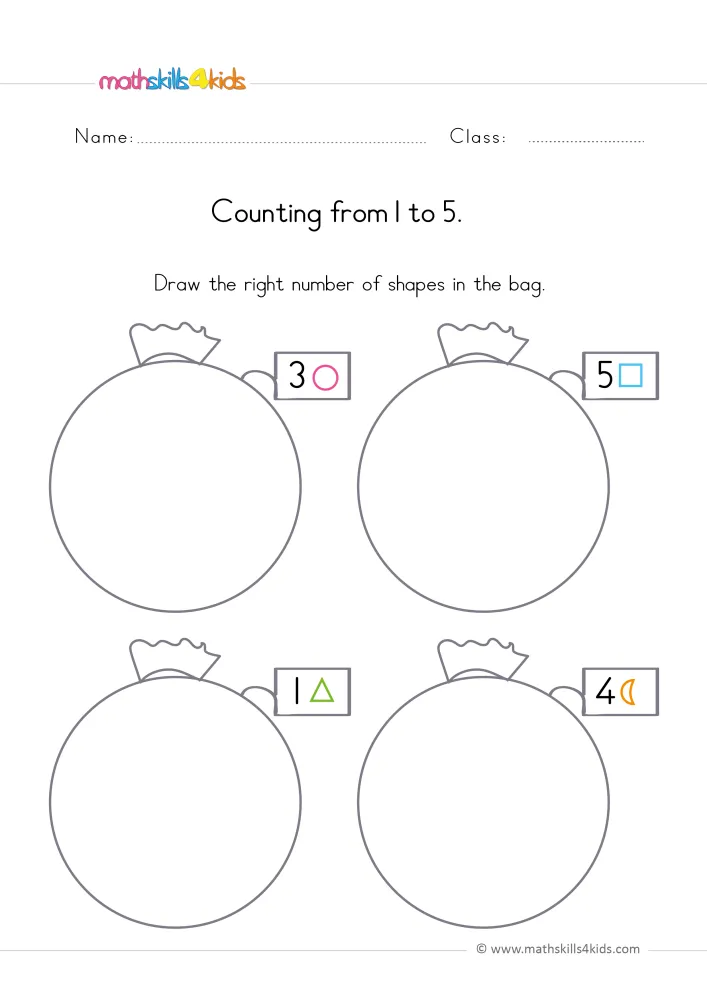
Download the worksheet: Read the Tags and Fill Each Bag With Up to Five Drawn Shapes
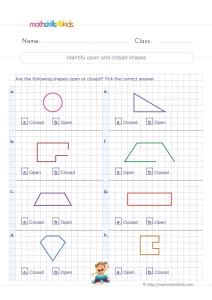 Worksheet3rd Grade Open and Closed Shapes Worksheet: 8 Shapes to Check
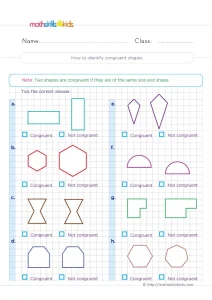 Worksheet2nd Grade Congruent Shapes Worksheet: Same Size and Same Shape?
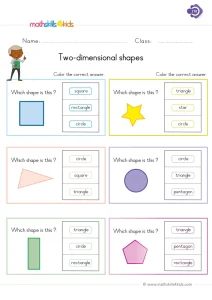 Worksheet1st Grade Name the 2D Shape Worksheet: Color the Word That Fits
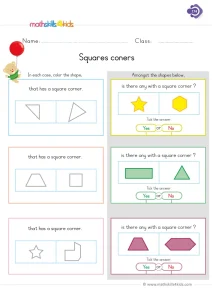 Worksheet1st Grade Find the Square Corners Worksheet: Color, Then Tick Yes or No
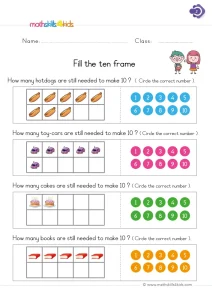 Worksheet1st Grade Ten Frame Make 10 Worksheet: How Many More?
A few related activities
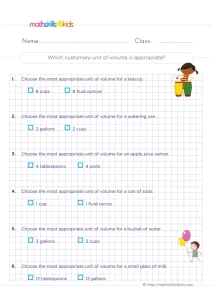 Six everyday containers, from a teacup to a bucket of water. Your child ticks the more sensible unit…See the activityGrade 1 Math — How long?Grade 1 math review game (ages 6–7): how long?. Instructions are read aloud, and every answer is checked…See the activityGrade 1 Math — The missing partGrade 1 math review game (ages 6–7): the missing part. Instructions are read aloud, and every answer is…See the activity
