Above or Below? Three Blue-Box Puzzles for Pre-K Position Words
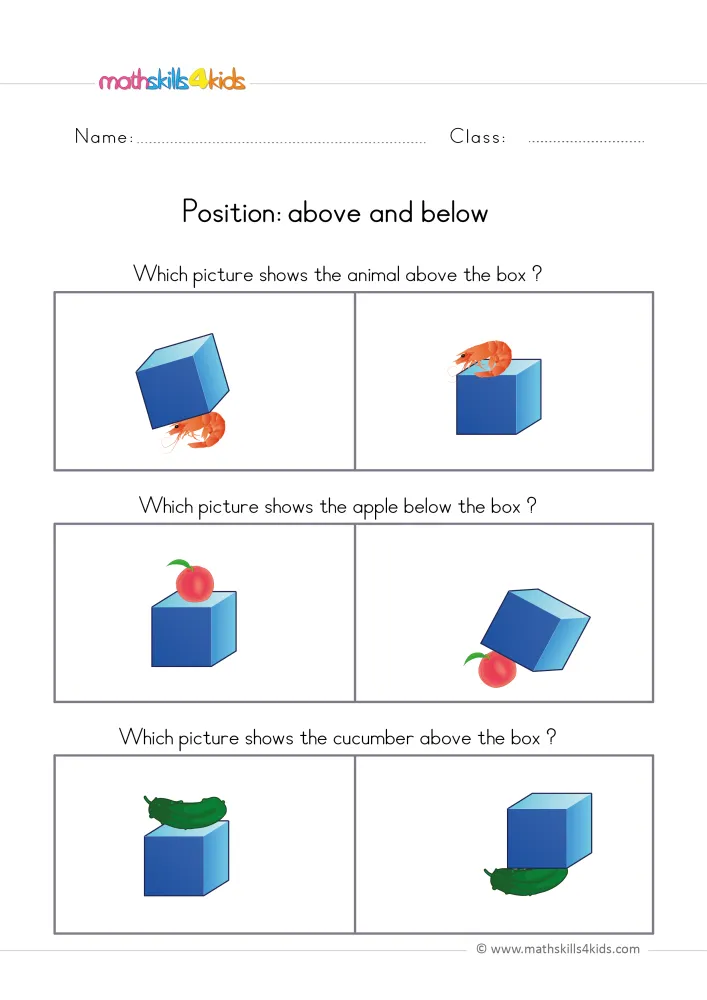
Put a toy on a box and ask your child where it is. Most four-year-olds will point and say "there" or "on it." The words above and below come later, because they need a fixed point to lean on. This Pre-K above and below worksheet gives them one: the same blue box in all six pictures. A pink shrimp, a red apple and a green cucumber take turns on top of it or underneath it. For each question, your child compares two pictures and circles one.
Why one blue box does the heavy lifting
Position words describe a link between two things. "Above" means nothing alone. You always need to know above what. Teachers call this understanding spatial relationships: one object placed in relation to another.
That is why the page keeps a single reference. The blue box appears in every frame, so only the shrimp, the apple or the cucumber changes place. Your child then has one question to ask each time: is it on the box, or under it?
The first question also hides a small word puzzle. It asks for the animal, not the shrimp. So your child has to connect the two, and that is real practice with category words.
Reading the tipped box together
Sit side by side, read each question slowly, then let your child point before they circle.
- The shrimp. Ask, "Where is the animal? Touch it."
- The apple. This is the row where mistakes happen. The apple on top of the box is bright and easy to spot, so many children circle it at once. However, this question asks for below. Instead of saying no, read it again: "Below the box. What is the box sitting on?"
- The cucumber. Above again. Ask, "Is the cucumber on the lid or on the floor?"
Use the words your child already owns. For example, "over" and "under" are simple synonyms that help the new words land. Also, look at the second apple picture: the tipped box rests on the apple.
Over the haystack, under the table
Any box at home can replay this page. Put a spoon on a shoebox, then slide it underneath, and let your child say where it went. Next, swap roles: your child gives the orders, while you follow them.
At dinner, ask what is above the table and what is below it. Following these small instructions builds receptive language, the words a child understands before using them.
Then read Rosie's Walk by Pat Hutchins. Rosie the hen walks over the haystack and under the beehives, so the book is a string of prepositions to point at. Finally, name the effort when the page is done: "You checked both pictures every time. That's careful looking."
About this Pre-K above and below worksheet with one simple blue box
Download the worksheet: Above or Below? Three Blue-Box Puzzles for Pre-K Position Words
 Worksheet3rd Grade Reading Coordinates on a Map Worksheet: Find the Places
 Worksheet1st Grade Top or Bottom Pictures Worksheet: Read, Then Color the Number
 Worksheet1st Grade Beside and Far From Worksheet: Yes or No Picture Sentences
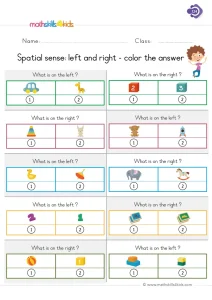 Worksheet1st Grade Left or Right Toy Pairs Worksheet: Color 1 or 2
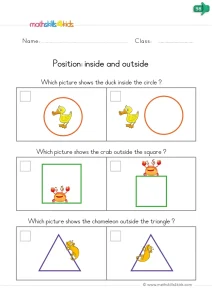 WorksheetKindergarten Inside and Outside Shapes Worksheet: Tick the Right Picture
A few related activities
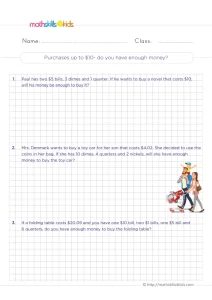 Three shopping stories with bills and coins. Children count the money, compare it with the price and decide…See the activityGrade 1 Math — How many at the end?Grade 1 math review game (ages 6–7): how many at the end?. Instructions are read aloud, and every…See the activity3rd Grade Count Coins and Bills Worksheet: 8 Money Totals
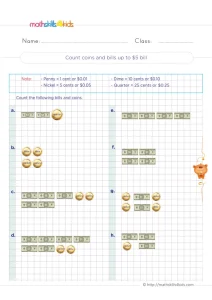 Eight sets of $1 and $5 bills with pennies, nickels, dimes and quarters. Children find each total in…See the activity
