1st Grade Left or Right Toy Pairs Worksheet: Color 1 or 2
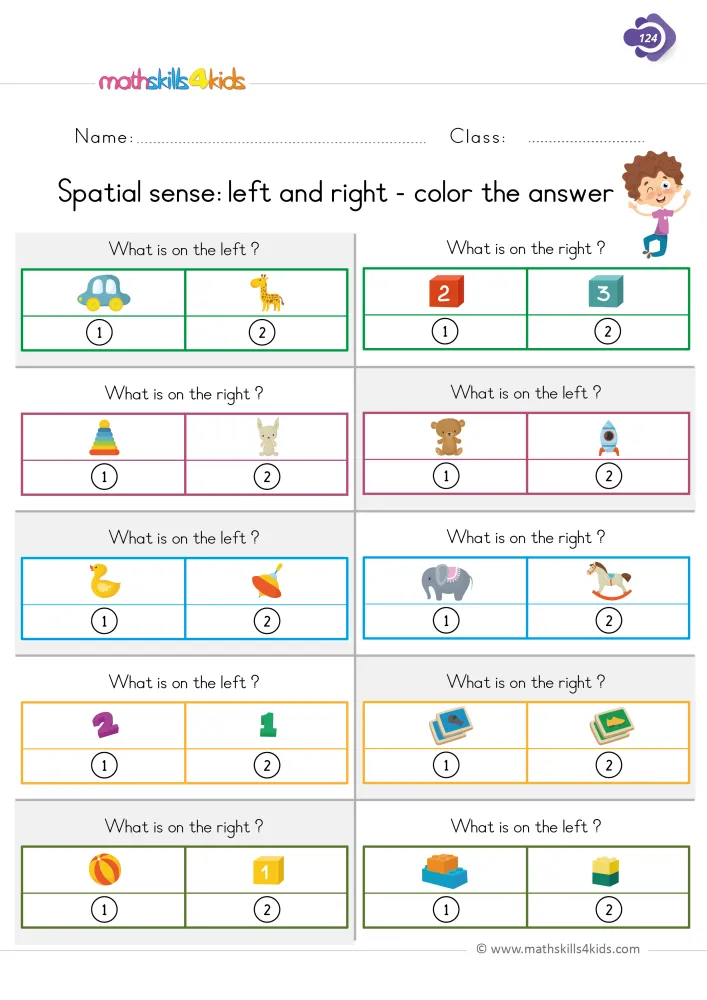
Ask a six-year-old to raise their left hand and you often see a pause, a glance at both hands, then a guess. Left and right change with the way you face, so they take longer to settle than top and bottom. This 1st grade left or right toy pairs worksheet gives that pause something to work on. Ten boxes each hold two toys side by side, like a blue car and a giraffe, or a teddy bear and a rocket. A short question above each box asks about the left side or the right side, and the child colors 1 or 2 under the answer. The questions switch from box to box, so reading each one counts. A second page gives the answer key.
Why left and right need their own practice
The sky stays up and the floor stays down. Left and right, however, belong to the body: a child has to check their own hands before naming a side. That is why many first graders still mix them up, and why spatial sense needs short, repeated practice.
On this page the two sides never move. In every box, toy 1 sits on the left side and toy 2 sits on the right side, so the child can tie the word to a fixed place. The questions, however, take turns. For example, the car and giraffe box asks about the left, while the red 2 and teal 3 blocks ask about the right.
These position words come back in reading, writing and directions. Small choices build them.
At the table: read the question, then point
Before your child colors anything, have them read the question aloud and hold up the matching hand. Then let them touch the toy on that side of the box.
The likely slip comes in the second row. The ring stacker and the bunny ask about the right, then the teddy bear and the rocket ask about the left. A child working fast may keep the same side for both boxes. Instead of fixing it, ask, "What does this question say?"
Some children notice that the left toy always wears number 1. That is a sharp observation, so say so. Still, ask them to name the toy too, because the goal is the word, not the number. Try one short check per row: "Which toy did you pick?"
After the page: left and right around the house
Left and right stick when they live in the body, not only on paper. At breakfast, lay out the spoons together and ask which side each one goes on. Also, on the way to school, call out each turn so your child hears the words while walking.
Simon Says fits this skill well. Give orders such as "touch your left ear" or "tap your right knee," and slow down when your child hesitates. A sticker on one wrist can serve as a quiet reminder.
Line up two toy pairs on a shelf and swap the questions. Finally, check the page with the answer key together and praise the habit: "You read every question before coloring."
About this 1st grade left or right toy pairs worksheet and its answer key
Download the worksheet: 1st Grade Left or Right Toy Pairs Worksheet: Color 1 or 2
 Worksheet3rd Grade Reading Coordinates on a Map Worksheet: Find the Places
 Worksheet1st Grade Tick the Named 3D Shapes Worksheet: Cones, Cubes and More
 Worksheet1st Grade 2D or 3D Shapes Yes or No Worksheet: Read Each Question Twice
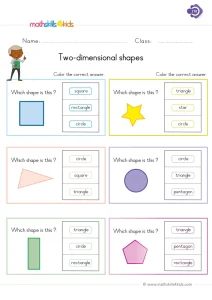 Worksheet1st Grade Name the 2D Shape Worksheet: Color the Word That Fits
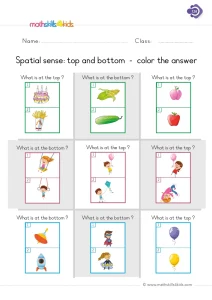 Worksheet1st Grade Top or Bottom Pictures Worksheet: Read, Then Color the Number
A few related activities
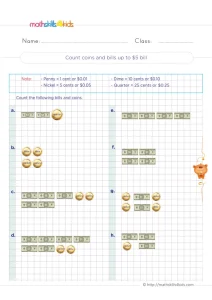 Eight sets of $1 and $5 bills with pennies, nickels, dimes and quarters. Children find each total in…See the activity3rd Grade Do You Have Enough Money Worksheet: 3 Word Problems
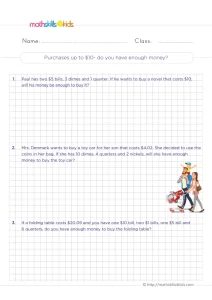 Three shopping stories with bills and coins. Children count the money, compare it with the price and decide…See the activity3rd Grade Cups, Pints and Gallons Worksheet
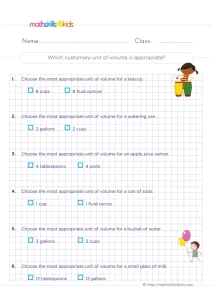 Six everyday containers, from a teacup to a bucket of water. Your child ticks the more sensible unit…See the activity
