Left, Middle or Right? Rows of Three Pictures for Pre-K Position Practice
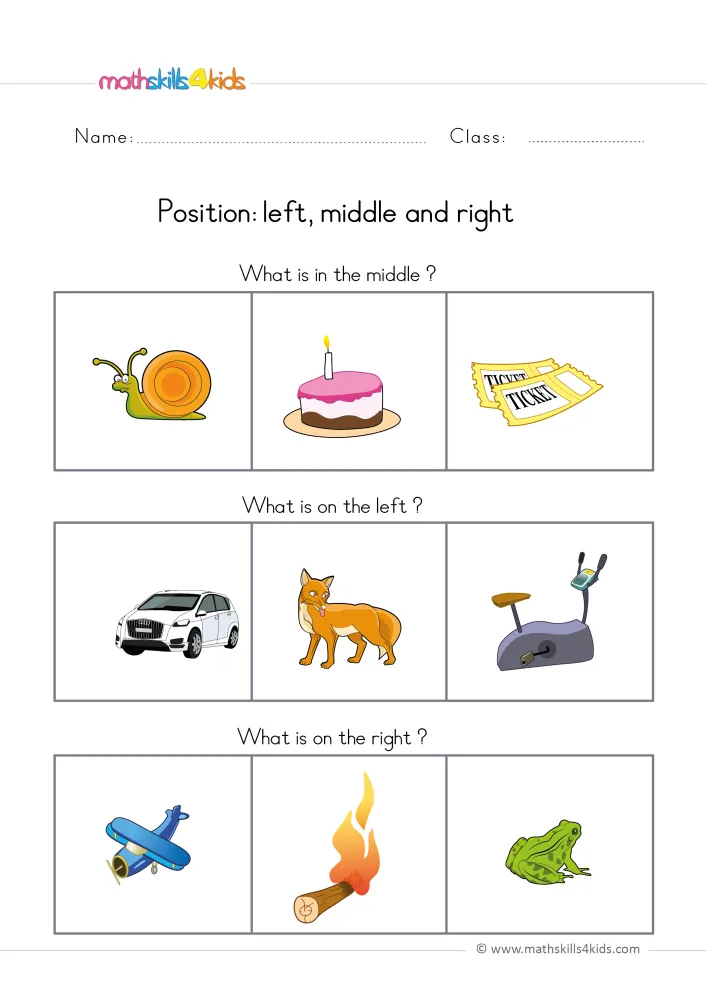
Line up three spoons on the table and ask which one sits in the middle. Some children point to the spoon nearest their hand. Middle is a new kind of word: it only exists when there is something on both sides. This Pre-K left, middle and right worksheet gives your child three rows of three pictures to explore it. The first row asks for the middle, among a snail, a birthday cake and two tickets. Then the questions move to the left side, and finally to the right side.
Middle needs two neighbors
Left and right name one side. Middle names a relationship. The cake sits in the middle only because the snail stands on one side and the tickets on the other. Take one neighbor away, and the middle disappears. Grasping this is the concept of middle, and it takes time.
The page also changes its question in every row: middle, then left, then right. So your child cannot repeat the last answer. Each row asks them to listen again, which trains auditory attention as much as position.
Slide the finger, one box at a time
First, let your child tap each box and name every picture aloud. "Snail, cake, tickets." Naming first leaves the mind free for the position.
For the middle, ask, "Which picture has a neighbor on each side?" Two fingers can touch both.
The likely mistake comes in the second row. After a middle question, the eye often stays in the middle. So the answer becomes the fox. Rather than correcting, read the question again. Then ask, "Which side did it say? Show me with your hand." Then let them find the white car.
Finally, invite a whole sentence: "The frog sits on the right." Full sentences grow oral language alongside the math.
I Spy on a shelf of three
Real objects make the middle easier to see. Put three cups on the counter. Ask, "Which cup sits in the middle?" Then swap two of them and ask again. Also, when three people wait in line at the shop, whisper, "Who stands in the middle?"
Next, play a round of I Spy with positions. "I spy something in the middle of the shelf." These games train ordinal position without numbers. They also prepare sequencing skills, because first, middle and last follow the same order.
When your child circles the frog, name the effort: "You named every picture before you chose."
About this Pre-K left, middle and right worksheet with nine pictures
Download the worksheet: Left, Middle or Right? Rows of Three Pictures for Pre-K Position Practice
 Worksheet3rd Grade Reading Coordinates on a Map Worksheet: Find the Places
 Worksheet1st Grade Top or Bottom Pictures Worksheet: Read, Then Color the Number
 Worksheet1st Grade Beside and Far From Worksheet: Yes or No Picture Sentences
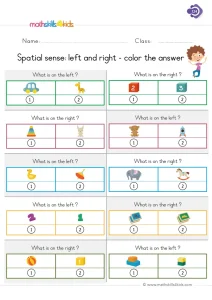 Worksheet1st Grade Left or Right Toy Pairs Worksheet: Color 1 or 2
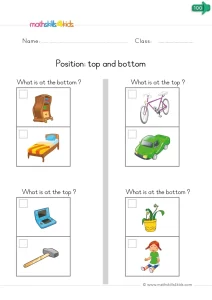 WorksheetKindergarten Top or Bottom Worksheet: Bed, Bike, Hammer and Doll
A few related activities
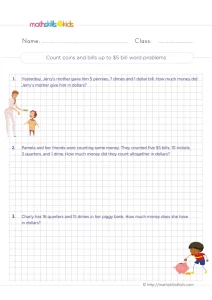 Three money word problems with pennies, nickels, dimes, quarters and $1 and $5 bills. Children find each total…See the activity3rd Grade Divide by 2 Worksheet: Long Division with Even Numbers
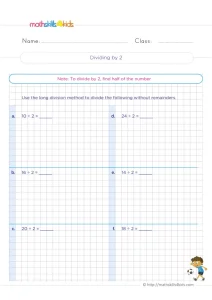 Six even numbers from 10 to 24 to divide by 2 with the long division method. Each answer…See the activity
