1st Grade Elapsed Time Worksheet With Clocks: Add Whole Hours, Tick the End Time
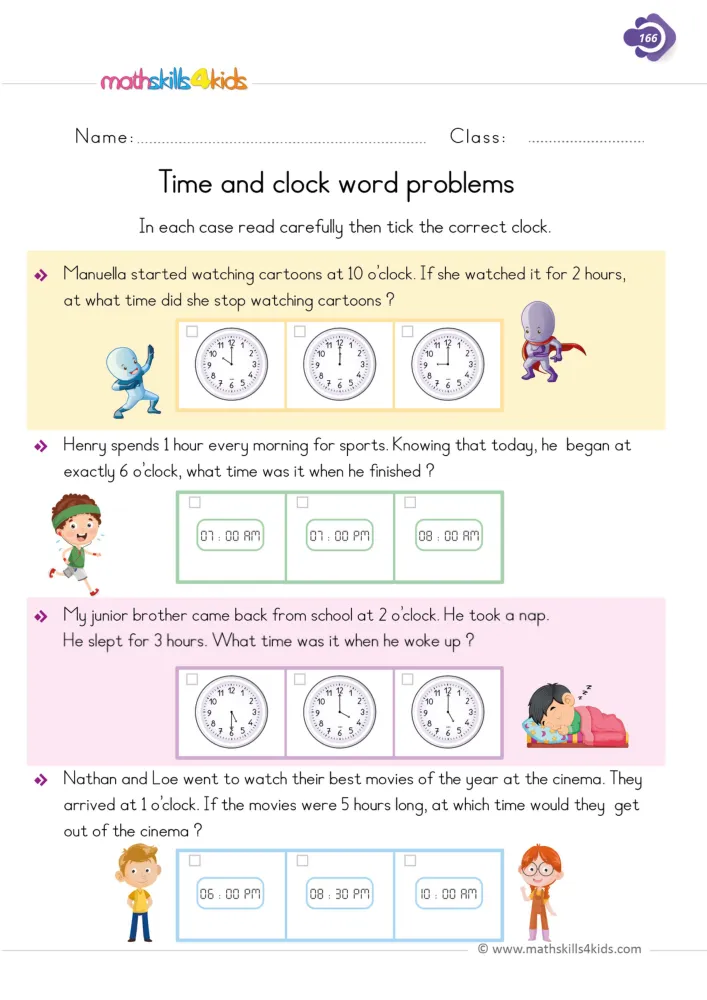
Tell a six-year-old that a cartoon lasts two hours and ask when it ends, and you may see them count on their fingers, then stop, unsure what to count. This 1st grade elapsed time worksheet with clocks gives that counting a shape. Four short stories each give a start time and a number of whole hours, from cartoons in the morning to an outing at the cinema. Under each story, three clocks wait. Some are round clocks with hands, others are digital with AM or PM. Your child works out the end time and ticks the matching clock. A second page gives the answer key.
Why counting hours is counting on
Elapsed time is the time that passes between a start and an end. For a first grader, it is really counting on: start at one hour, then move forward one hour at a time.
This page keeps that idea simple. Every story uses whole hours, so the minute hand never moves away from 12. Your child only has to move the hour forward.
The clocks also switch between two styles. Round clocks show the answer with hands, while digital clocks add AM or PM. So the same skill appears in two forms, and your child learns that both clocks tell the same time. Two clocks, one idea.
At the table: counting on from the start
Start with the cartoon story. Ask, "Where does the hour hand start?" Let your child tap each hour forward on the clock face.
The common slip is counting the start hour as the first one. From 10, a child may say ten, eleven and stop too early. Instead of correcting, try, "Put your finger on 10. Now jump one hour. Where are you?" Then jump again.
The digital clocks bring a new question. Two choices can show the same hour, so AM and PM make the difference. Ask, "Is this in the morning or the afternoon?" Let the story decide.
Finally, ask your child to read the story aloud before ticking. Each story tells when something starts and how long it lasts.
How long until dinner?
Your child's own day is the best clock to practice with. Before a trip to the park, look at the clock together and say, "We leave at three and come back two hours later." Then ask what time that will be. Also, on a weekend, set a timer for one hour of play and check the clock when it rings.
The playground game What's the Time, Mr. Wolf? fits well. While you play, the wolf calls out hours, and your child steps forward one step for each hour.
These small moments teach that time moves forward in steady steps. When the page is done, check it with the answer key and name the effort: "You counted on, hour by hour. That is how time works."
About this 1st grade elapsed time worksheet with clocks and its answer key
Download the worksheet: 1st Grade Elapsed Time Worksheet With Clocks: Add Whole Hours, Tick the End Time
 Worksheet3rd Grade Like Denominator Fraction Story Problems Worksheet
 Worksheet3rd Grade Reading a Data Table Worksheet: 2 Tables
 Worksheet3rd Grade AM and PM Time Worksheet: 5 Daily Events
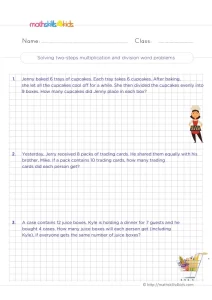 Worksheet3rd Grade Two-Step Multiply and Divide Problems: 3 Stories
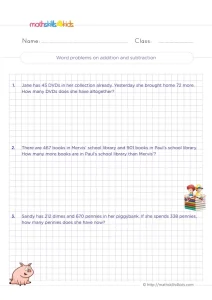 Worksheet3rd Grade Addition and Subtraction Problems: 3 Stories
A few related activities
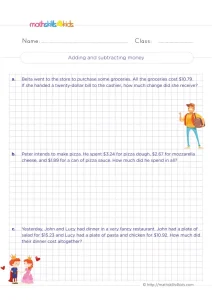 Three money word problems about groceries, a pizza and a dinner out. Children find the change from a…See the activity3rd Grade Do You Have Enough Money Worksheet: 3 Word Problems
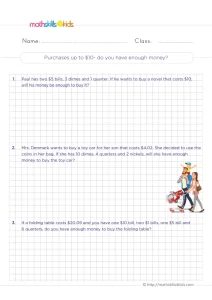 Three shopping stories with bills and coins. Children count the money, compare it with the price and decide…See the activity3rd Grade How Much Money in All Worksheet: 3 Word Problems
 Three money word problems with pennies, nickels, dimes, quarters and $1 and $5 bills. Children find each total…See the activity
