2nd Grade Dividing Hearts and Stars Worksheet: Four Group Models
A seven-year-old who has just shared sixteen stickers with three friends can usually tell you how many each person got. Writing it down as a number sentence is another matter. This 2nd grade dividing hearts and stars worksheet builds that step with no options to lean on. Four models fill the page: eighteen circles on three plates, fourteen triangles in two boxes, twelve hearts in six ovals and sixteen stars in four frames. Below each one, there is space to write a full sentence. Your child counts the total, the groups and the amount in each, then writes it with a division sign. A second page gives the answer key.
Why writing the sentence fixes the idea
Recognizing a division sentence is one thing; writing it from a blank line is another. Your child has to decide which number comes first, which goes after the sign and which is the answer.
The answer key models a clear habit. It keeps the object name next to the numbers, as in eighteen circles divided by three makes six circles. That small detail reminds your child that division describes real things being shared.
The four models also change their layout, plates, boxes, ovals and frames. However, the structure never changes: total, divided by the number of equal groups, equals the amount in each. So your child learns a pattern, not just four answers. That pattern carries straight into third grade.
At the table: groups or amounts?
Start with model a and say, "Tell me the story first." A child who can say "eighteen circles, three plates, six on each" is ready to write.
The hearts in model c are the likely slip. There are six ovals with two hearts in each, and many children write 12 ÷ 2 = 6, swapping the groups and the amount. Instead of correcting, ask, "How many ovals are there?" and let your child touch each one. Then ask which number tells the groups.
For the stars, encourage a quick check by multiplying back: four frames of four stars. If the total matches, the sentence is right. Say it together, slowly.
Sharing jars and a story about mice
Division sentences stick best when your child acts them out. Give them a handful of buttons or dry pasta and a few cups, ask for a fair share, then write the sentence on a sticky note under the cups. Also, when you portion out a snack, say the sentence aloud before anyone eats.
For story time, "Mouse Count" by Ellen Stoll Walsh has a snake collecting ten mice in a jar. Afterward, ask, "If the snake had two jars, how many mice in each?" and write the sentence together. It is division as sharing in a picture book.
When the page is done, praise the story-telling: "You said each story before you wrote it. That is clear thinking."
About this 2nd grade dividing hearts and stars worksheet and its answer key
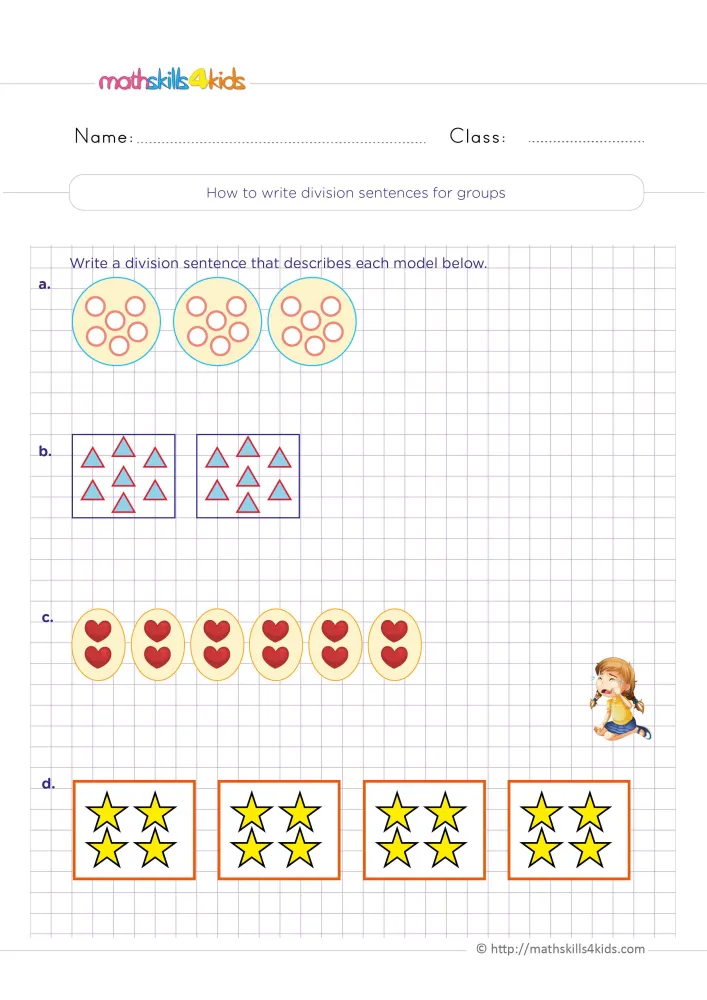
Download the worksheet: 2nd Grade Dividing Hearts and Stars Worksheet: Four Group Models
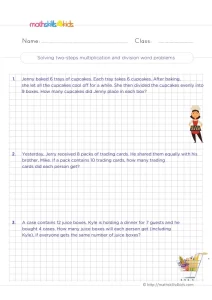 Worksheet3rd Grade Two-Step Multiply and Divide Problems: 3 Stories
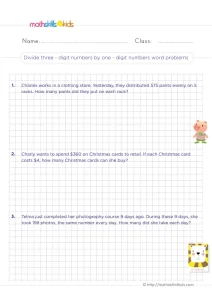 Worksheet3rd Grade Divide 3-Digit by 1-Digit Word Problems: 3 Stories
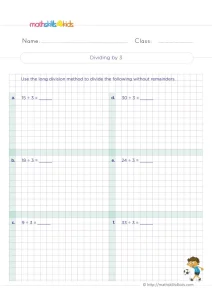 Worksheet3rd Grade Divide by 3 Worksheet: Long Division Without Remainders
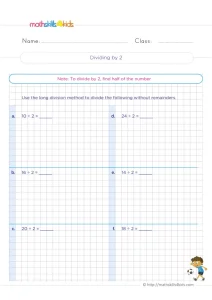 Worksheet3rd Grade Divide by 2 Worksheet: Long Division with Even Numbers
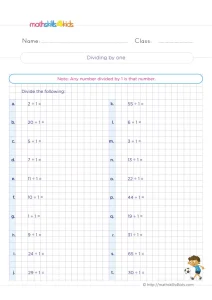 Worksheet3rd Grade Divide by 1 Worksheet: 20 Facts and the Rule of One
A few related activities
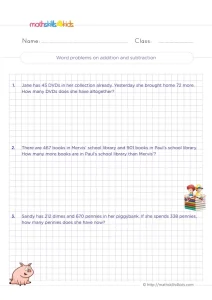 Three word problems about DVDs, school library books and pennies in a piggy bank. Your child adds or…See the activity3rd Grade Multiplication Properties Worksheet: Zero, Identity, Commutative
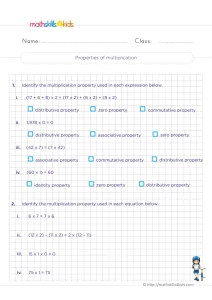 Tick the right property for four equations, from 1,978 x 0 = 0 to (60 x 1) =…See the activity3rd Grade 8 Times Table Worksheet: 12 Column Facts and a Doubling Trick
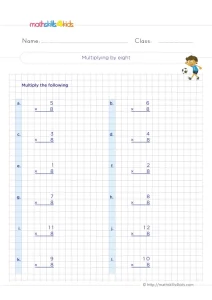 Twelve column facts times 8, from 1 × 8 to 12 × 8, in a mixed order. Double…See the activity
