Fossils and Earth’s Past
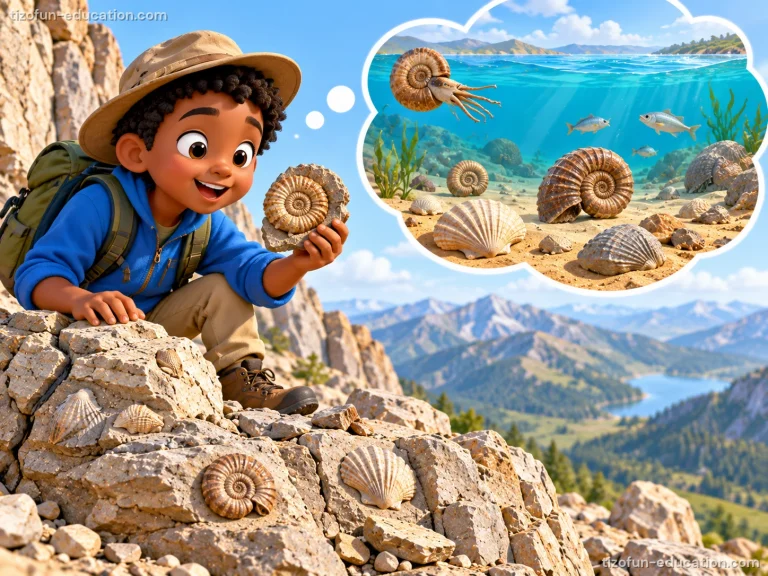
A sea shell on top of a mountain? A footprint in a rock? Fossils are clues left by living things from long ago. Let’s find out how they form, what kinds there are, and what they tell us about Earth’s past.
This lesson takes about 10 minutes. You can take a break after each part.
Before you start
Learning objectives
- I can explain how a fossil forms in layers of rock, and that deeper layers are usually older.
- I can tell body fossils, trace fossils, molds and casts apart.
- I can use fossils to describe living things and places from long ago.
How a fossil forms
Buried in layers
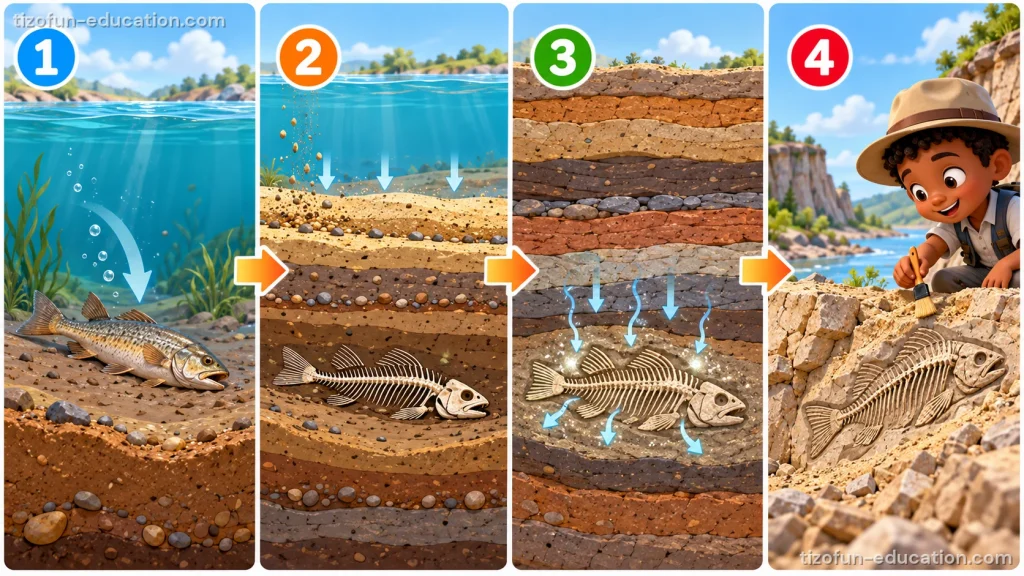
A fossil is what is left of a living thing from long ago, kept in rock.
When an animal dies, mud and sand can cover it. Layer after layer, over a very long time, they turn into rock. The deepest layers are usually the oldest.
Loading the questions…
Fossils of all kinds
Bodies, traces, molds and casts
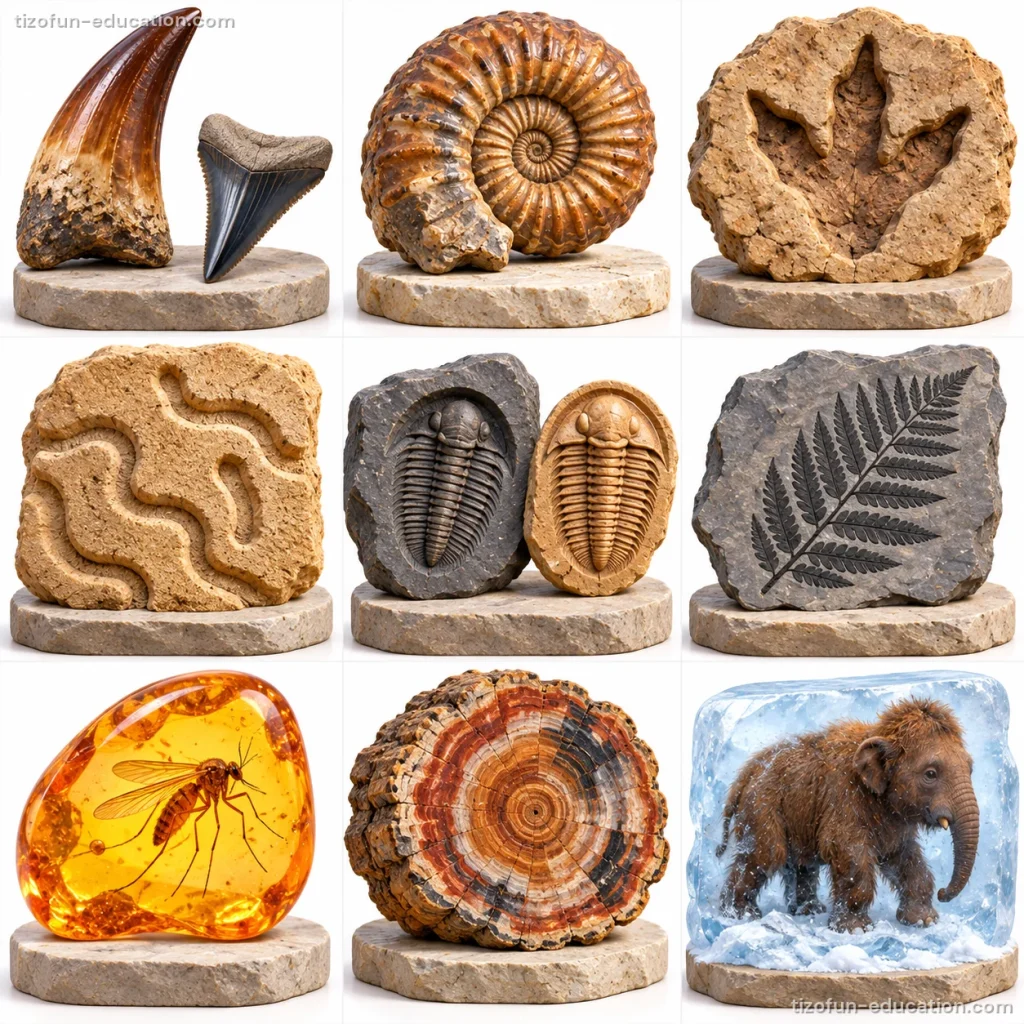
Some fossils are parts of a body: bones, teeth, shells. Others are traces: footprints or tracks that show what an animal did.
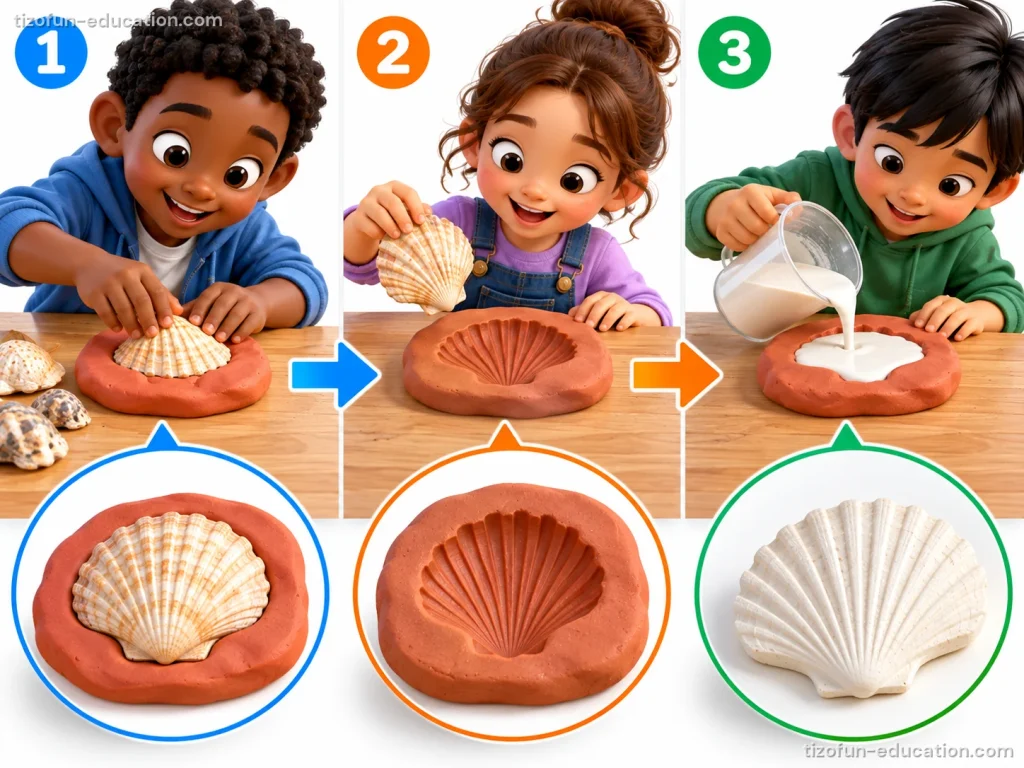
A shell can leave a hollow print in mud: a mold. If the mold fills up and hardens, it makes a cast.
Loading the questions…
What fossils tell us
Clues about living things and places
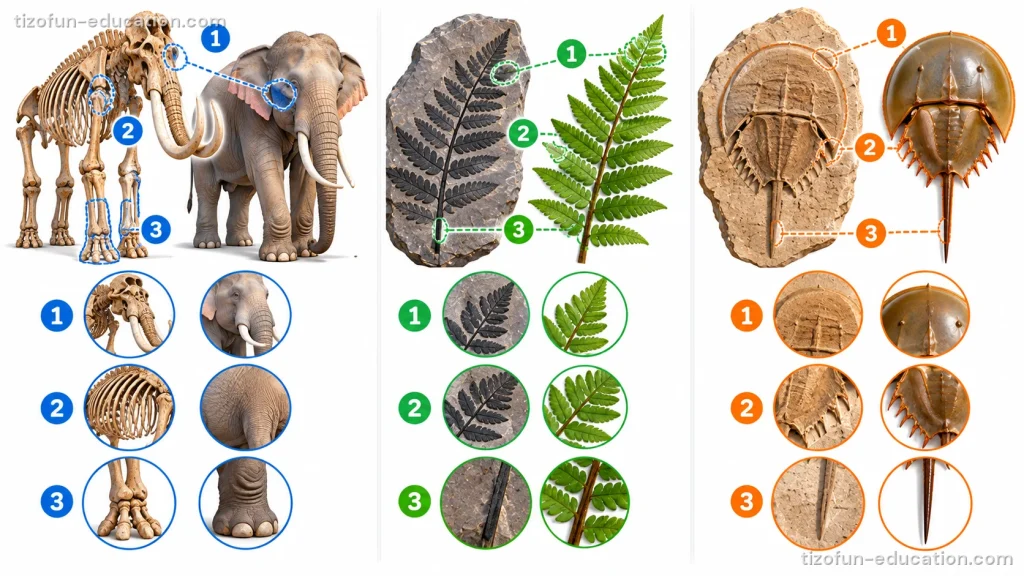
Fossils show living things from long ago. Some, like the mammoth, no longer live on Earth.
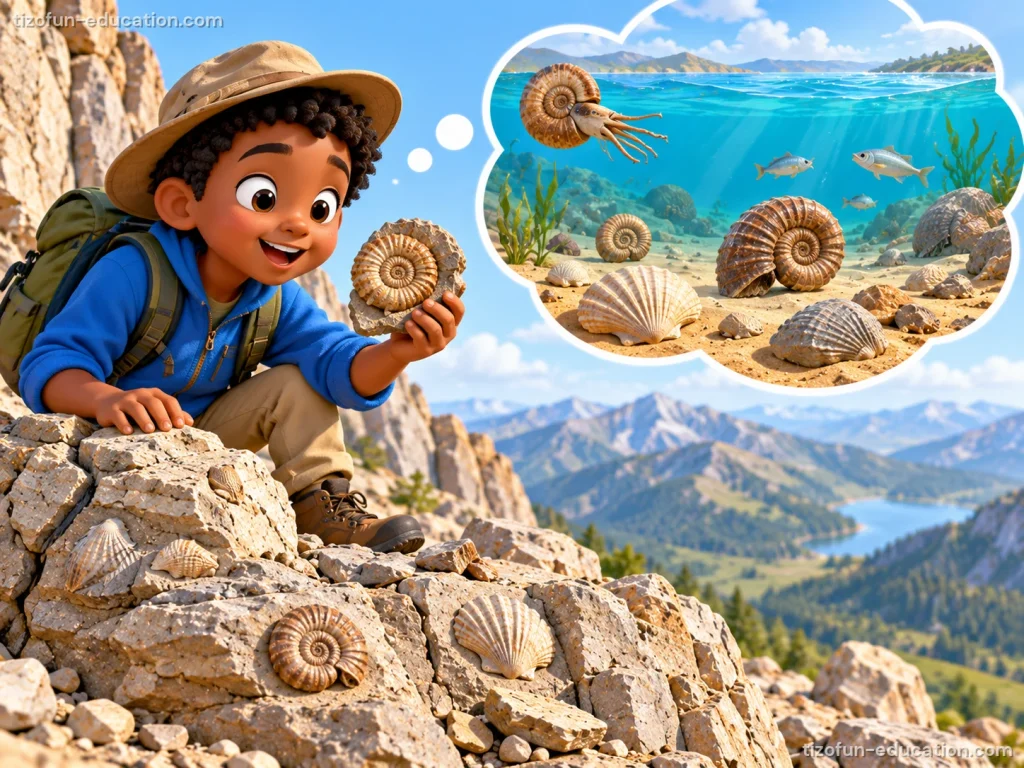
They also show how places have changed: sea shells on a mountain mean the land was once under the sea.
Loading the questions…
Review game
Final assessment
To master the lesson, you need at least 60% correct answers.
Loading the assessment…
Summary
- A fossil is what is left of a living thing from long ago, kept in rock.
- Fossils form when living things are buried in layers that turn into rock; deeper layers are usually older.
- Fossils can be body parts, traces, molds or casts.
- Fossils tell us about living things and places of long ago: sea shells on a mountain mean the land was once under the sea.
A few related activities
 GameFossils and Earth’s Past — Review gameReview game for the lesson “Fossils and Earth’s Past”: 8 questions drawn at random every round. Free science…See the activity
 LessonInherited Traits and the EnvironmentWhy does a puppy look like its parents, but not exactly? Why is a flamingo pink? Some traits…See the activity
 LessonWeather and ClimateSunny, rainy, windy… How do scientists measure the weather? And how do they know what weather to expect…See the activity
