Waves, and How Light Lets Us See
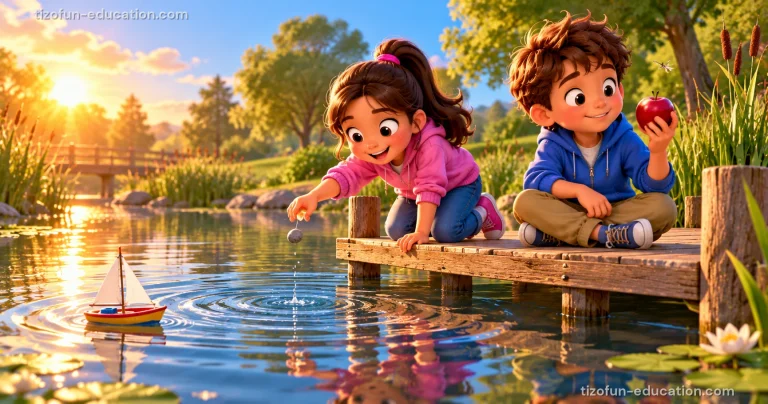
Ripples on a pond, a shaking rope, a “wave” in a stadium: they all follow a pattern that moves. Let’s see what a wave carries, how to describe it, and how light lets you see the things around you.
This lesson takes about 10 minutes. You can take a break after each part.
Before you start
Learning objectives
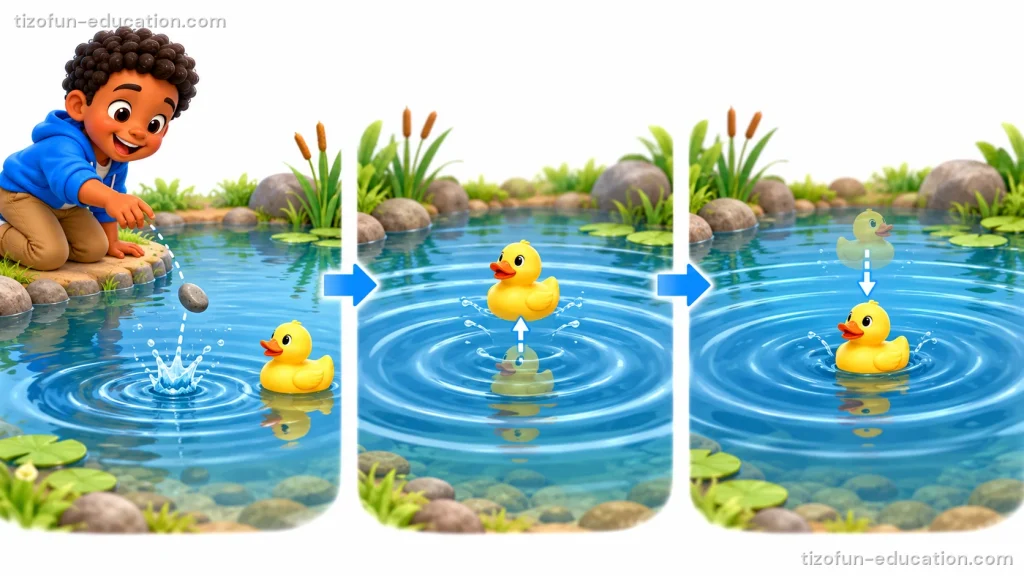
- I can explain that a wave can make objects move, while the water or the rope stays in place.
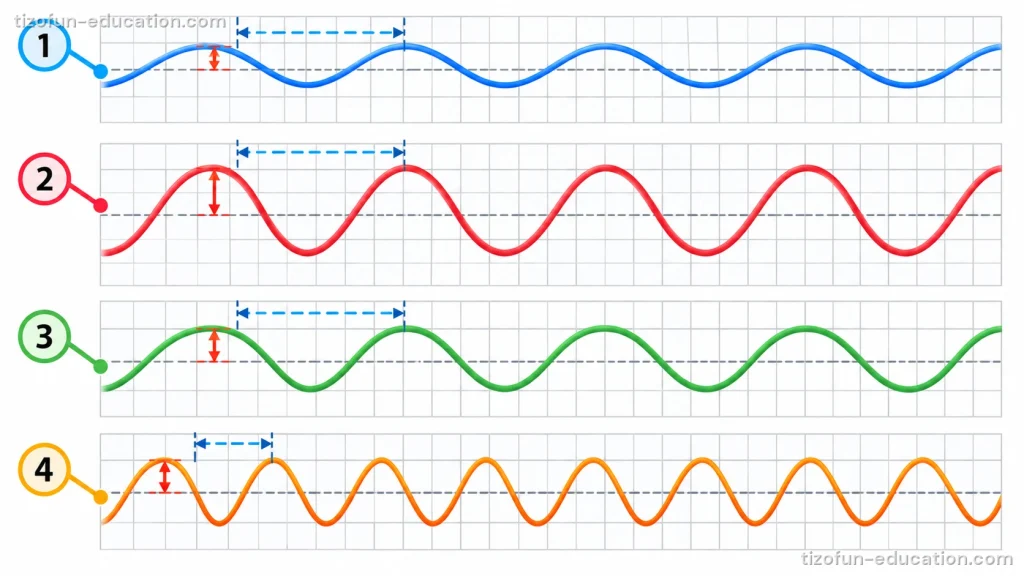
- I can describe a wave by its amplitude and its wavelength.
- I can explain that we see an object when light bounces off it and enters our eyes.
What a wave carries
Waves move energy
A wave is a pattern of ups and downs that moves along. It carries energy, but the water it crosses only goes up and down.
Loading the questions…
Amplitude and wavelength
Describing a wave
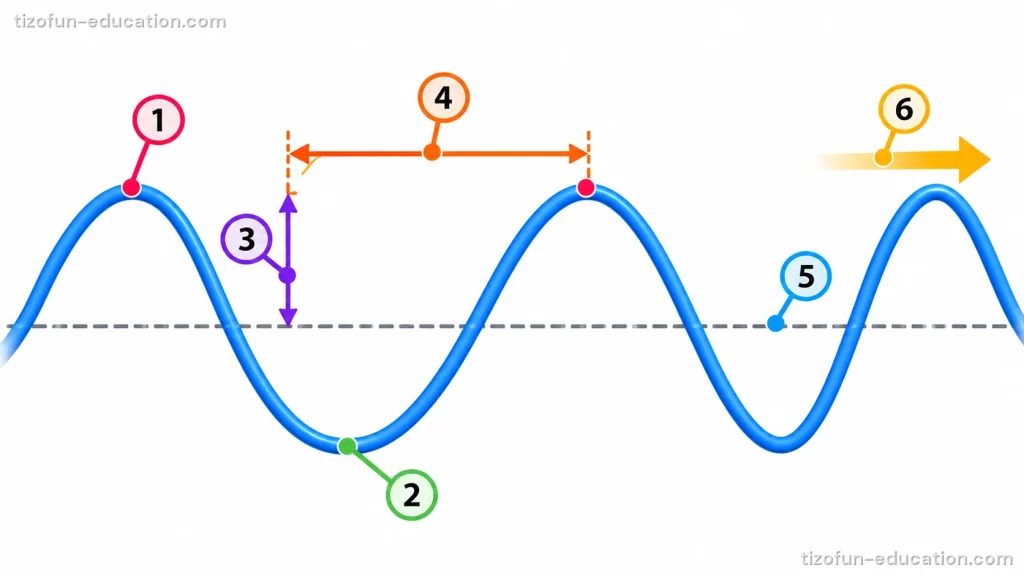
The high points of a wave are crests, the low points are troughs. The amplitude is how high a crest rises from the rest line. The wavelength is the distance from one crest to the next.
Loading the questions…
How we see things
Light into your eyes
A light source, like the Sun or a lamp, makes its own light. Most objects do not. Light from a source bounces off an object and travels into your eyes: that is how you see the object.
Loading the questions…
Review game
Final assessment
To master the lesson, you need at least 60% correct answers.
Loading the assessment…
Summary
- A wave is a pattern that repeats as it moves. It carries energy and can make objects move.
- The water or the rope a wave crosses only goes up and down, in place.
- The amplitude is the height of a crest from the rest line; the wavelength is the distance from one crest to the next.
- A light source, like the Sun or a lamp, makes its own light.
- We see an object when light bounces off it and enters our eyes.
A few related activities
 LessonEnergy: How It Moves and ChangesA rolling ball, a ringing bell, a warm mug, a shining lamp: they all have energy. Let’s see…See the activity
 LessonWeather and ClimateSunny, rainy, windy… How do scientists measure the weather? And how do they know what weather to expect…See the activity
 LessonInherited Traits and the EnvironmentWhy does a puppy look like its parents, but not exactly? Why is a flamingo pink? Some traits…See the activity
