1st Grade Base Ten Blocks to 20 Worksheet: Read the Model
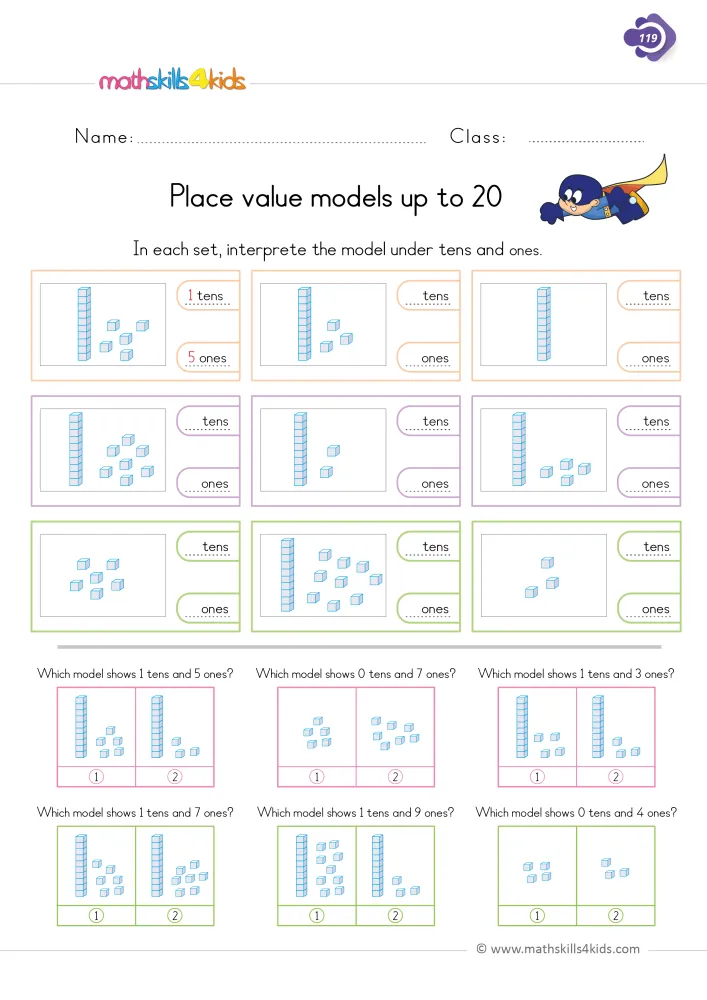
Hand a six-year-old a tall rod of ten cubes and three loose cubes, and they will often count the rod one cube at a time before they trust it is ten. That trust is the goal here. This 1st grade base ten blocks to 20 worksheet works with pictures of those blocks: a long rod stands for one ten, and each small cube for one. In the top part, nine models wait for your child to write how many tens and how many ones they show; the first one is done as an example. In the bottom part, six questions offer two models, and your child picks the one that matches. Some models have no rod at all. A second page gives the answer key.
Why a rod counts as one
Place value asks children to see ten things as one unit, a ten. That is a big leap, because the rod is clearly made of ten cubes, yet we count it as "one ten".
Base ten blocks make this idea concrete. The rod and the cubes look different, so tens and ones are easy to tell apart. When your child writes 1 ten and 5 ones, then reads it as 15, they connect the model to the number. That link is the heart of place value.
The page also includes models with zero tens, such as a small group of cubes on its own. These matter. Writing 0 in the tens place shows that the tens column exists even when it is empty. Zero has meaning.
At the table: the rod with no cubes
Start with the example in the first box. Point to the rod and ask, "How many cubes are in this rod?" Next, point to the loose cubes and count them together.
The third model, a rod with no loose cubes, is the likely slip. Many children leave the ones line empty, since there is nothing to count. Ask, "What number means none?"
In the bottom part, the two models often differ by only a few cubes. For example, the question about 1 ten and 7 ones shows two rods with nearly the same pile of cubes beside them. A child who glances may pick the first picture. Ask them to touch each cube once while counting.
Finally, let your child say each number aloud once the tens and ones are written.
Towers of ten and a matching game
Building tens at home helps the pictures make sense. Snap ten building bricks into a tower, then add a few loose bricks and ask for the total. Also, bundle ten straws with a rubber band and count the bundles and the single straws.
For a card game, make a set for Memory: draw a few block models on some cards, and write the matching numbers up to 20 on others. Then turn two cards at a time and keep the pairs that match.
Once the page is complete, compare it with the answer key together. Then name the work: "You counted the rod as one ten and the cubes as ones." Real place value thinking.
About this 1st grade base ten blocks to 20 worksheet and its answer key
Download the worksheet: 1st Grade Base Ten Blocks to 20 Worksheet: Read the Model
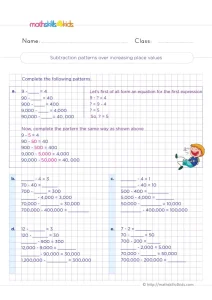 Worksheet3rd Grade Subtraction Patterns Worksheet: Over Increasing Place Values
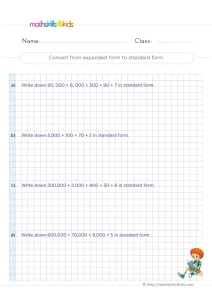 Worksheet3rd Grade Writing Numbers from Expanded Form Worksheet: Up to Six Digits
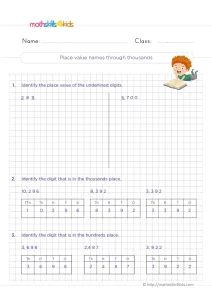 Worksheet3rd Grade Thousands and Hundreds Digits Worksheet: Name Each Place
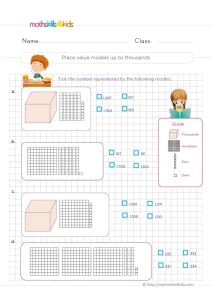 Worksheet3rd Grade Place Value Blocks Matching Worksheet: Cubes, Flats, Rods and Ones
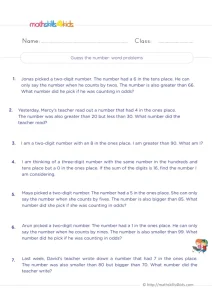 Worksheet2nd Grade Two-Digit Number Riddles Worksheet: Use the Clues, Find the Number
A few related activities
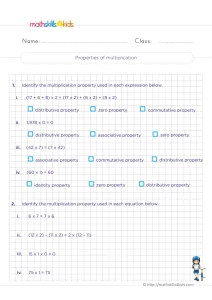 Tick the right property for four equations, from 1,978 x 0 = 0 to (60 x 1) =…See the activity3rd Grade 8 Times Table Worksheet: 12 Column Facts and a Doubling Trick
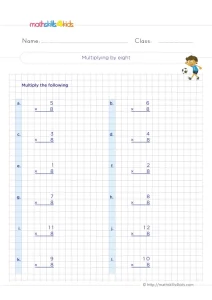 Twelve column facts times 8, from 1 × 8 to 12 × 8, in a mixed order. Double…See the activity3rd Grade Addition and Subtraction Problems: 3 Stories
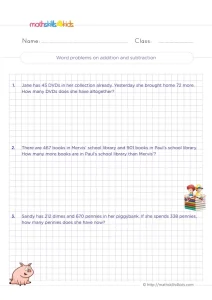 Three word problems about DVDs, school library books and pennies in a piggy bank. Your child adds or…See the activity
