1st Grade Subtracting 1 Worksheet: Take 1 From Two-Digit Numbers
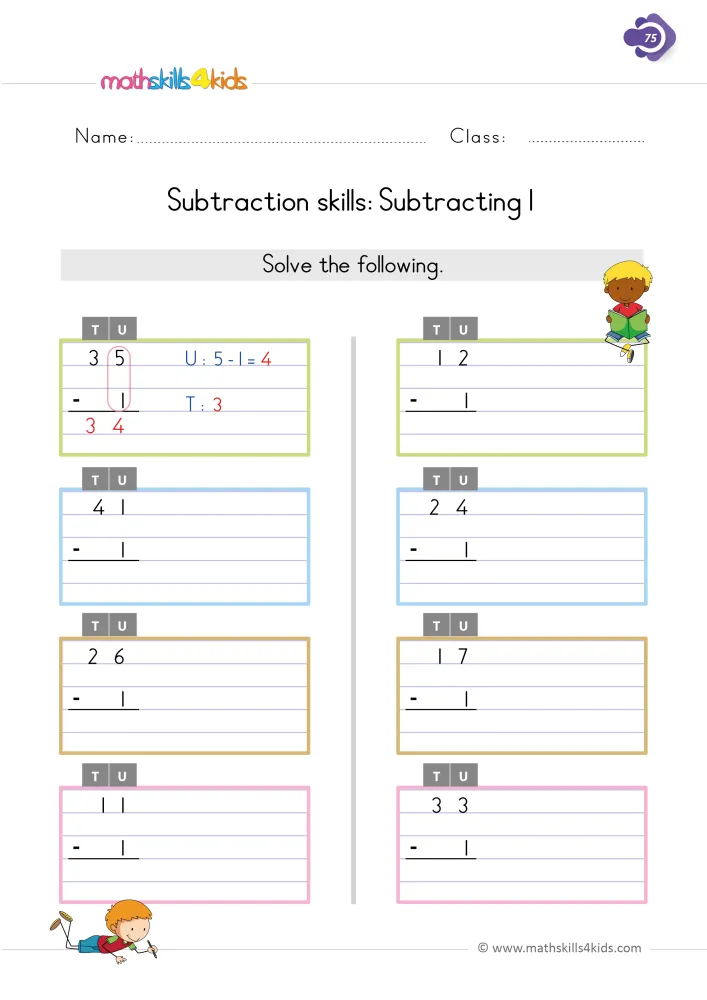
A six-year-old who can say the number just before 35 already knows most of this page, even if they have never seen subtraction written in columns. This 1st grade subtracting 1 worksheet connects that counting habit to the written method. Each box holds a two-digit number with - 1 underneath, set in small tens and ones columns. The first box is a worked example: 35 - 1, with the ones column circled and a note beside it, 5 - 1 = 4, then the tens, 3. Seven more problems follow, from 12 - 1 to 41 - 1. Your child writes each answer on the line below. A second page gives the answer key.
Why the circle around the ones matters
Taking away one is the first subtraction fact most children trust. They have heard it in songs and counted it on fingers. What is new here is the place where the change happens.
In the worked example, a red loop goes around the 5 and the 1, the two digits in the ones column. So the page tells the child, without words, that only the ones change. The tens digit, 3, comes straight down.
That is the core of column subtraction with two-digit numbers: subtract the ones, then write the tens. Here no problem needs regrouping, so your child can practice the order of the steps with numbers that feel safe. Then 41 - 1 and 11 - 1 add a quiet challenge, because the ones digit becomes zero.
At the table: 41 - 1 and 11 - 1
Start by reading the example together. Point to the red loop and ask, "Which column changes when we take 1?"
Most children solve 24 - 1 and 33 - 1 quickly. The pink box with 11 - 1 is where a child may stop. The ones turn into zero, and some children write only 1, or leave the ones place empty. Instead of correcting, tap the empty ones place and ask, "What goes in the ones column now?"
The blue box, 41 - 1, gives the same moment a second time. A child might write 4 or 39. Ask, "Did the tens change in the example?" Let them look back at 35 - 1 and decide. Finding the answer in the example builds real independence.
One at a time, all through the day
Subtracting 1 hides in daily life. When you set the table, count the forks, then take one back to the drawer and ask how many stay. At bedtime, point to the page number in a book, then turn back one page and read the new number together.
Also, the rhyme Ten in the Bed does this sum ten times in a row. Each verse, one rolls out, so hold up ten fingers and fold one down as you sing.
These moments keep tens and ones close to counting. Finally, check the page together with the answer key and name the effort: "You looked at the ones column first every time."
About this 1st grade subtracting 1 worksheet and its full answer key
Download the worksheet: 1st Grade Subtracting 1 Worksheet: Take 1 From Two-Digit Numbers
 Worksheet3rd Grade Addition and Subtraction Problems: 3 Stories
 Worksheet3rd Grade Adding and Subtracting Like Fractions Worksheet: Eight Sums
 Worksheet3rd Grade Unit Fraction of a Number Worksheet: 1/12 of 24 and More
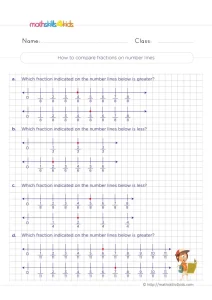 Worksheet3rd Grade Comparing Fractions Closer to Zero Worksheet: Which Dot Wins?
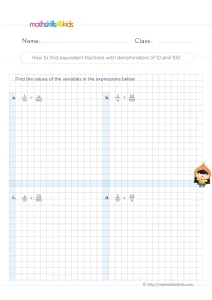 Worksheet3rd Grade Equivalent Tenths and Hundredths Worksheet: Find the Letter
A few related activities
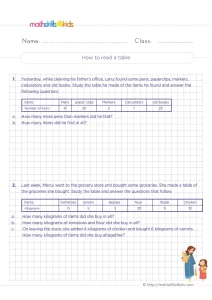 Two small tables, one of office items and one of groceries in kilograms. Your child finds the numbers,…See the activity3rd Grade 1 Times Table Worksheet: 18 Column Facts and the Identity Rule
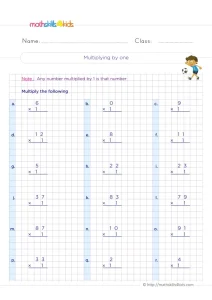 Eighteen column facts times 1, from 0 × 1 to 91 × 1. One rule solves them all:…See the activity3rd Grade Expressions for Arrays Worksheet: Write Each Product
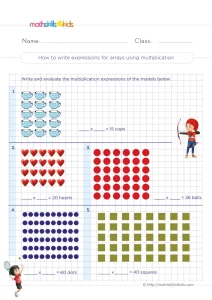 Five arrays of cups, hearts, balls, dots and squares. Your child writes the multiplication expression for each one…See the activity
