Count the Daffodils in Each Row: One, Two, Three, Then Four
Some pages hide a pattern in plain sight. This Pre-K daffodil counting worksheet with growing rows fills its table with yellow daffodils on short green stems. The first row holds one, then come two, three and four. A finger chart for 1 to 5 sits at the top. Next to each row, five colored dots wait for a circle. Your child counts the flowers and circles the matching number. No row reaches five, so the last dot always stays empty. Later, the growing rows become a quiet lesson in number order.
One more, and one more again
Counting to four is one thing. Seeing that four is three plus one more is another. It is a key step in early number sense, because children who grasp "one more" begin to see that each number is built on the one before.
This page makes that visible. Row after row, a single flower joins the group, so the answers climb 1, 2, 3, 4 from top to bottom. That pattern of one more each row is the hidden gift of the sheet.
However, keep it a secret at first. If your child spots the pattern too early, they may stop counting and simply guess the next number. Let them count every flower. Then reveal the surprise.
Fingers up, fingers down
Begin with the hands at the top. Raise fingers along with the chart while you both count to five.
- For each row, your child puts up one finger per flower: "One daffodil, one finger."
- Ask, "How many fingers are up?" Then they find that number in the dots.
- Fold the fingers down before moving to the next row.
Used like this, fingers as a tool carry the count from the picture to the dots. The likely slip comes in the last row. The four daffodils look exactly alike, and the chart above ends at five, so a child may raise a whole hand out of habit. Instead of correcting, ask, "Can you touch each flower with one finger?" Then compare the fingers with the flowers.
When all four rows are circled, ask one more question: "What do you notice?" Some children see the staircase on their own.
Growing a row of your own
Out in the garden or the park, collect a few leaves or petals together. Lay them in rows on a step: one, then two, then three. Next, ask your child to build the following row, and listen for "one more." At home, you can do the same with spoons on the table. This kind of spring math needs no paper.
Also, read Mouse Count by Ellen Stoll Walsh. A hungry snake drops mice into a jar, one at a time, while your child counts along. Then the clever mice escape. They leave one by one, too.
Finally, name the work, not the answer: "You counted every daffodil, even after you guessed the pattern."
About this Pre-K daffodil counting worksheet with growing rows of flowers
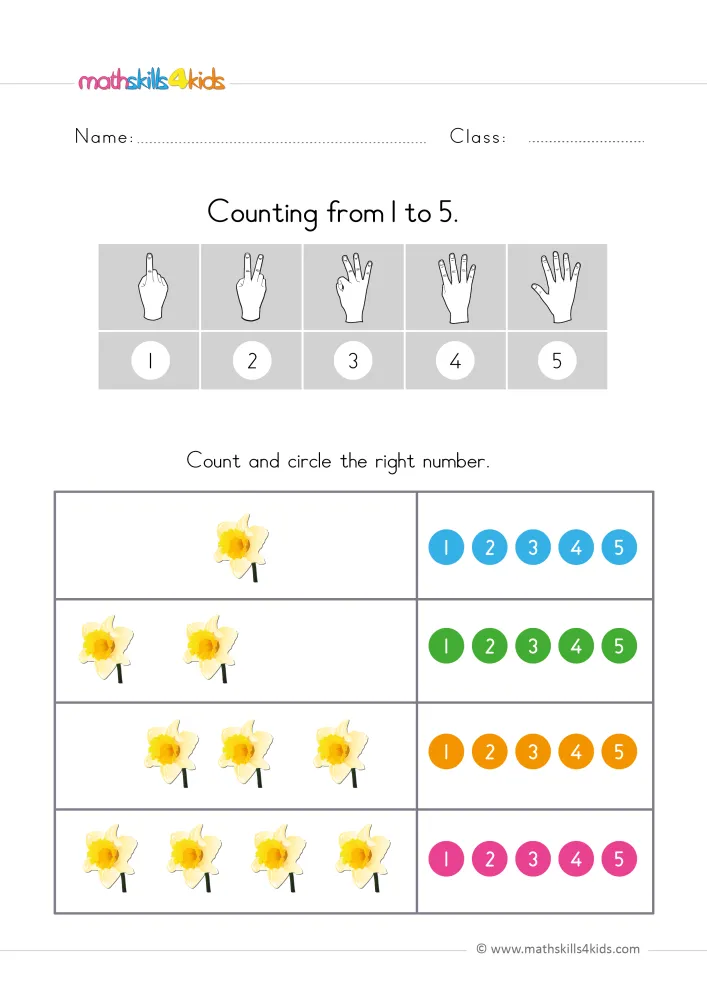
Download the worksheet: Count the Daffodils in Each Row: One, Two, Three, Then Four
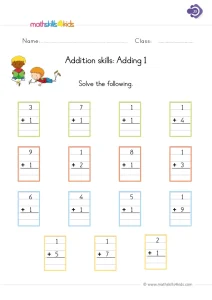 Worksheet1st Grade Adding 1 Worksheet: Fifteen Vertical Sums of One More
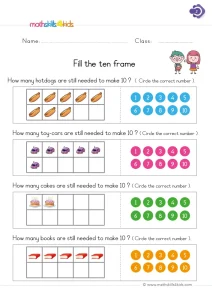 Worksheet1st Grade Ten Frame Make 10 Worksheet: How Many More?
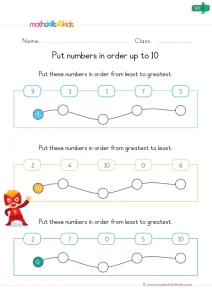 WorksheetKindergarten Ordering Numbers to 10 Worksheet: Least to Greatest and Back
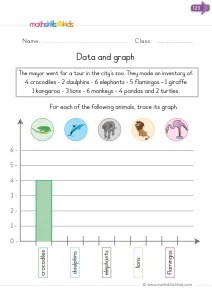 WorksheetKindergarten Make a Bar Graph Worksheet: Count the Zoo, Then Draw Each Bar
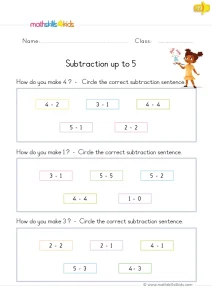 WorksheetKindergarten Choose the Right Subtraction Worksheet: Make 4, 1 and 3
A few related activities
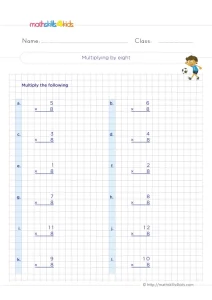 Twelve column facts times 8, from 1 × 8 to 12 × 8, in a mixed order. Double…See the activity3rd Grade Multiplication Properties Worksheet: Zero, Identity, Commutative
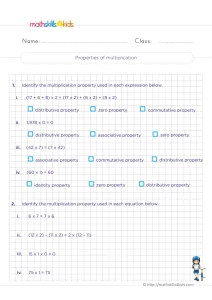 Tick the right property for four equations, from 1,978 x 0 = 0 to (60 x 1) =…See the activity
