Which Shape Is Not Like the Others? Pentagons, Hearts, Squares and Stars
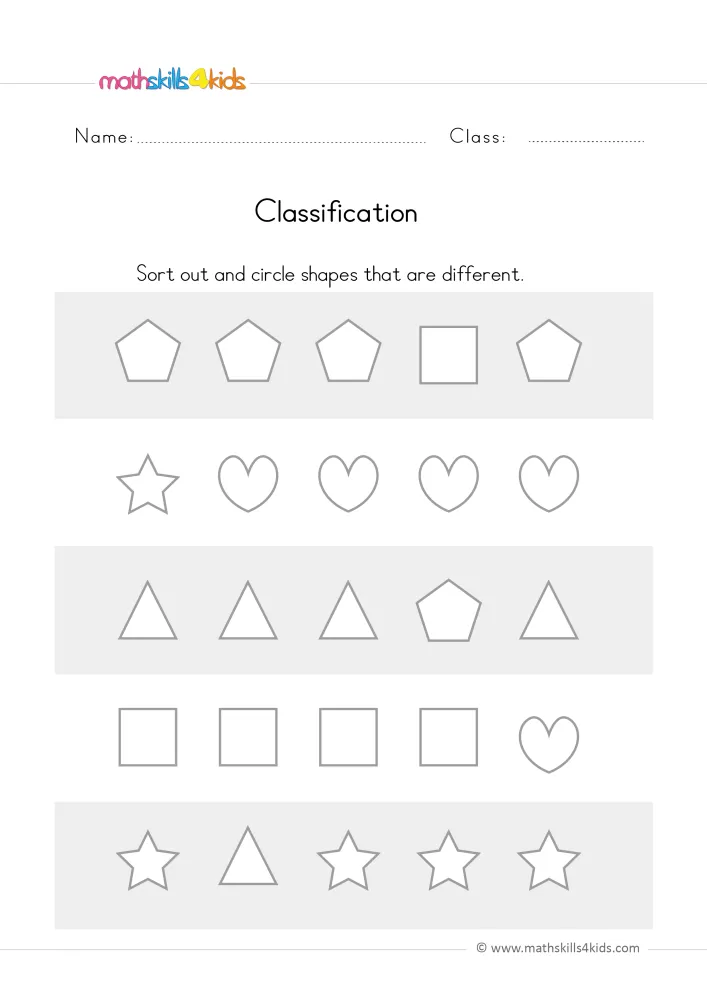
Show a pentagon to a group of preschoolers and someone will usually call it "a house." That nickname is a good sign: the child has noticed the pointed roof. This Pre-K odd one out shapes worksheet with pentagons builds on that eye for detail. Five rows of gray outlines each repeat one shape four times and slip in a different one. Some rows are quick. Others put two straight-sided shapes side by side, so your child has to look twice before the pencil moves.
Close cousins sharpen the eye
Telling a heart from a star is easy, because one is round and the other is spiky. Telling a square from a pentagon is harder, since both have straight sides and flat bottoms. Noticing that kind of small difference is called visual discrimination, and it is the same skill your child will later need to tell b from d.
The top row puts that challenge first. A square stands fourth in a line of pentagons, so the only clue is the missing roof. Look up, not down. The third row turns it around: a pentagon hides among four triangles.
Then the page gives the eye a rest. A star opens a row of hearts, a heart ends a row of squares, and a triangle sits second among stars. That mix of hard and easy rows keeps confidence up.
"Which one has no roof?"
If the top row feels heavy, begin with the hearts instead. Your child will spot the star at once, and that quick success makes the harder rows feel possible.
Back at the top, some children circle a pentagon, often the first one, simply because they started looking from the left. Wait a moment. Rather than pointing to the square, ask, "Which one has no roof?" Then let your child run a finger along the top edge of each shape. The flat top of the square tells the story.
Also, ask for a reason after each ring: "How did you know?" Putting same and different into words is harder than circling. However, a child who can say "it has no point" has found the rule, not just the answer. The pentagon and square pair is worth a second visit later in the week.
A napkin, a pair of scissors, a card game
Fold one corner of a square paper napkin down, and hold it up: "How many sides now?" Your child can count five and see a pentagon born from a square. Next, cut ten cardboard cards with one shape on each, and lay out four alike and one stranger. Ask your child to tap the stranger and explain the sorting rule.
Those same cards make a set for Memory, too. Turn them face down in pairs, then take turns flipping two at a time. Matching a pentagon to a pentagon, and not to a square, is preschool logic in action.
Finally, name the effort when the page is done: "You checked the top of every shape in that first row. That's how you knew."
About this Pre-K odd one out shapes worksheet with pentagons and stars
Download the worksheet: Which Shape Is Not Like the Others? Pentagons, Hearts, Squares and Stars
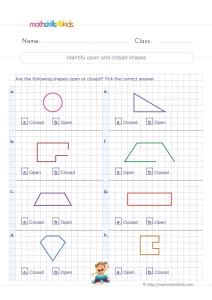 Worksheet3rd Grade Open and Closed Shapes Worksheet: 8 Shapes to Check
 Worksheet3rd Grade Two Numbers from Sum and Difference Worksheet: 3 Puzzles
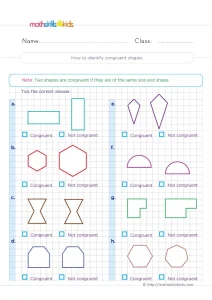 Worksheet2nd Grade Congruent Shapes Worksheet: Same Size and Same Shape?
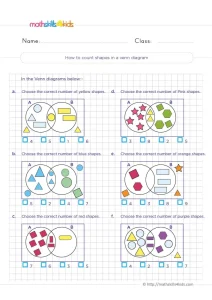 Worksheet2nd Grade Venn Diagram Color Counting Worksheet: Find Every Shape of One Color
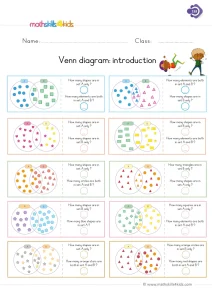 Worksheet1st Grade Two-Circle Venn Diagram Worksheet: Count the Shapes in Each Set
A few related activities
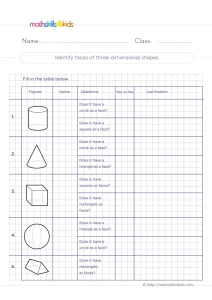 A table of five solid shapes, from a cylinder to a triangular prism. Name each one, answer yes…See the activity3rd Grade Divide 3-Digit by 1-Digit Word Problems: 3 Stories
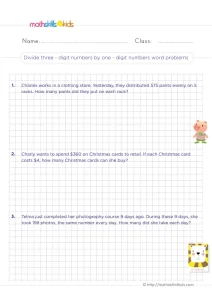 Three word problems about pants on racks, Christmas cards and photos. Your child divides a 3-digit number by…See the activity3rd Grade Like Denominator Fraction Story Problems Worksheet
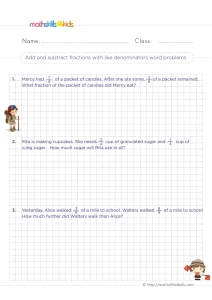 Three short stories about candies, cupcakes and a walk to school. Your child adds or subtracts fractions with…See the activity
