Top, Middle or Bottom? Breakfast Towers for Pre-K Position Practice
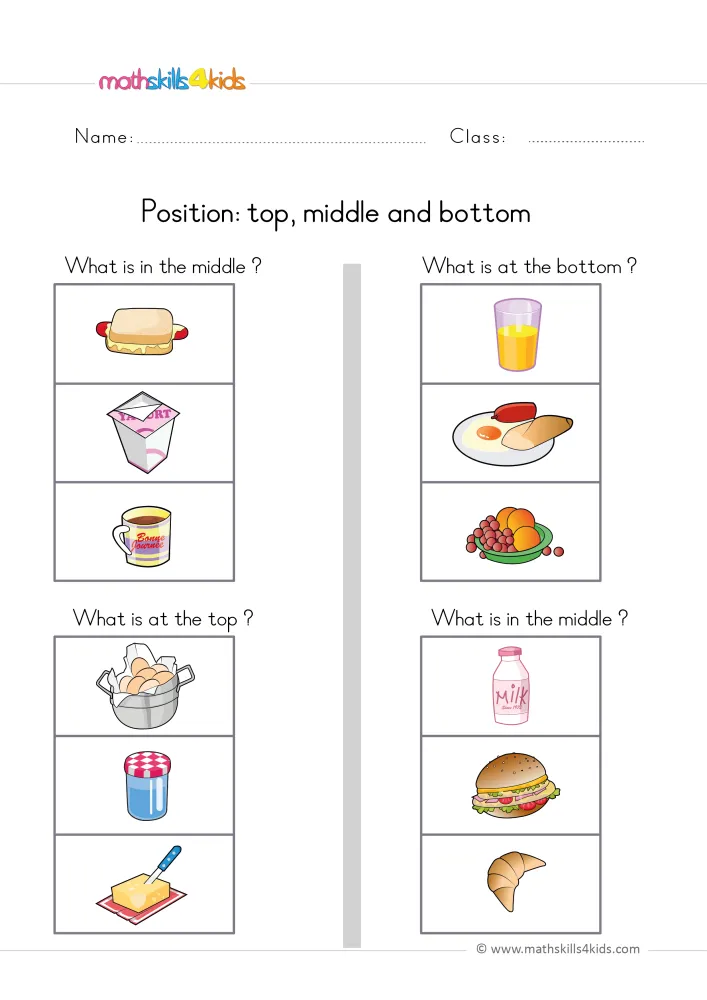
At breakfast, a child who presses a slice of cheese between two slices of bread has already built a middle. This Pre-K top, middle and bottom worksheet turns that kitchen habit into four towers of three boxes. Every box holds a breakfast food: a yogurt pot, a jam jar, a croissant, a glass of orange juice. Two questions ask for the middle, one for the top and one for the bottom. So your child has to scan each tower from end to end, not just glance at it.
Three floors instead of two
With two levels, a child only has to find an end. A third level changes the job. The middle box touches both of the others, so your child must keep the whole tower in mind. That is the step from single words to real positional language.
The page asks for the middle twice, in the first tower and the last. In between, the top and bottom questions keep the eyes moving up and down. That steady movement is visual scanning, the same skill children use later to read a list of words.
A finger elevator, from top floor to ground floor
Let your child's finger ride down each tower like an elevator, stopping at every floor. "Eggs, jam, butter."
The likely slip comes in the second tower. Right after a middle question, the eye lingers on the middle box, and the plate of egg and sausage is the busiest picture there. So some children circle it. Rather than correcting, ask, "Ride down as far as you can go. Where does the elevator stop?" The bowl of fruit waits at the bottom.
Also, this page shows two sandwiches: one at the top of the first tower, one in the middle of the last. Ask, "Same food, different floor?" That question invites logical reasoning, because the answer depends on the place, not the picture.
Stacking breakfast, one floor at a time
When you set the table, stack three bowls and ask, "Which bowl sits in the middle?" Later, let your child build a tower of three plastic cups and describe it. "Red on top, blue in the middle, yellow at the bottom." Talking about a stack this way grows descriptive vocabulary. Also, placing each cup with care trains fine motor skills.
Next, read Ten Apples Up On Top! by Theo LeSieg, the pen name of Dr. Seuss. When three apples balance on a head, stop and ask which apple sits in the middle.
Finally, praise the looking: "You checked all three floors every time."
About this Pre-K top, middle and bottom worksheet with breakfast foods
Download the worksheet: Top, Middle or Bottom? Breakfast Towers for Pre-K Position Practice
 Worksheet3rd Grade Reading Coordinates on a Map Worksheet: Find the Places
 Worksheet1st Grade Shapes Traced from Solids Worksheet: Can You Trace It?
 Worksheet1st Grade Equal or Unequal Parts Worksheet: Tick Every Fair Split
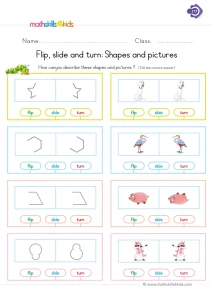 Worksheet1st Grade Flip, Slide and Turn Worksheet: Tick the Move for Each Pair
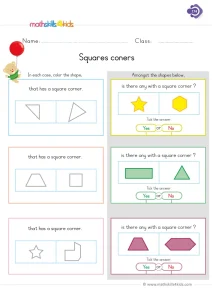 Worksheet1st Grade Find the Square Corners Worksheet: Color, Then Tick Yes or No
A few related activities
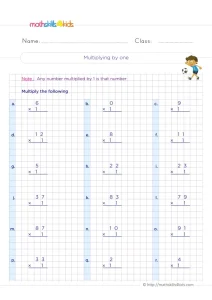 Eighteen column facts times 1, from 0 × 1 to 91 × 1. One rule solves them all:…See the activity3rd Grade Reading a Data Table Worksheet: 2 Tables
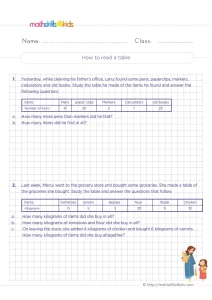 Two small tables, one of office items and one of groceries in kilograms. Your child finds the numbers,…See the activityGrade 2 Math — Time to the half hourGrade 2 math review game (ages 7–8): time to the half hour. Instructions are read aloud, and every…See the activity
