1st Grade Flip, Slide and Turn Worksheet: Tick the Move for Each Pair
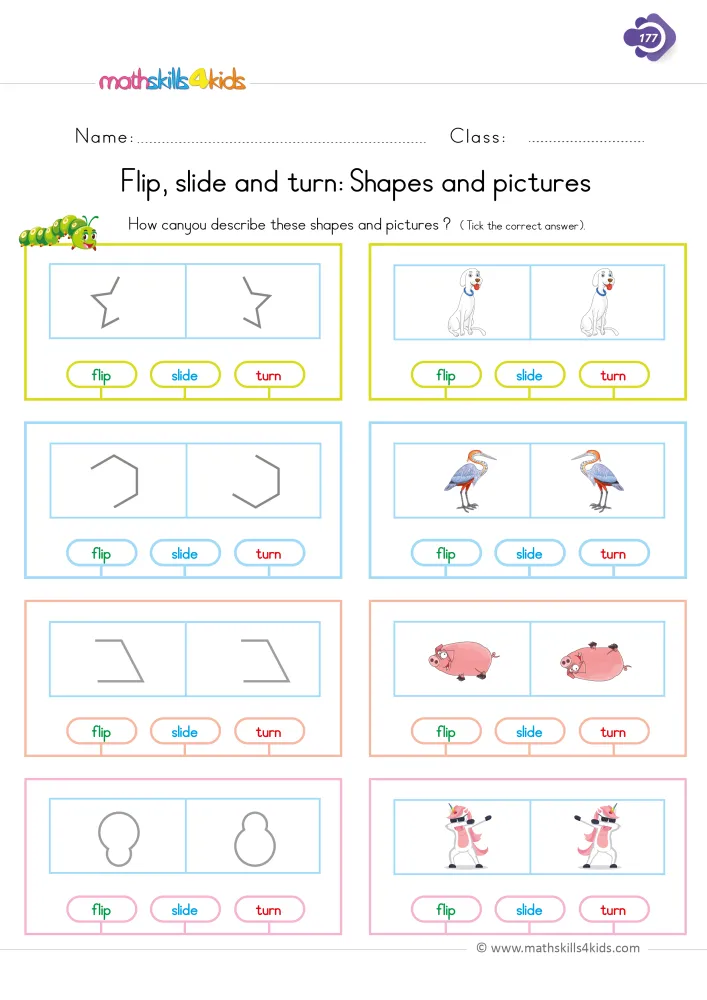
Hold a toy dog up to a mirror and ask a six-year-old what changed. Most will say nothing at first, then notice the nose now points the other way. That small surprise is the heart of this 1st grade flip, slide and turn worksheet. Eight boxes each show a shape or picture twice: once as it starts, once after a move. On the left side come outline shapes, such as an open star and a broken hexagon. On the right side come pictures, such as a white dog, a heron, a pink pig and a dancing unicorn. Under each pair, the child ticks the move that matches: flip, slide or turn. A second page gives the answer key.
Why three moves need three words
A slide moves a figure without changing how it faces. A flip makes a mirror image, so left and right swap. A turn spins the figure around a point, so it may end up upside down. Children see all three every day, yet they rarely have words for them.
This page gives each move a clear example. The white dog only shifts over, so it shows a slide. The heron looks the other way, which shows a flip. The pink pig ends up on its back, which points to a turn.
Naming moves like these prepares later work on symmetry. It also turns geometry words into tools. Words make the change visible.
At the table: act out each move
Cut a small paper shape, such as a triangle with one corner colored, and keep it beside the page. When a pair puzzles your child, have them copy the first figure with the paper, then try each move until it matches the second.
The outline shapes on the left side are the harder half. Without a face or a nose to follow, a child may tick slide whenever the two shapes look alike. Instead of correcting, ask, "Does it face the same way?"
Some balanced shapes look the same after a flip or a turn. If your child argues for one move, let them prove it with the paper shape, then compare with the answer key. Ask, "Can you show me that move?"
After the page: moves in the living room
Moves are easiest to feel with the whole body. Simon Says works well here, and later your child can give the orders. Try "Simon says slide one step to the side," "Simon says turn around," or "Simon says flip your hand over."
At the table, push a cup across without spinning it, then flip a pancake or turn a puzzle piece until it fits. Each time, ask which of the three words describes what happened. A mirror also helps: hold up a letter card and look at the reflection together.
Finally, check the page and praise the reasoning: "You tested the move before you ticked." Naming shape moves then becomes a habit, not a guess, each time they tick the answer.
About this 1st grade flip, slide and turn worksheet and its answer key
Download the worksheet: 1st Grade Flip, Slide and Turn Worksheet: Tick the Move for Each Pair
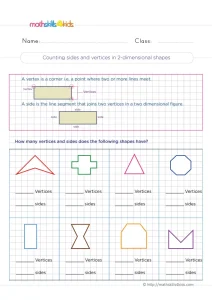 Worksheet3rd Grade Counting Sides and Vertices Worksheet: 8 Flat Shapes
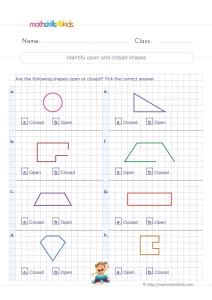 Worksheet3rd Grade Open and Closed Shapes Worksheet: 8 Shapes to Check
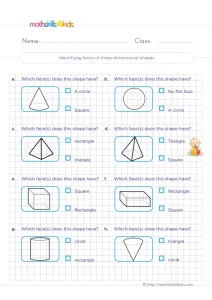 Worksheet2nd Grade Faces of Solid Shapes Worksheet: Which Flat Faces Does It Have?
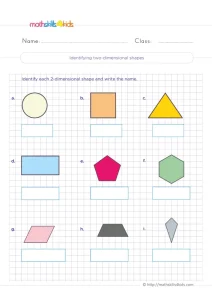 Worksheet2nd Grade Write the Shape Names Worksheet: Nine Flat Shapes on a Grid
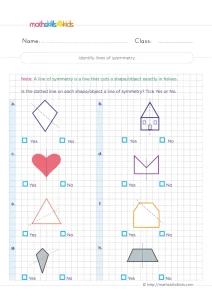 Worksheet2nd Grade Is It a Line of Symmetry Worksheet: Check Each Dotted Line
A few related activities
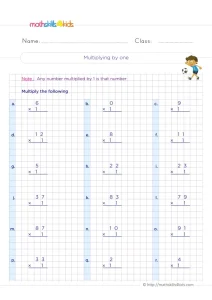 Eighteen column facts times 1, from 0 × 1 to 91 × 1. One rule solves them all:…See the activity3rd Grade Reading a Data Table Worksheet: 2 Tables
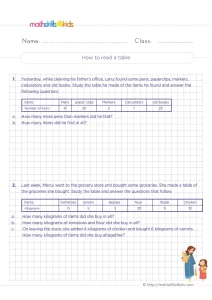 Two small tables, one of office items and one of groceries in kilograms. Your child finds the numbers,…See the activity3rd Grade Expressions for Arrays Worksheet: Write Each Product
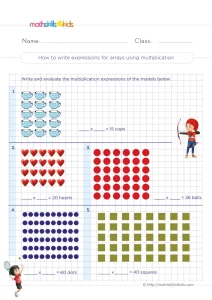 Five arrays of cups, hearts, balls, dots and squares. Your child writes the multiplication expression for each one…See the activity
