2nd Grade Spinner Chances Worksheet: Compare the Sections
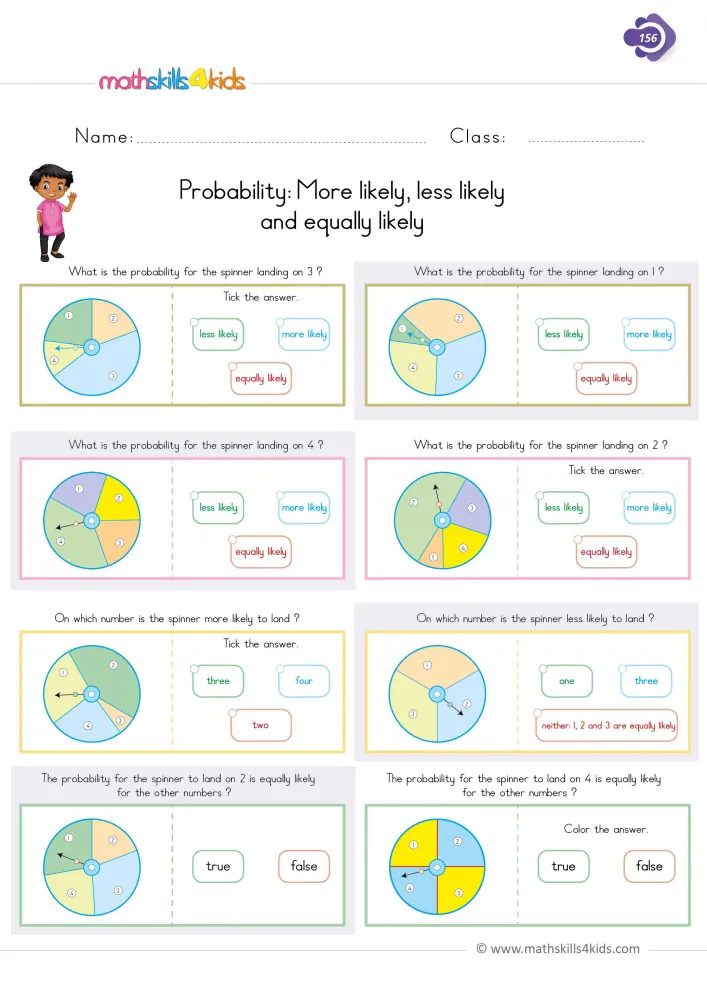
Watch a seven-year-old flick a board game spinner and you will often hear a hopeful "Come on, 4." Few stop to notice that some numbers own a much bigger slice of the circle. This 2nd grade spinner chances worksheet is all about that slice. Eight spinners fill the page, each split into three or four numbered sections of different colors and sizes. In some boxes your child ticks less likely, more likely or equally likely. In others, they pick the number the arrow will most often land on, or color true or false. A second page gives the answer key.
Why the biggest slice wins
On a spinner, chance is something you can see. The bigger a section, the more of the circle it covers, so the arrow stops there more often. In the same way, equal sections give equal chances.
This is a gentle first step into probability, and it rests on a skill second graders are building anyway: comparing the size of parts of a whole. For example, the last spinner on the page is cut into four matching quarters, so every number is equally likely. On the spinner just beside it, one number takes up a huge share and the others are thin wedges.
So your child learns to read area, not luck. The question becomes "Which part is biggest?" rather than "Which number do I like?"
At the table: ignore the arrow
Each spinner has an arrow drawn on it, and that arrow is the main trap. Many children answer with the number the arrow points to right now. Instead of correcting, ask, "If we spin again, where will it stop most often?"
Then let your child trace the edge of each section with a finger, because a slow trace makes the big and small slices easy to feel.
The question about the number 1 in the top right box is a good test. However, its section is only a narrow wedge. Ask, "Is that slice bigger or smaller than the others?" Let your child decide between less likely and more likely alone.
Finally, the true or false boxes need a comparison of all sections. Point to each one.
Paper spinners and Chutes and Ladders
A homemade spinner turns this page into an experiment. Draw a circle on cardboard, split it into one big section and two small ones, then spin a paper clip around a pencil tip at the center. Then spin twenty times together and keep a tally of where the clip stops. The big section usually wins, and your child sees why.
Also, take out a game with a spinner, such as Chutes and Ladders. Before each turn, ask which number is most likely, then check whether the sections are really equal.
When the page is done, praise the looking: "You compared the sections instead of following the arrow. That was careful thinking."
About this 2nd grade spinner chances worksheet and its answer key page
Download the worksheet: 2nd Grade Spinner Chances Worksheet: Compare the Sections
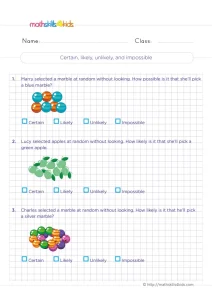 Worksheet3rd Grade Likely and Unlikely Events Worksheet: Marbles and Apples
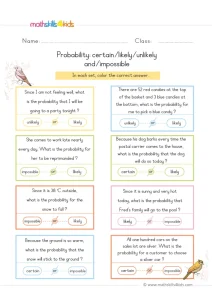 Worksheet2nd Grade Everyday Events Chance Worksheet: Color the Right Word
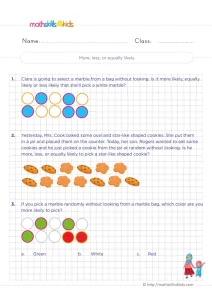 Worksheet2nd Grade More or Less Likely Worksheet: Marbles and Cookies
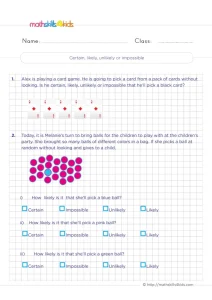 Worksheet2nd Grade Certain or Impossible Worksheet: Cards and Party Balls
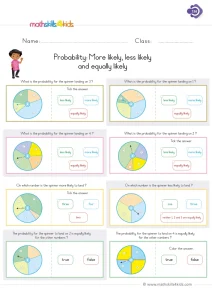 Worksheet1st Grade Spinner Probability Worksheet: More Likely, Less Likely or Equally Likely
A few related activities
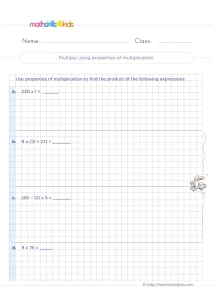 Work out four products, from 230 x 1 to 9 x 75, with the identity, distributive and commutative…See the activity3rd Grade Count Edges of 3D Shapes Worksheet: Faces and Vertices Too
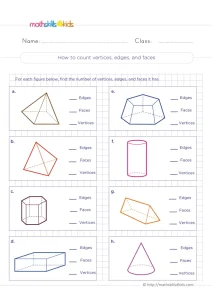 Eight drawn solids, from a square pyramid to a hexagonal prism and a cone. Count the edges, faces…See the activity3rd Grade Naming Solid Figures Worksheet: Prisms, Pyramids and More
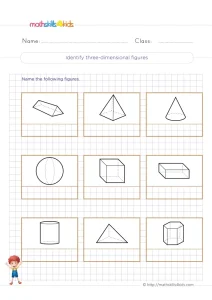 Nine drawn solids to name, from a cube and a cone to a hexagonal prism and a triangular…See the activity
