2nd Grade Adding Four or More Numbers Worksheet: Pennies, Puzzles, Crickets
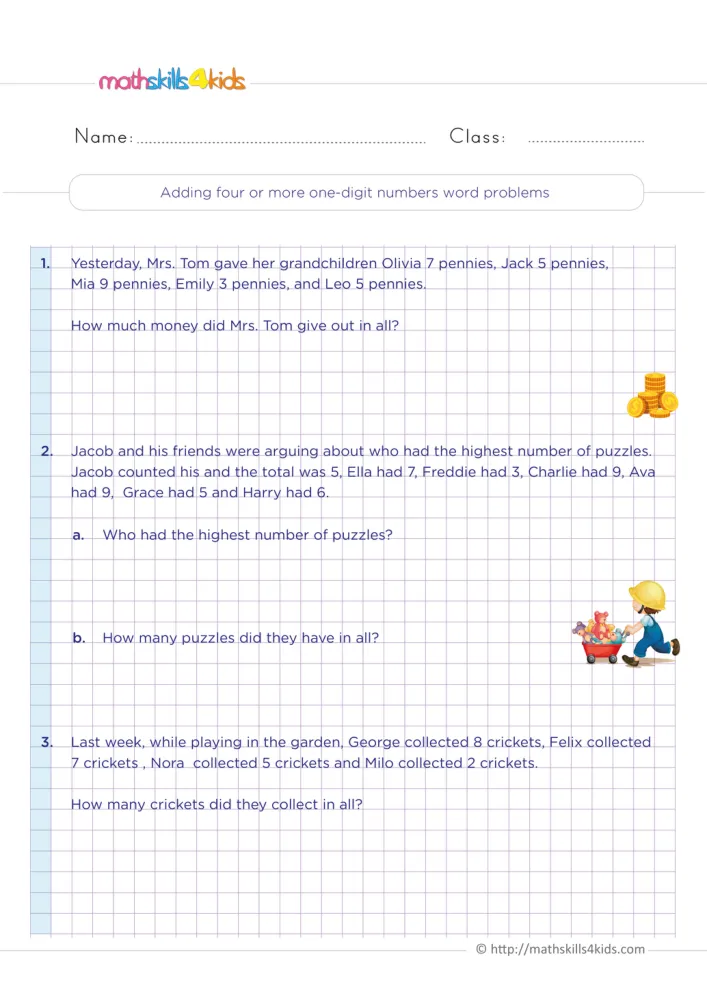
Ask a seven-year-old to add 7, 5, 9, 3 and 5 in their head and the numbers start to slip away before the end. Writing them down, then grouping them, changes everything. This 2nd grade adding four or more numbers worksheet offers three short stories. Mrs. Tom gives pennies to five grandchildren. Jacob and six friends count their puzzles, and your child finds who had the most, then the total. Finally, four children collect crickets in the garden. Every amount uses one-digit numbers, but the lists are long, so organization matters more than speed. A second page gives the answer key.
Why order and grouping help with long sums
Adding a long list is less about arithmetic and more about keeping track. Two ideas make it manageable. First, you can add in any order: 7 + 3 gives the same result as 3 + 7, and the total never changes when you move numbers around.
Second, pairs that make ten are worth finding first. In the pennies story, Olivia's 7 and Emily's 3 make ten, Jack's 5 and Leo's 5 make another ten, and Mia's 9 joins easily after that. The crickets work the same way: 8 and 2, then 7 and 5.
These moves are the start of real mental strategy. A child who looks for tens before adding is thinking about numbers, not just counting them. That habit pays off for years.
At the table: the puzzle story
Read the first story aloud. Then ask your child to name everyone who got pennies and write each amount in a column. A list like that helps a lot.
The puzzle story asks two different questions, so slow down. For part a, many children grab the first 9 they see and answer Charlie. Point to the names in the story and ask, "Is anyone else at 9?" Ava is, so the answer names two children. That surprise is a good moment.
For part b, seven numbers is a lot to hold. Suggest crossing out each number once it joins the total. If the sum looks odd, count the names first. Seven names should mean seven numbers in the addition.
Piggy banks, playing cards and Go Fish
Long sums show up whenever you empty a piggy bank. Spread out a handful of pennies, sort them into small piles and ask your child to add the piles, looking for tens first.
Also, card games make good practice. After a round of Go Fish, add the numbers on the cards each player kept. With four or five cards, the list grows long fast, just like on the page.
When a sum feels heavy, offer a pencil and scrap paper. Then, once you finish the worksheet, check each answer with the key. Praise the method: "You found the tens first. That made the long sum easier."
About this 2nd grade adding four or more numbers worksheet and its key
Download the worksheet: 2nd Grade Adding Four or More Numbers Worksheet: Pennies, Puzzles, Crickets
 Worksheet3rd Grade Like Denominator Fraction Story Problems Worksheet
 Worksheet3rd Grade Reading a Data Table Worksheet: 2 Tables
 Worksheet3rd Grade Two-Step Multiply and Divide Problems: 3 Stories
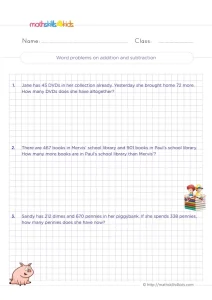 Worksheet3rd Grade Addition and Subtraction Problems: 3 Stories
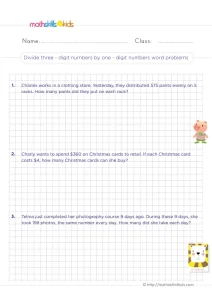 Worksheet3rd Grade Divide 3-Digit by 1-Digit Word Problems: 3 Stories
A few related activities
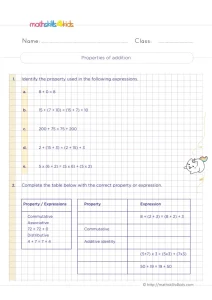 Five number sentences to name, from 8 + 0 = 8 to 5 x (6 + 2). Then…See the activity3rd Grade Divide by 1 Worksheet: 20 Facts and the Rule of One
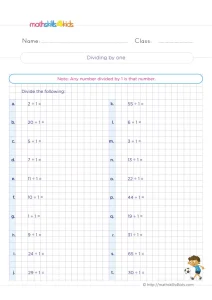 Twenty division facts by 1, from 1 ÷ 1 to 65 ÷ 1. One rule solves them all:…See the activity3rd Grade How Much Money in All Worksheet: 3 Word Problems
 Three money word problems with pennies, nickels, dimes, quarters and $1 and $5 bills. Children find each total…See the activity
