1st Grade Word Problems with Extra Information Worksheet: Two-Digit Sums
Ask a six-year-old how many paint brushes a painter owns, right after a list of pencils, pens, feathers and brushes, and the pencil often adds everything in sight. This 1st grade word problems with extra information worksheet is built around that urge. Four short problems each add a one-digit number to a two-digit number. They count instruments in a store room, cooking pots in a kitchen shop, brushes in a painter's kit and crowns in a queen's collection. Two of them hide numbers the question does not need. Every sum also crosses into the next ten, so the page doubles as practice of addition within 100. A second page gives the answer key.
Why the extra numbers are the lesson
Real questions rarely come with only the numbers you need. In the kitchen shop problem, the list holds pots, forks, spoons and knives, yet the question asks only about cooking pots. Choosing what to use is a reasoning step, and it sits at the heart of this page. Teachers call it spotting extra information.
The arithmetic moves up a level too. Each sum joins a two-digit number and a one-digit number, and each one crosses a ten. For example, 27 + 9 cannot stay in the twenties. Your child might count on, or fill up to 30 first and then add the rest.
Finally, the lined space invites a full answer sentence. It keeps the question in view right to the end.
At the table: the painter's long list
Read the painter problem aloud together. Ask your child to underline the question first, before looking at any numbers.
The likely slip is adding every number in the list. A child may add the pencils and the pens, or grab the 18 that sits right after the 48. Instead of correcting, ask, "Which things are paint brushes?"
Then let your child circle only those items. The list holds two kinds of brushes, and both count. That small discovery is the point.
In the crowns problem, the opening lines about the king and queen carry no numbers at all. So ask one more question before any adding starts: "Does this part help us count?"
Shopping bags and a hungry caterpillar
Everyday lists are full of extra information. After a trip to the store, read the receipt together and ask only about the fruit: how many apples and bananas came home? In the kitchen drawer, count the spoons and the forks, then ask a question about spoons alone.
Also, The Very Hungry Caterpillar by Eric Carle lists foods day by day. While you read, keep a running total of the fruit only, and skip the cake and the pickle. Point to each piece as you add it.
Once you finish the page, name the thinking rather than the score: "You found the numbers that mattered."
About this 1st grade word problems with extra information worksheet
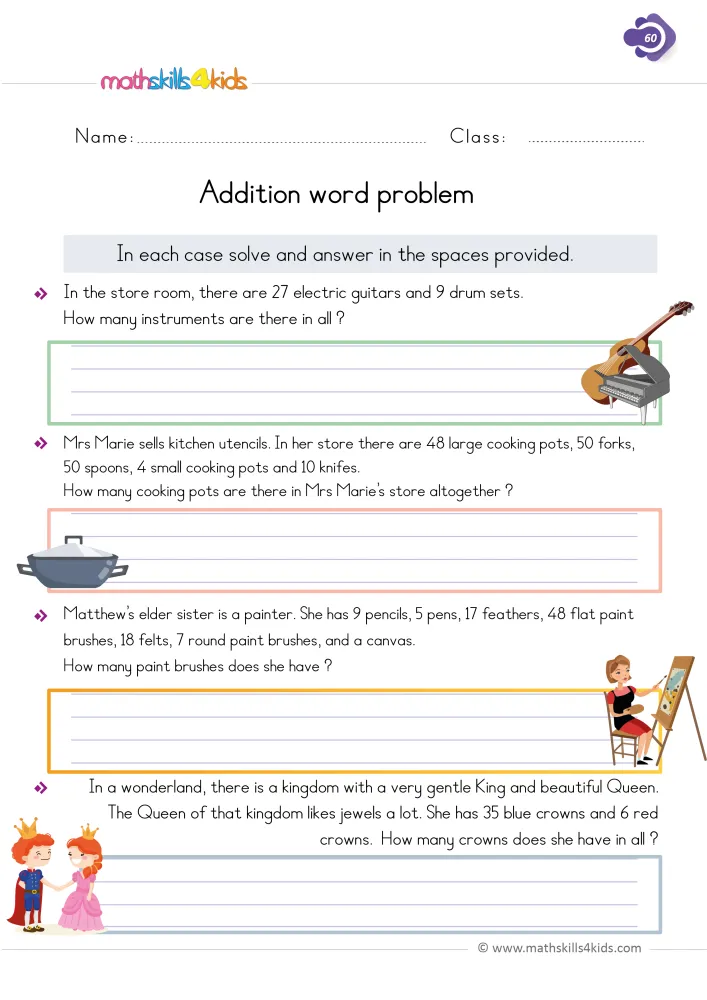
Download the worksheet: 1st Grade Word Problems with Extra Information Worksheet: Two-Digit Sums
 Worksheet3rd Grade Like Denominator Fraction Story Problems Worksheet
 Worksheet3rd Grade Reading a Data Table Worksheet: 2 Tables
 Worksheet3rd Grade Two-Step Multiply and Divide Problems: 3 Stories
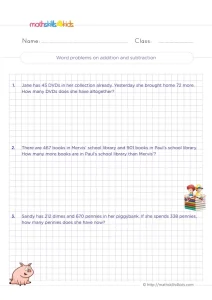 Worksheet3rd Grade Addition and Subtraction Problems: 3 Stories
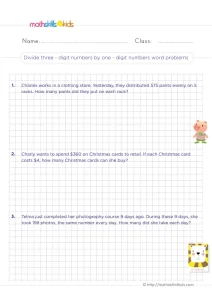 Worksheet3rd Grade Divide 3-Digit by 1-Digit Word Problems: 3 Stories
A few related activities
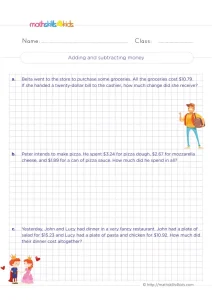 Three money word problems about groceries, a pizza and a dinner out. Children find the change from a…See the activity3rd Grade Do You Have Enough Money Worksheet: 3 Word Problems
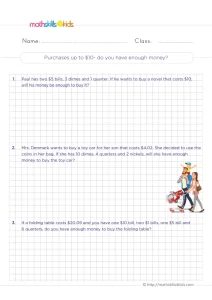 Three shopping stories with bills and coins. Children count the money, compare it with the price and decide…See the activity3rd Grade Count Coins and Bills Worksheet: 8 Money Totals
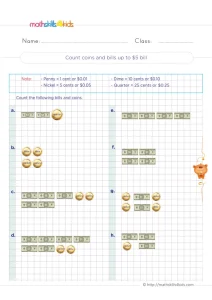 Eight sets of $1 and $5 bills with pennies, nickels, dimes and quarters. Children find each total in…See the activity
