2nd Grade Count Forward and Back Worksheet: By 2s, 5s, 10s and 100s
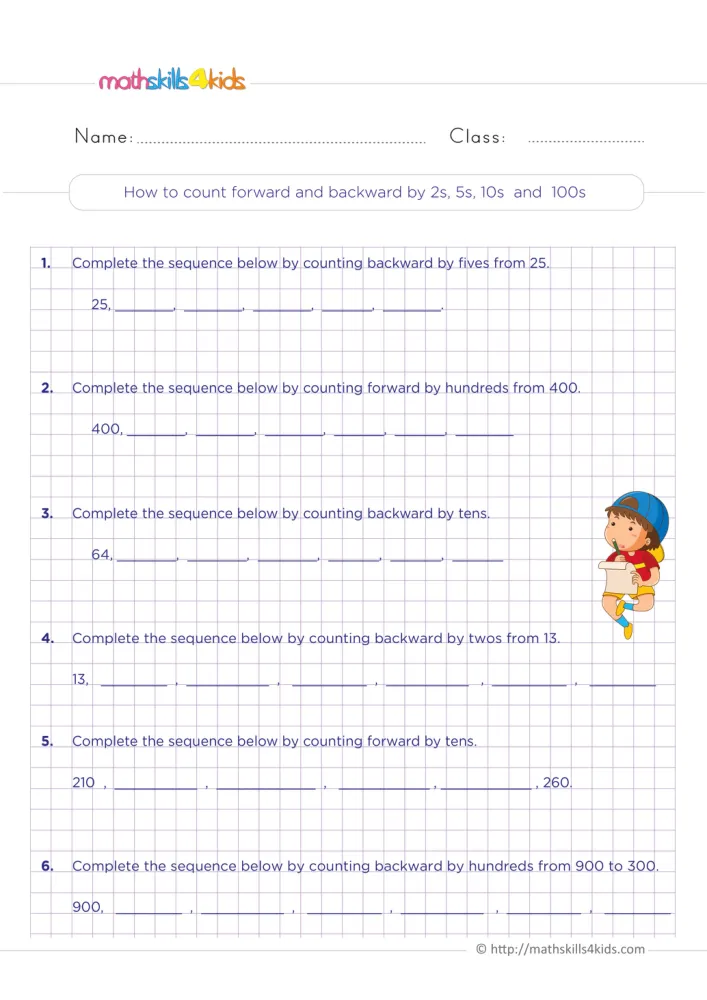
Ask a seven-year-old to count up by tens and the words roll out easily. Ask for the same jump going down, from 64, and the room goes quiet. This 2nd grade count forward and back worksheet works on exactly that pause. Six sequences of skip counting fill the page, and your child counts backward by fives from 25, forward by hundreds from 400, backward by tens from 64 and by twos from 13. Two bigger ones close the page, tens from 210 to 260 and hundreds from 900 down to 300, and each line starts with one number and a row of blanks. A second page gives the answer key.
Why going backward is the harder half
Counting forward is a habit; counting backward is a skill. To go down by tens, your child has to take ten away in their head each time, so counting backward is really quiet subtraction.
The page also mixes the step size: 2, 5, 10 and 100. Switching from one jump to another keeps your child alert, since the same rule never runs twice in a row.
Notice item 3. It starts at 64, not at a round number, so the pattern is easy to see: for example, the ones digit stays a 4 all the way down while only the tens digit changes. That is place value at work, and these number sequences make it visible. The answer key shows each jump with a small arrow and the subtraction or addition underneath.
At the table: from 64 down, and from 13
Begin with item 2, where your child will count by hundreds from 400, because most children enjoy reaching 1,000. Say, "Only the first digit moves. Watch it."
Item 3 is where slips happen. Going down from 64, a child may write 54, 44, then 43, sliding into ones. Ask, "Which digit should change each time?" and let them check the line again.
Item 4 counts backward by twos from 13. Here the numbers stay odd, and some children land on 10 or 12 by habit. Point to 13 and ask, "Odd or even? What should the next one be?"
Finally, read each finished line aloud together, since hearing the rhythm catches a wrong jump fast.
Countdowns in the kitchen and on the board
Backward counts are everywhere once you look. While dinner cooks, count down the minutes by fives on the timer, and when you pay at a shop, count change by tens: 90, 80, 70.
The board game Chutes and Ladders fits this page well because its squares run from 1 to 100, so a slide down a chute is a backward jump. Ask, "We were on 64. Where did we land?"
So practice moves both ways. Once you finish the page, check it with the answer key and name the effort: "You kept the rule going in both directions. That takes focus."
About this 2nd grade count forward and back worksheet and its answer key
Download the worksheet: 2nd Grade Count Forward and Back Worksheet: By 2s, 5s, 10s and 100s
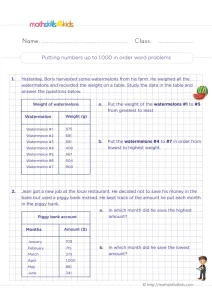 Worksheet2nd Grade 3-Digit Data Tables Worksheet: Watermelons and a Piggy Bank
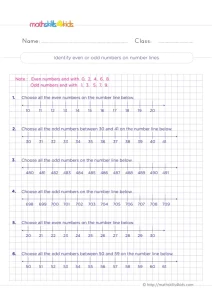 Worksheet2nd Grade Even and Odd Number Line Worksheet: Circle by the Last Digit
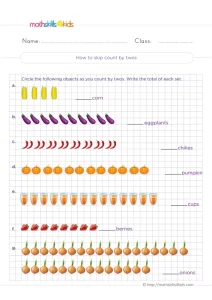 Worksheet2nd Grade Skip Count by 2 Worksheet: Circle Pairs, Write the Total
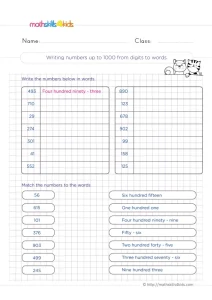 Worksheet2nd Grade Spell Out Numbers Worksheet: Digits to Number Names
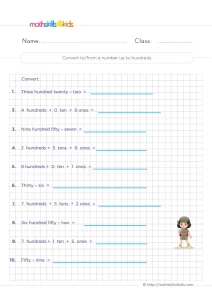 Worksheet2nd Grade Three Ways to Show a Number Worksheet: Convert Up to Hundreds
A few related activities
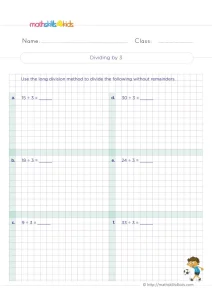 Six numbers from 9 to 33 to divide by 3 with the long division method. Each one is…See the activity3rd Grade Like Denominator Fraction Story Problems Worksheet
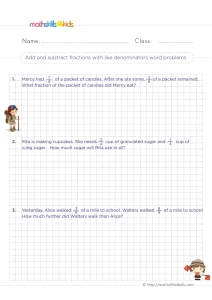 Three short stories about candies, cupcakes and a walk to school. Your child adds or subtracts fractions with…See the activity3rd Grade Divide 3-Digit by 1-Digit Word Problems: 3 Stories
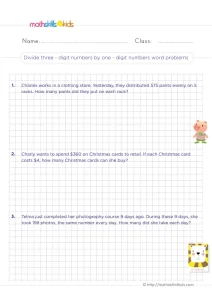 Three word problems about pants on racks, Christmas cards and photos. Your child divides a 3-digit number by…See the activity
