2nd Grade 3-Digit Data Tables Worksheet: Watermelons and a Piggy Bank
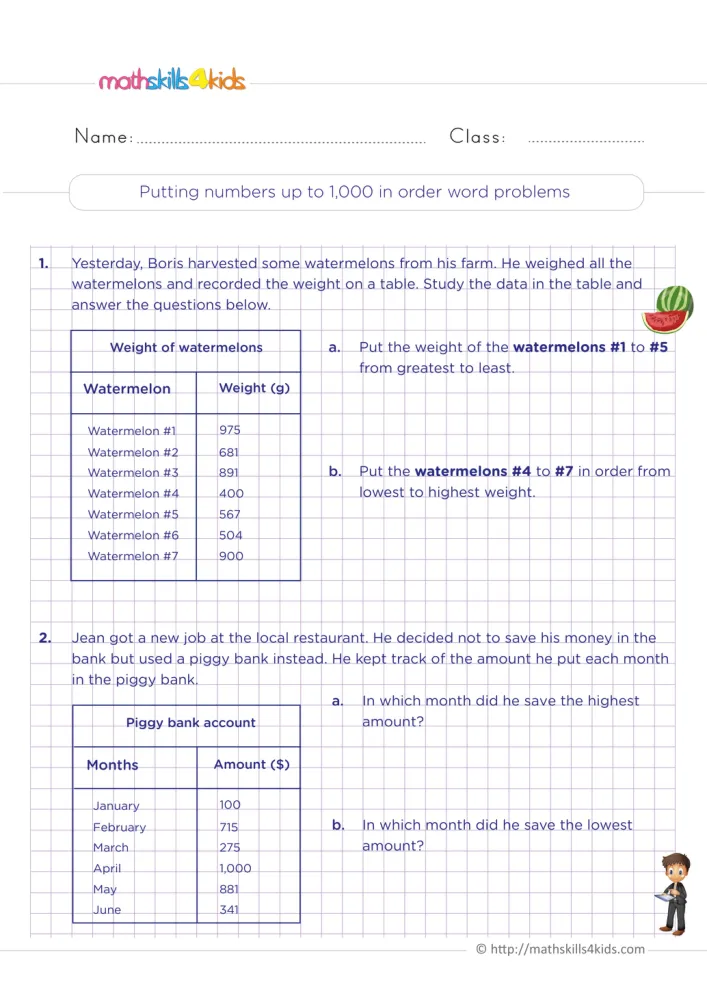
Children love a piggy bank, and a seven-year-old will happily tell you which month it got the fattest. That instinct is the starting point of this 2nd grade 3-digit data tables worksheet. In the first word problem, Boris weighs seven watermelons and records each weight in a table, from 400 to 975 grams. Your child puts watermelons #1 to #5 from greatest to least, then #4 to #7 from lowest to highest. In the second, Jean saves money from January to June, from $100 to $1,000, and your child finds the month with the highest and the lowest amount. A second page gives the answer key.
Why picking part of a table is the real skill
Sorting a full list is one job, while sorting only part of it is a sharper one, because your child must first choose which rows count. Question 1a asks for watermelons #1 to #5; question 1b asks for #4 to #7. So the same table gives two different lists, and two rows belong to both.
With three-digit numbers, the hundreds decide first. For example, 891 and 900 look close, yet the hundreds digit settles it at once. Then 504 and 567 share their hundreds, so the tens take over.
The piggy bank asks a different question: not just which amount is largest, but which month. That return trip from number to label is how adults read every chart.
At the table: rows #4 to #7, then April
Start by covering the rows you do not need with a strip of paper. For 1a, only watermelons #1 to #5 stay visible.
Question 1b is where children slip. Many keep using rows #1 to #5, or add #1 because 975 is so big. Point to the bold words and ask, "Which watermelons does this question want?" Then let them slide the paper strip down.
Watch the direction too: 1a goes greatest to least, while 1b goes lowest to highest.
In problem 2, the amount 1,000 has four digits, and some children skip it because it looks unusual. Ask, "Is 1,000 bigger or smaller than 881?" and let them reason it out.
Weigh the fruit, count the savings
Kitchen scales make this page come alive. Weigh three pieces of fruit in grams, write the numbers down, and let your child order them before checking by hand. Also, if your child keeps a piggy bank, note the total at the end of each month and compare.
At the supermarket, play a round of I Spy with prices: "I spy a number greater than 500." Your child scans the shelf and points.
Real numbers make the rule stick. Once you finish the page, check it with the answer key and praise the method: "You covered the rows you didn't need. That kept the list clean."
About this 2nd grade 3-digit data tables worksheet and its answer key
Download the worksheet: 2nd Grade 3-Digit Data Tables Worksheet: Watermelons and a Piggy Bank
 Worksheet3rd Grade Reading a Data Table Worksheet: 2 Tables
 Worksheet3rd Grade Ordering Fractions with Inequality Signs Worksheet: 8 Rows
 Worksheet3rd Grade Making Line Plots from Data Worksheet: Scores and Books
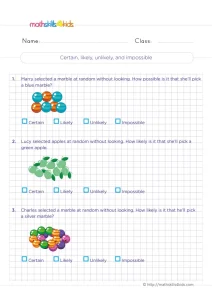 Worksheet3rd Grade Likely and Unlikely Events Worksheet: Marbles and Apples
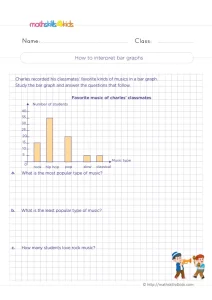 Worksheet3rd Grade Interpreting Bar Graphs Worksheet: Favorite Music
A few related activities
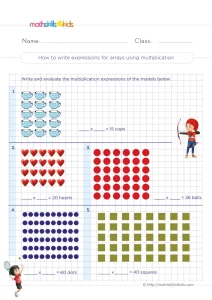 Five arrays of cups, hearts, balls, dots and squares. Your child writes the multiplication expression for each one…See the activity3rd Grade 1 Times Table Worksheet: 18 Column Facts and the Identity Rule
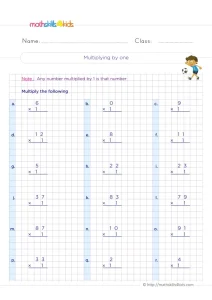 Eighteen column facts times 1, from 0 × 1 to 91 × 1. One rule solves them all:…See the activity3rd Grade Flat and Curved Faces Worksheet: Circles, Squares, Triangles
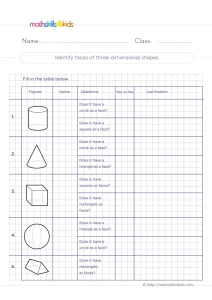 A table of five solid shapes, from a cylinder to a triangular prism. Name each one, answer yes…See the activity
