3rd Grade Metric Units of Length Worksheet
How long is a toothpick, and how far is it from Dallas to Houston? This 3rd grade metric units of length worksheet asks your child to picture each object before naming a unit. It uses metric units: millimeters, centimeters, meters and kilometers. For each of the five items, two estimates are offered with the same number, and only the unit changes. A fish fork, for example, is about 18 centimeters long, not 18 meters. The second page is an answer key. It ticks the better estimate and says why the other one is too short or too long.
Picture the object first
Before reading the two choices, ask your child to picture the object or the trip. Then they can show its size with their fingers or their arms. A toothpick fits between two fingers, so 6 centimeters is sensible, whereas 6 millimeters is barely the width of a pencil. In the same way, a grown-up is about 170 centimeters tall, because 170 meters would be taller than a building.
After that, saying the size out loud helps your child reject the estimate that does not fit.
From the smallest unit to the largest
Next, line the metric units up from small to large: millimeter, centimeter, meter, kilometer. Ten millimeters make one centimeter, and one hundred centimeters make one meter. Likewise, one thousand meters make one kilometer. So a dessert spoon is about 19 centimeters long, while the road from Dallas to Houston is about 385 kilometers.
Millimeters and kilometers come back in 4th grade, so this page is a gentle first meeting with them.
After the page: measuring at home
To begin, compare the five answers with the answer key on page two. Then take a ruler marked in centimeters and measure a spoon, a fork and a toothpick together. Ask your child to estimate each length first, and only then to check it. Finally, look at a road sign or a map app, because distances between cities are given in kilometers in most countries.
About this metric units of length worksheet and its answer key page
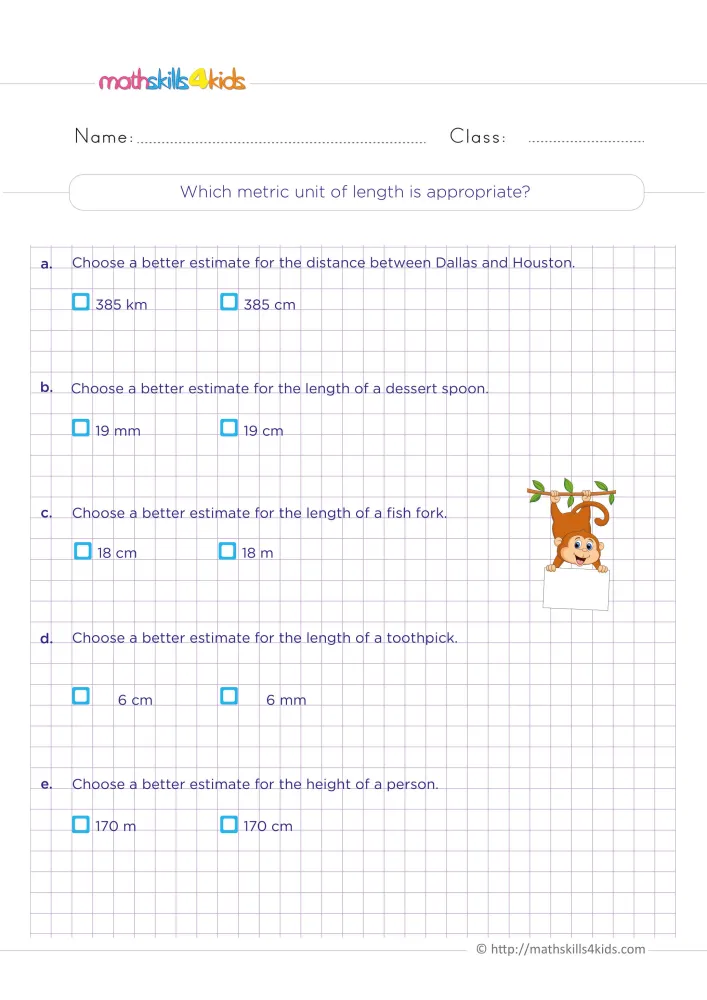
Download the worksheet: 3rd Grade Metric Units of Length Worksheet
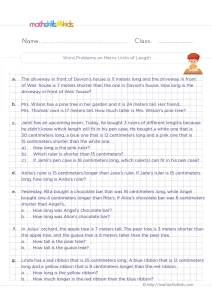 Worksheet2nd Grade Meters and Centimeters Word Problems Worksheet: Longer, Shorter, Taller
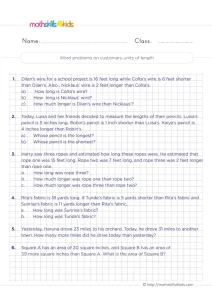 Worksheet2nd Grade Customary Units Word Problems Worksheet: Feet, Inches, Yards, Miles
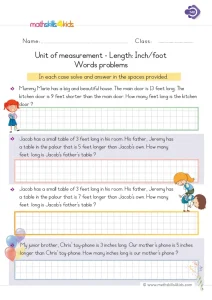 Worksheet1st Grade Length Word Problems Worksheet: Longer and Shorter in Feet and Inches
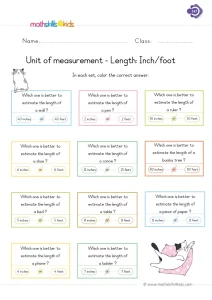 Worksheet1st Grade Choose Inches or Feet Worksheet: Which Unit Fits Better?
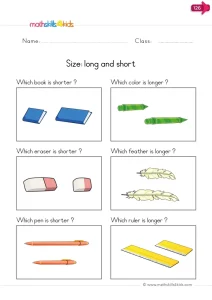 WorksheetKindergarten Comparing Length Worksheet: Longer or Shorter School Supplies?
A few related activities
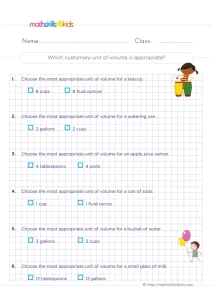 Six everyday containers, from a teacup to a bucket of water. Your child ticks the more sensible unit…See the activity3rd Grade Two-Step Multiply and Divide Problems: 3 Stories
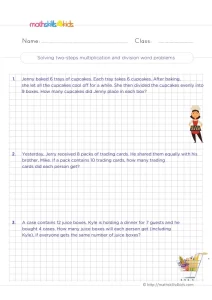 Three stories about cupcakes, trading cards and juice boxes. Your child multiplies to find a total, then divides…See the activity3rd Grade Change and Total Cost Worksheet: Money Word Problems
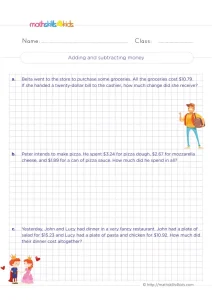 Three money word problems about groceries, a pizza and a dinner out. Children find the change from a…See the activity
