1st Grade Length Word Problems Worksheet: Longer and Shorter in Feet and Inches
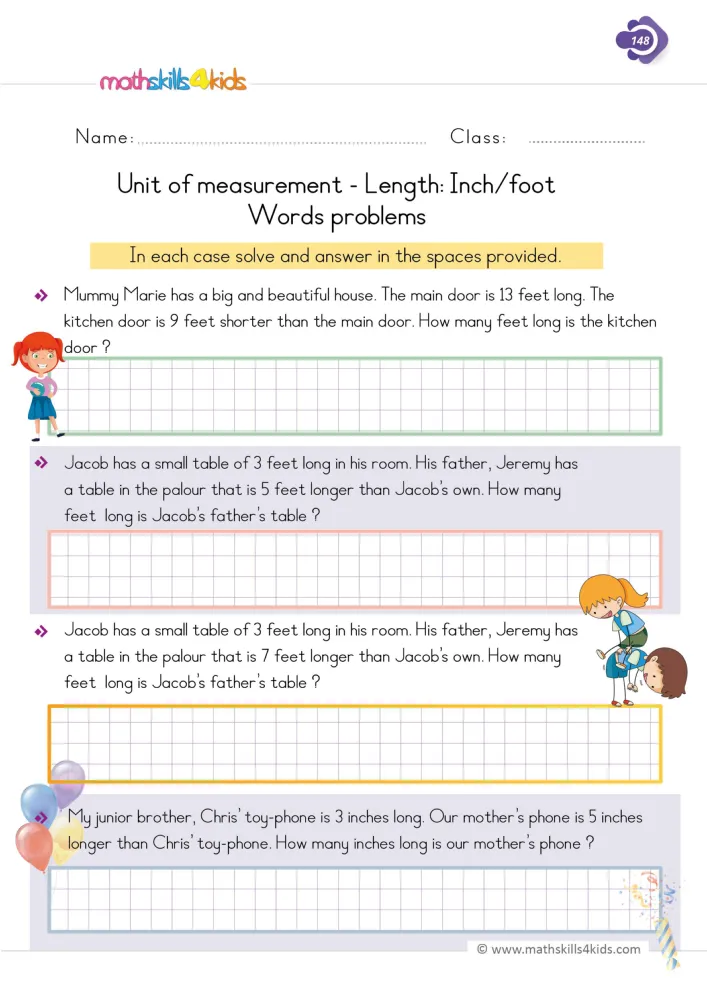
Read a six-year-old the words "9 feet shorter" and watch what happens: many will add, because they heard two numbers. This 1st grade length word problems worksheet works on that reflex. Each short story gives one length, then tells how much longer or shorter something else is. There is a main door and a kitchen door, a small table and a bigger one, a toy phone and a real phone. Lengths come in feet and inches, and each story has a grid below it for working. Your child reads, decides whether to add or subtract, then writes the answer. A second page gives the answer key.
Why longer and shorter matter more than the numbers
A word problem about length is really a comparison. One object is known, and the other is described as longer than or shorter than it. So the key words decide the operation, not the size of the numbers.
That link is central in first grade. Longer means the second length grows, so your child adds. Shorter means it shrinks, so your child takes away. Once that picture is clear, the numbers on this page are small and friendly.
The units help too. Every story stays in one unit, feet for the doors and tables, inches for the phones. Your child never has to convert, only to reason. Clear thinking first.
At the table: the kitchen door
Start with the door story. Ask, "Is the kitchen door bigger or smaller?" Let your child answer before any number goes down.
This is where the common slip happens. The story says shorter, yet a child may add the two numbers and get a door longer than the first. Instead of correcting, try, "Does your answer make the kitchen door shorter?"
The phone story goes the other way. The real phone is longer than the toy phone, so the answer must be bigger than the toy. Point to the toy phone length and ask your child to check.
Finally, ask your child to say the answer as a sentence, with its unit. A full answer names the object, the number and the feet or inches.
Measuring stories around the house
Length problems become real with things your child can touch. Lay two spoons side by side and ask how much longer one is, in thumb widths. Also, tape a strip of paper as long as your child's foot, then make one that is three inches longer and compare.
Hopscotch works well outside. While you draw the squares in chalk, ask your child to step out each one in feet and tell how much longer the whole path is than one square.
These little stories train the ear for longer and shorter. When the page is done, check it with the answer key and name the effort: "You read each story carefully. That is how problems get solved."
About this 1st grade length word problems worksheet and its answer key
Download the worksheet: 1st Grade Length Word Problems Worksheet: Longer and Shorter in Feet and Inches
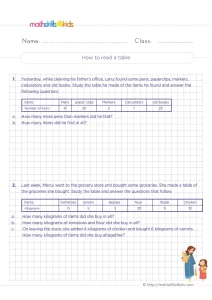
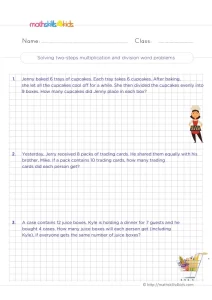
A few related activities
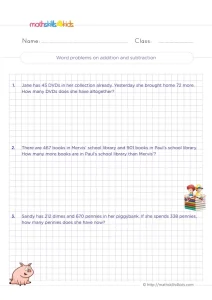 Three word problems about DVDs, school library books and pennies in a piggy bank. Your child adds or…See the activity3rd Grade How Much Money in All Worksheet: 3 Word Problems
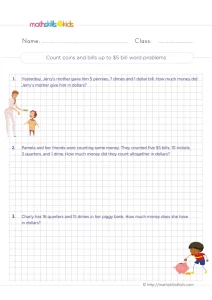 Three money word problems with pennies, nickels, dimes, quarters and $1 and $5 bills. Children find each total…See the activity3rd Grade Change and Total Cost Worksheet: Money Word Problems
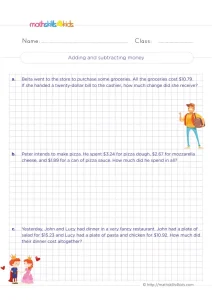 Three money word problems about groceries, a pizza and a dinner out. Children find the change from a…See the activity
