Kindergarten Counting to 30 Worksheet: Rows of Ten Cars and Tennis Balls
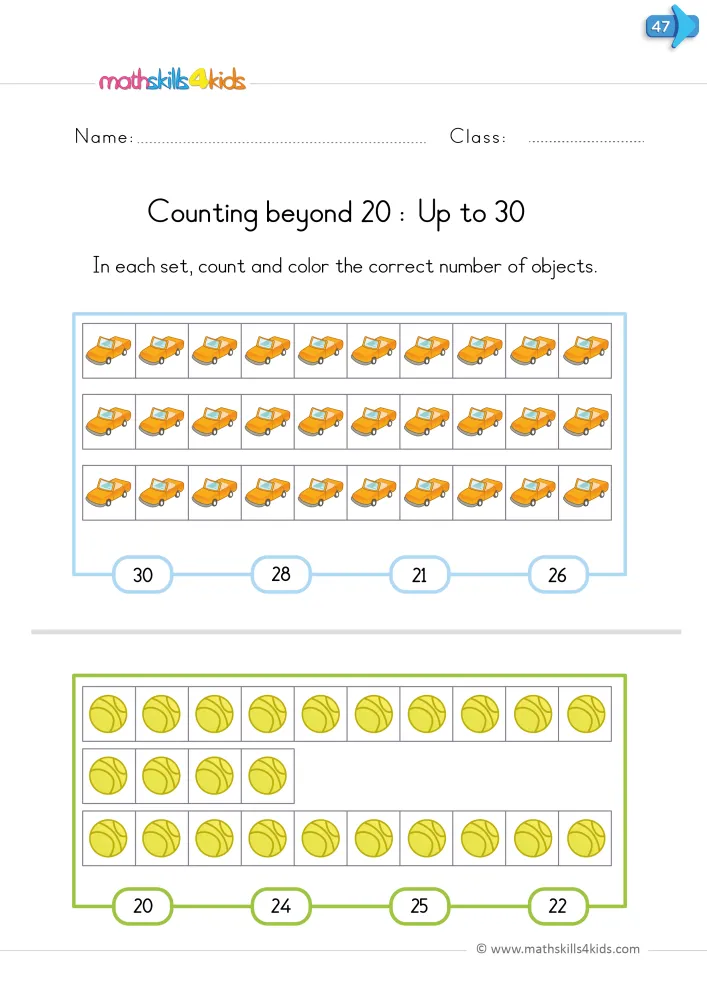
Count to thirty with a five-year-old and you may hear "twenty-nine, twenty-ten." Crossing a ten is hard. This kindergarten counting to 30 worksheet makes those tens easy to see. In the first set, orange cars fill three rows of ten boxes. In the second, yellow tennis balls fill two long rows and a shorter one. Below each set, four numbers wait, and children color the right one. The PDF has two pages: the worksheet and its answer key.
Why rows of ten make 30 easy to see
Past twenty, counting one by one gets long, and long counts break. A child who loses the thread at 23 often starts over. Rows of ten fix that, because each full row is one ten and three full rows read as ten, twenty, thirty.
That is the start of place value: a number like 26 is two tens and six ones. Educators call this unitizing, seeing groups of ten as single units. It is a big step.
The page also works on number recognition past 20. The choices look alike, like 21 and 26, so the child must read both digits.
At the table: tens first, then the tennis balls
Start with the cars. Ask your child to slide a finger along the top row and count to ten. Point to the row and say, "That's one ten." Let your child count the rows, then say the tens together.
The tennis balls are the trap. The short row sits in the middle, so a child may count the two long rows and color 20. Instead of correcting, point to the middle row and ask, "Did we count these?" Together, count on from twenty, one ball at a time.
This is counting by rows in action. Finally, read all four choices aloud together. Same tens, different ones.
After the page: I Spy on the road
Cars and balls are easy to find beyond the page. On a walk, play I Spy with a counting twist: "I spy with my little eye... three red cars." Afterwards, let your child spy and count the next group.
At home, line up toy cars in rows of ten on the floor, add a few more and count on together. While you tidy the toy box, also sort balls into groups of ten. Keep it playful.
When your child colors the last number, praise the strategy: "You counted the rows first, then the extra balls. That is how big numbers stay neat."
About this kindergarten counting to 30 worksheet and its answer key
Download the worksheet: Kindergarten Counting to 30 Worksheet: Rows of Ten Cars and Tennis Balls
 Worksheet2nd Grade Regrouping Tens and Ones Worksheet: Trade Extra Ones for Tens
 Worksheet2nd Grade Skip Count by 10 Worksheet: Circle Groups of Ten
 Worksheet1st Grade Circle a Group of Ten Worksheet: Tens and Ones to 20
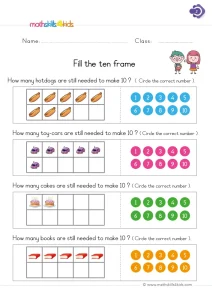 Worksheet1st Grade Ten Frame Make 10 Worksheet: How Many More?
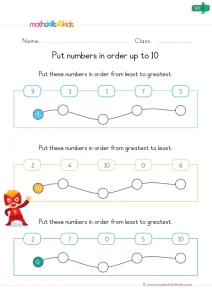 WorksheetKindergarten Ordering Numbers to 10 Worksheet: Least to Greatest and Back
A few related activities
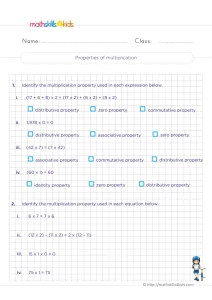 Tick the right property for four equations, from 1,978 x 0 = 0 to (60 x 1) =…See the activity3rd Grade 8 Times Table Worksheet: 12 Column Facts and a Doubling Trick
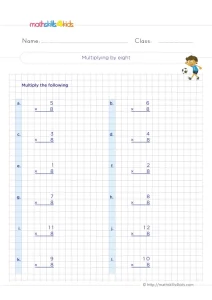 Twelve column facts times 8, from 1 × 8 to 12 × 8, in a mixed order. Double…See the activity3rd Grade Addition and Subtraction Problems: 3 Stories
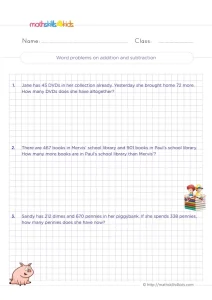 Three word problems about DVDs, school library books and pennies in a piggy bank. Your child adds or…See the activity
