Kindergarten Equal Parts Worksheet: Which Circle, Rectangle and Triangle Is Fair?
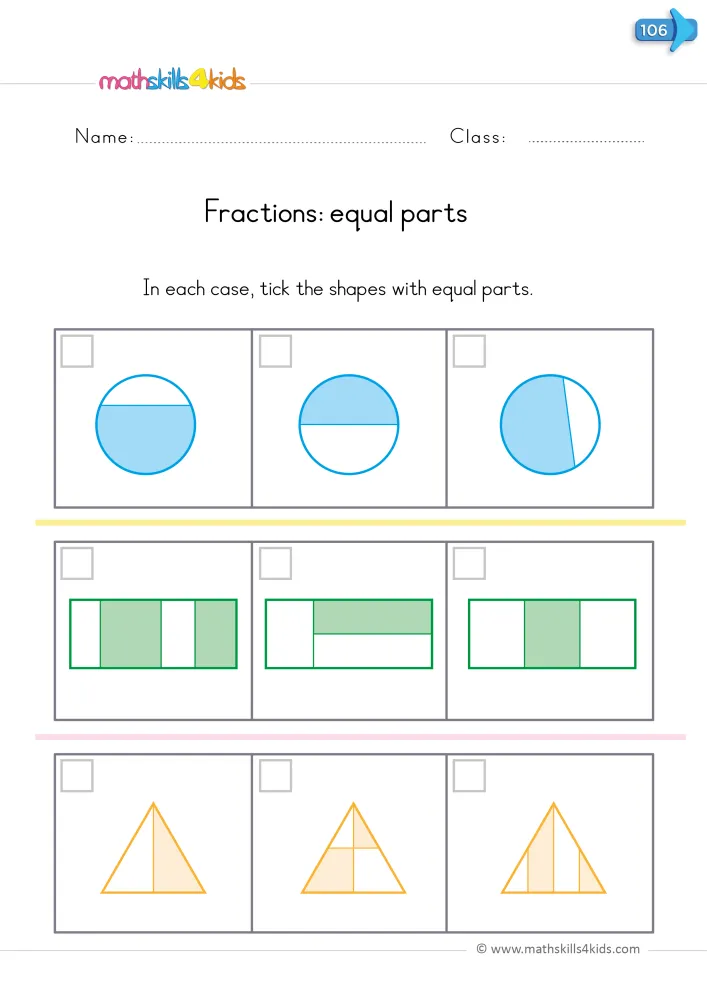
Cut a sandwich for two children and you will hear about it if one piece is bigger, because five-year-olds are sharp judges of fairness. This kindergarten equal parts worksheet turns that sense of fair into a first step toward fractions. It shows nine shapes in three rows: blue circles, green rectangles and yellow triangles, each split by one or more lines. In every row, only one shape is cut into parts of the same size, and the child ticks it. Some unfair shapes look very neat, so the eye has to compare, not just admire. The PDF holds two pages: the worksheet, then the answer key.
Why fair comes before fractions
Before a child can say one half or one third, they need a simpler idea: equal parts. The number of pieces matters less than their size. That is the heart of early fractions, and children already care about it at snack time.
This page asks for judgment rather than counting. For example, one rectangle has four strips, while another has only three, and more lines do not make a shape fairer. The child must look at each piece and ask whether they match.
The circles and triangles bring in halves in their simplest form: one line, two matching sides. Those clean cases give your child a model to measure the trickier shapes against. Size first, then count.
At the table: the striped rectangle
Read the instruction, then point at the first row and ask, "If this were a pizza, would you both get the same?" Let your child answer for each circle before ticking.
The rectangle row is where most mistakes happen. The first rectangle, with its four colored strips, looks tidy, so a child may tick it at once. Instead of correcting, ask your child to put two fingers on the thin strip and two on the wide one. Then ask, "Same size?"
For the triangles, a fold helps. Draw one triangle on scrap paper, cut it out and fold it down the middle so your child sees both sides land on top of each other. That small test is visual comparison made physical, and it often settles the question.
The Doorbell Rang, sandwiches and snack time
Fair sharing happens every day at home. When you cut toast, let your child choose where the knife goes, then check together whether the halves match. While you split a banana, ask, "Is this fair, or does one of us get more?"
Pat Hutchins's picture book The Doorbell Rang also fits this page. Each time the doorbell rings, more children arrive and the cookies have to be shared again. Pause on each page and count the cookies on every plate.
When the worksheet is finished, look at the answer key together and talk about each row. Finally, praise the checking: "You compared the pieces before you ticked. That was fair thinking."
About this kindergarten equal parts worksheet with nine split shapes
Download the worksheet: Kindergarten Equal Parts Worksheet: Which Circle, Rectangle and Triangle Is Fair?
 Worksheet3rd Grade Like Denominator Fraction Story Problems Worksheet
 Worksheet3rd Grade Adding and Subtracting Like Fractions Worksheet: Eight Sums
 Worksheet3rd Grade Writing Fractions as Unit Fraction Sums Worksheet: Tick One
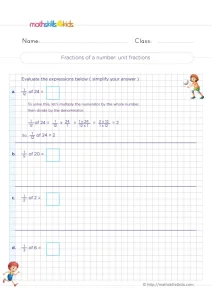 Worksheet3rd Grade Unit Fraction of a Number Worksheet: 1/12 of 24 and More
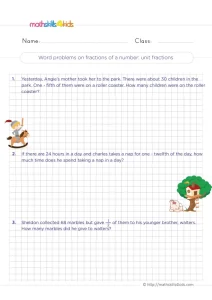 Worksheet3rd Grade Fraction of a Group Stories Worksheet: Park, Nap and Marbles
A few related activities
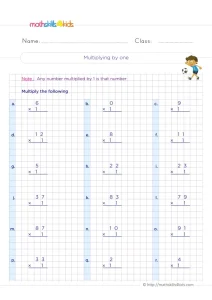 Eighteen column facts times 1, from 0 × 1 to 91 × 1. One rule solves them all:…See the activity3rd Grade Reading a Data Table Worksheet: 2 Tables
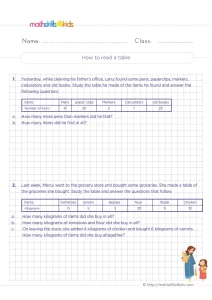 Two small tables, one of office items and one of groceries in kilograms. Your child finds the numbers,…See the activity3rd Grade Expressions for Arrays Worksheet: Write Each Product
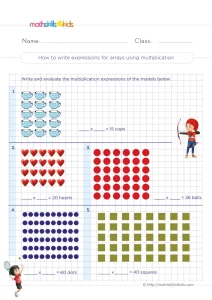 Five arrays of cups, hearts, balls, dots and squares. Your child writes the multiplication expression for each one…See the activity
