Which Shape Has Less or More? Sort a Mixed Row, Then Color the Answer
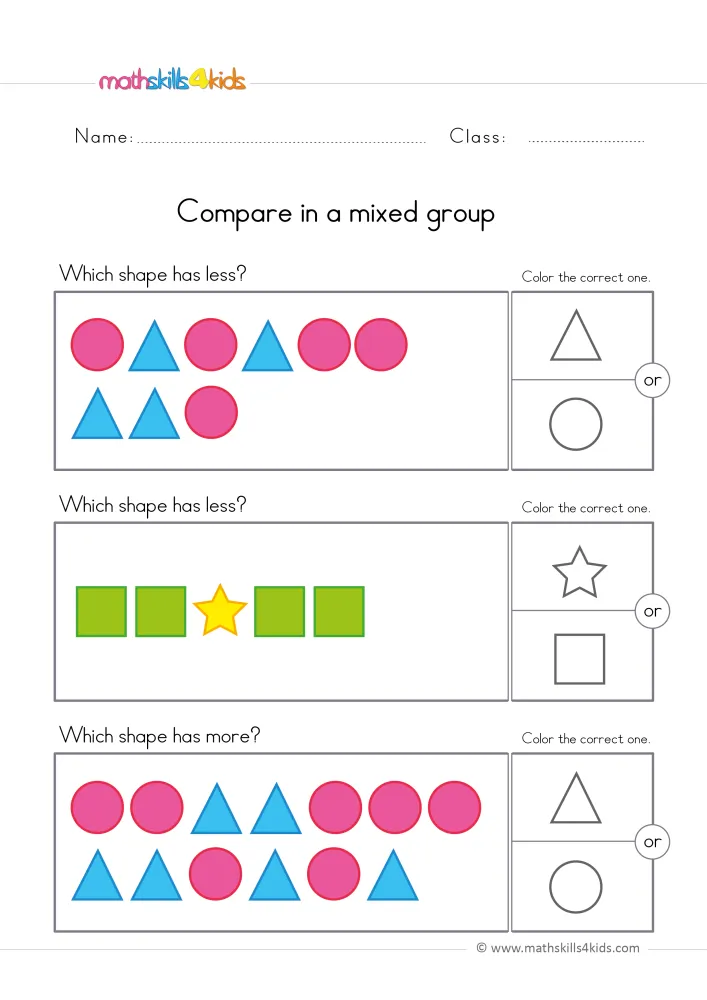
Hand a preschooler a jar of mixed buttons and, more often than not, they start sorting before you say a word. Big ones here, red ones there. That urge to group is exactly what this Pre-K compare shapes in a mixed group worksheet asks for. Each box shuffles two kinds of shapes in one row: pink circles with blue triangles, then green squares with a yellow star. Your child works out which shape has fewer, or which has more, and colors one of the two outlines on the right.
Sorting is half the answer
Comparing two separate piles is one skill. Comparing inside a mixed collection asks for two at once. Your child must first decide which things belong together, then keep track of each group while the other kind gets in the way. It takes practice.
That first step is sorting by shape, and young children enjoy it. On this page, the shapes share one strip, so the eye has to skip. In the top box, five circles and four triangles alternate in no fixed order. The middle box is a breather: four squares and a single star.
Then the last box raises the stakes. Seven circles and six triangles fill two lines. With a gap of one, no glance will settle it.
One kind at a time
Start by naming the two shapes together. Then ask, "Can you touch only the triangles?" Your child taps each blue triangle and skips the circles. Next, ask for the circles, and count those aloud.
The usual stumble happens in the bottom box. Halfway along the second line, a child may lose the thread and count a circle twice, or slip a triangle into the circle count. Rather than giving the number, try, "Let's put a little dot on each circle we count." The marks show at once what is done.
Also watch the question itself. The first two boxes ask which has fewer, while the last asks which has more. A quick "What does this one want?" before your child picks up a crayon helps them color the answer that matches.
Round crackers, square crackers
Snack time hands you a mixed set. Tip round and square crackers onto one plate and ask, "Are there more circles or more squares?" Most children pull them into two groups first. Let them. That move is the whole idea, and they found it.
On a walk, count round windows and square ones on a single house front. Next time you cut a sandwich, make triangles and squares, then let your child compare before eating. Each round sharpens visual attention, because the eye learns to pick one kind out of a crowd.
For a picture book, Mouse Shapes by Ellen Stoll Walsh sends three mice among circles, triangles and squares. Finally, when you reach the last box, name the care: "You kept the circles and triangles apart all the way."
About this Pre-K compare shapes in a mixed group worksheet and its key
Download the worksheet: Which Shape Has Less or More? Sort a Mixed Row, Then Color the Answer
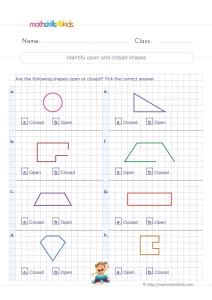 Worksheet3rd Grade Open and Closed Shapes Worksheet: 8 Shapes to Check
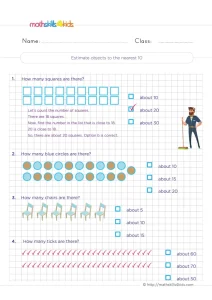 Worksheet2nd Grade Estimating Objects Worksheet: Squares, Circles, Chairs and Ticks
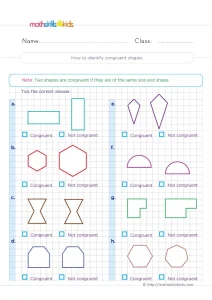 Worksheet2nd Grade Congruent Shapes Worksheet: Same Size and Same Shape?
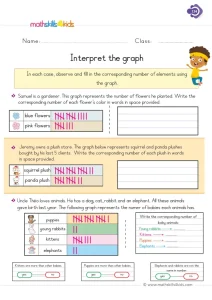 Worksheet1st Grade Reading Tally Charts Worksheet: Flowers, Plush Toys and Baby Animals
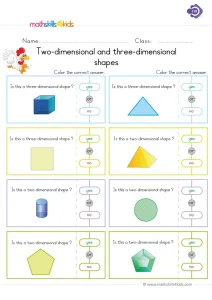 Worksheet1st Grade 2D or 3D Shapes Yes or No Worksheet: Read Each Question Twice
A few related activities
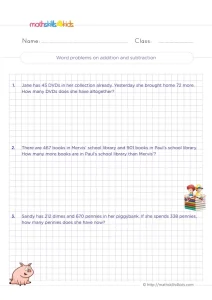 Three word problems about DVDs, school library books and pennies in a piggy bank. Your child adds or…See the activityGrade 1 Math — The end time
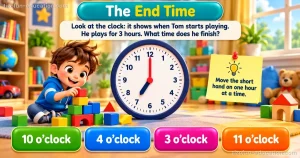 Grade 1 math review game (ages 6–7): the end time. Instructions are read aloud, and every answer is…See the activityGrade 1 Math — How many more?Grade 1 math review game (ages 6–7): how many more?. Instructions are read aloud, and every answer is…See the activity
