1st Grade Reading Tally Charts Worksheet: Flowers, Plush Toys and Baby Animals
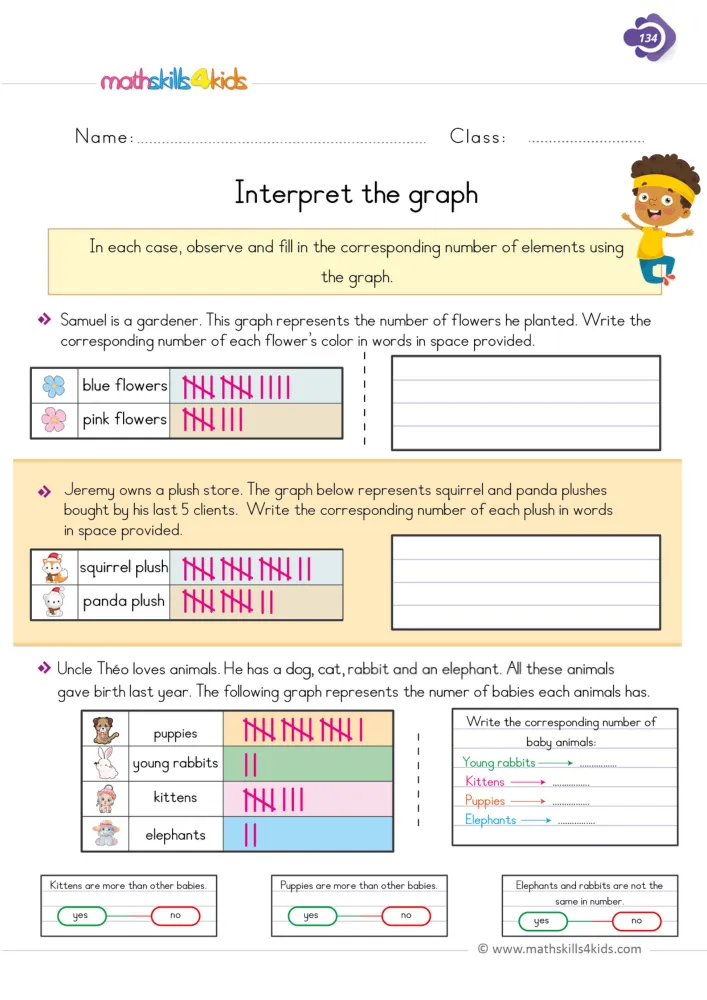
Hand a six-year-old a row of tally marks and they will often count every stroke one by one, slashes included, and lose their place halfway. This 1st grade reading tally charts worksheet asks for a faster way. Three charts sit on the page: blue and pink flowers in a garden, squirrel and panda plush toys in a shop, then four kinds of baby animals. Your child reads each row and writes the total. The first two charts ask for words. The last one ends with three yes or no questions. Because the marks come in groups, the page rewards counting by fives. A second page gives the answer key.
Why the slash makes counting faster
Each group of tally marks holds four upright strokes and one slash across them. So one bundle always means five, and your child never has to count it again.
That is the real lesson of a tally chart: it trades counting by ones for counting by fives, then adding the few strokes left over. For example, two bundles of five and four single strokes make the blue flowers total.
The page also links three ways to show a number. The strokes are a picture, the total is a numeral, and the first two charts ask for number words too. Moving between them is how a number becomes solid in a child's head. Quick to see.
At the table: the plush toys and the yes or no boxes
Start with the pink flowers. Ask, "How many in this bundle?" Then let your child add the three strokes after it.
The squirrel plush row is where counting slips. It has three bundles, and a child may count the slash as a sixth stroke or skip it entirely. Instead of correcting, try, "Tap each bundle and say five, ten, fifteen." Then let your child finish with the single strokes.
Spelling is the next hurdle, since a long word like the squirrel total is easy to start and hard to finish. Point to the chart again and say the number slowly together.
Finally, the three yes or no boxes ask your child to compare rows. Before circling, ask, "Which row is the longest?"
Tally marks for real-life counts
Tally marks earn their place when something keeps happening. During a car ride, keep a tally of red cars on a notepad and slash every fifth mark together. At home, also tally the cups on the dinner table for a whole week.
The card game Go Fish works too. While you play, each player draws one tally mark for every pair they lay down, then you compare the charts at the end.
These small counts teach that a slash is a shortcut, not a decoration. When the page is done, check it with the answer key and praise the method: "You counted by fives. That made it quick."
About this 1st grade reading tally charts worksheet and its answer key
Download the worksheet: 1st Grade Reading Tally Charts Worksheet: Flowers, Plush Toys and Baby Animals
 Worksheet3rd Grade Reading a Data Table Worksheet: 2 Tables
 Worksheet3rd Grade Likely and Unlikely Events Worksheet: Marbles and Apples
 Worksheet3rd Grade Making Line Plots from Data Worksheet: Scores and Books
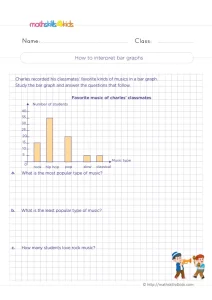 Worksheet3rd Grade Interpreting Bar Graphs Worksheet: Favorite Music
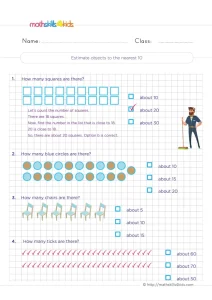 Worksheet2nd Grade Estimating Objects Worksheet: Squares, Circles, Chairs and Ticks
A few related activities
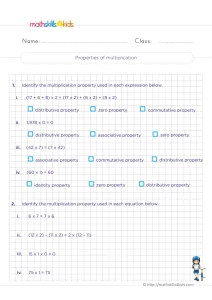 Tick the right property for four equations, from 1,978 x 0 = 0 to (60 x 1) =…See the activity3rd Grade 8 Times Table Worksheet: 12 Column Facts and a Doubling Trick
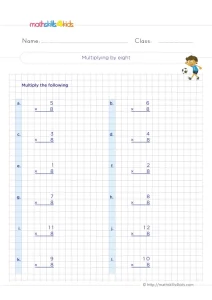 Twelve column facts times 8, from 1 × 8 to 12 × 8, in a mixed order. Double…See the activity3rd Grade Addition and Subtraction Problems: 3 Stories
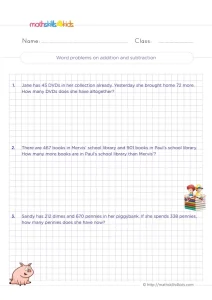 Three word problems about DVDs, school library books and pennies in a piggy bank. Your child adds or…See the activity
