Long or Short? Six Pairs of Everyday Objects to Compare in Pre-K
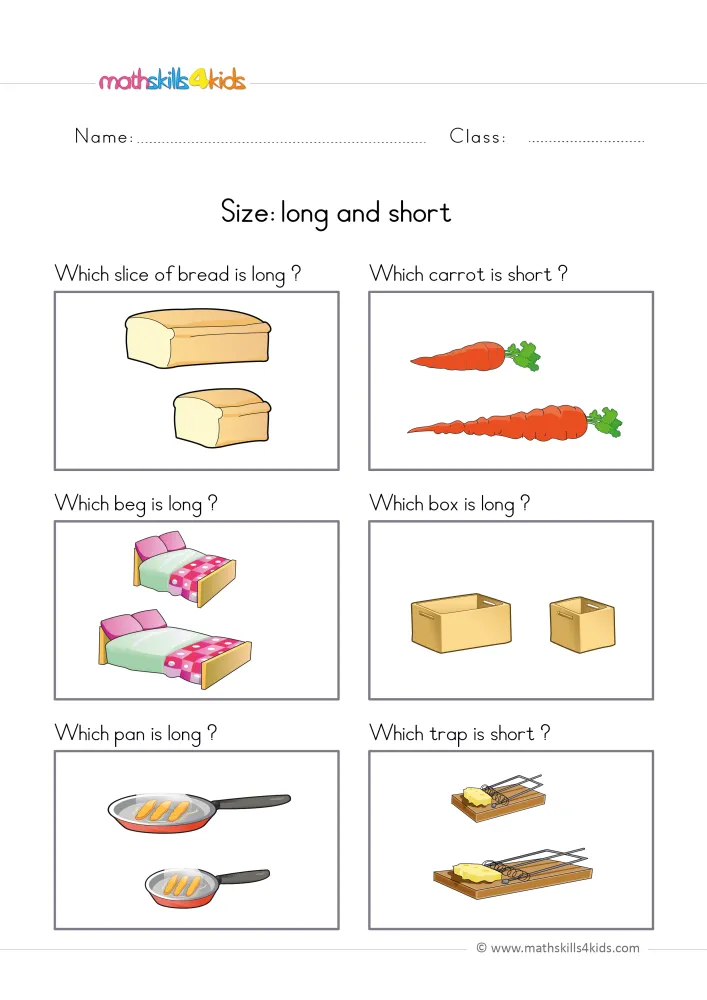
Preschoolers argue about length all the time. Whose straw is longer? Whose scarf drags on the floor? This Pre-K long and short worksheet turns those little debates into six careful looks. Every box shows the same object twice: two loaves of bread, two carrots, two beds, two wooden crates, two frying pans and two mousetraps with cheese. Four questions ask for the long one, while two ask for the short one. Since each pair differs only in length, your child has just one thing to judge.
Both ends tell the story
To compare two lengths fairly, you look at where each object starts and where it stops. Adults do it without thinking. Young children, however, often look at one end only, usually the end that sticks out furthest. Learning to check both ends is the heart of length comparison, and later of every ruler.
For example, this page tests that habit gently. In the first box, the short loaf sits lower and further to the right, so its far end pokes past the long loaf. By contrast, the two crates stand side by side on the same floor, which makes them the easiest pair.
So the layout changes from box to box. That variety keeps visual comparison honest.
Fingers on the ends
The bread. Start here, because it holds the classic trap. A child who looks only at the right side may circle the lower loaf. Rather than saying no, ask, "Put one finger on each end of this loaf." Then do the same for the other. The fingers spread wider on the top loaf, and your child sees it.
The carrots and the mousetraps. However, these two ask for short, not long. A quick "Long or short this time?" before the crayon moves keeps the question in mind.
The frying pans. Here, ask, "Does the handle count?" It does, because length runs from the tip of the handle to the far rim.
This is measuring length before any numbers appear.
Carrots, spoons and an inchworm
The kitchen is full of pairs to line up. Before you peel carrots, lay two side by side on the board and ask your child to push the tops level. Then ask, "Which one is longer now?" Next, at the table, put two spoons together and let them find the short one by touch.
Also, at the bakery, a long loaf and a round roll make the same comparison in real life. That kind of hands-on learning sticks, because your child moves the objects and fixes the ends.
For a story, Inch by Inch by Leo Lionni follows a small inchworm who measures a robin's tail and a flamingo's neck. Longer, shorter, the same: these words grow math vocabulary. Finally, praise the method: "You checked both ends every time."
About this Pre-K long and short worksheet with six pairs of objects
Download the worksheet: Long or Short? Six Pairs of Everyday Objects to Compare in Pre-K
 Worksheet3rd Grade Metric Units of Length Worksheet
 Worksheet2nd Grade Meters and Centimeters Word Problems Worksheet: Longer, Shorter, Taller
 Worksheet2nd Grade Customary Units Word Problems Worksheet: Feet, Inches, Yards, Miles
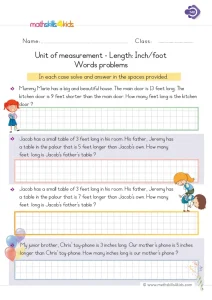 Worksheet1st Grade Length Word Problems Worksheet: Longer and Shorter in Feet and Inches
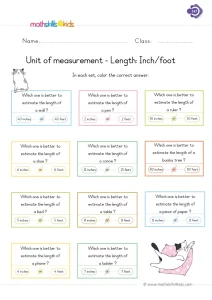 Worksheet1st Grade Choose Inches or Feet Worksheet: Which Unit Fits Better?
A few related activities
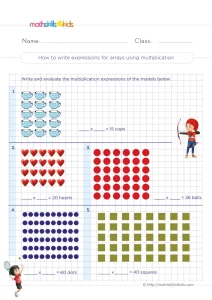 Five arrays of cups, hearts, balls, dots and squares. Your child writes the multiplication expression for each one…See the activity3rd Grade 1 Times Table Worksheet: 18 Column Facts and the Identity Rule
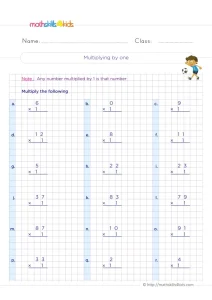 Eighteen column facts times 1, from 0 × 1 to 91 × 1. One rule solves them all:…See the activityGrade 2 Math — Time to the half hourGrade 2 math review game (ages 7–8): time to the half hour. Instructions are read aloud, and every…See the activity
