Kindergarten Small, Smaller, Smallest Worksheet: Circle the Tiniest Bug
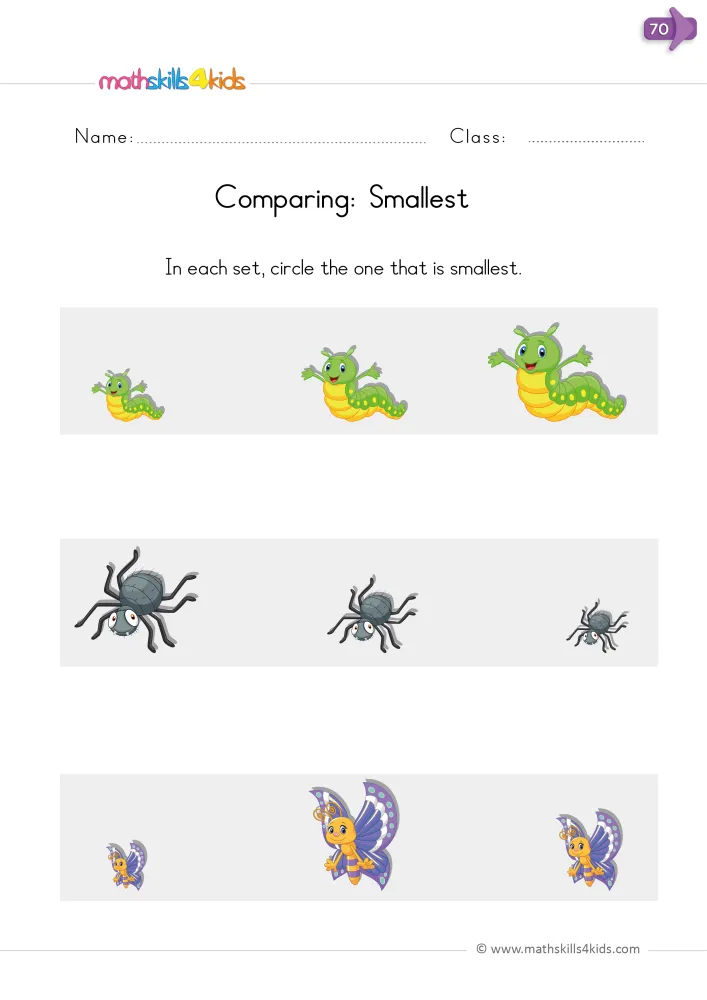
Line up three toy cars, ask for the smallest, and many five-year-olds will simply point to the one at the end of the row. This kindergarten small smaller smallest worksheet checks whether they look at size or at place. Three gray bands each hold the same creature in three sizes: green caterpillars, gray spiders and purple butterflies. In each set, your child circles the smallest one. The smallest is not always in the same spot, so a quick guess will not work. The second page of the PDF is the answer key.
Why three sizes ask more than two
Comparing two things needs one judgment: this one is smaller. Comparing three asks for more. Your child has to hold the first comparison in mind, make a second one, and only then name the smallest. That is the start of seriation, the ordering skill behind all early measurement.
The words matter too. Small, smaller and smallest give children the measurement vocabulary to explain what they see, so ordering by size becomes something they can say, not just do.
The butterfly row is the real test. The sizes are not in order there, so the child cannot simply follow a line from big to small. Look, compare, then decide.
At the table: a finger on each creature
Start with the caterpillars. Ask, "Which one is the smallest? How do you know?" Most children see it at once.
The spiders run the other way, from big to small, so the smallest one sits on the right side this time. Say, "Let's look at all three before we circle," and touch each spider in turn while your child whispers "small, smaller, smallest."
On the butterflies, a child may circle the one on the right, because it is smaller than the big middle one. Instead of correcting, cover the middle butterfly with your hand and ask, "Now which of these two is smaller?" This builds attention to detail without giving the answer away.
I Spy something smaller
Size words grow fastest with real objects. Line up three spoons from the kitchen drawer, or three shoes by the door, and ask your child to find the smallest. Then mix them up and try again.
Also, play I Spy with a twist: "I spy something smaller than my hand." Take turns, and let your child give the clue sometimes. While you walk outside, compare two leaves or two pebbles and ask which one is smaller.
Finally, check the page against the answer key together. Name what your child did: "You looked at all three before you chose. That is careful comparing."
About this kindergarten small smaller smallest worksheet and its key
Download the worksheet: Kindergarten Small, Smaller, Smallest Worksheet: Circle the Tiniest Bug
 Worksheet1st Grade Spinner Probability Worksheet: More Likely, Less Likely or Equally Likely
 WorksheetKindergarten Digital Clock Worksheet: Which Clock Shows the Hour?
 WorksheetShort or Tall? Four Pairs of People to Compare by Height in Pre-K
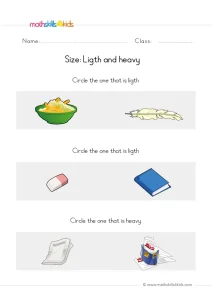 WorksheetLight or Heavy? Three Pairs of Objects to Compare by Weight in Pre-K
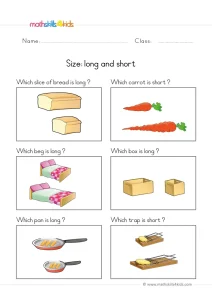 WorksheetLong or Short? Six Pairs of Everyday Objects to Compare in Pre-K
A few related activities
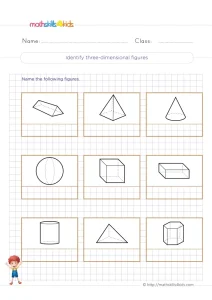 Nine drawn solids to name, from a cube and a cone to a hexagonal prism and a triangular…See the activity3rd Grade Count Edges of 3D Shapes Worksheet: Faces and Vertices Too
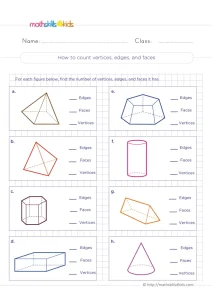 Eight drawn solids, from a square pyramid to a hexagonal prism and a cone. Count the edges, faces…See the activity3rd Grade Multiplication Worksheet: Find Products Using Properties
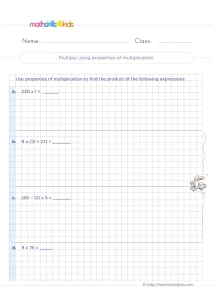 Work out four products, from 230 x 1 to 9 x 75, with the identity, distributive and commutative…See the activity
