2nd Grade Everyday Events Chance Worksheet: Color the Right Word
"Will we go to the park today?" A seven-year-old asks it every morning, and your answer usually comes with a reason: the weather, the time, how everyone feels. That reasoning is probability in everyday clothes. This 2nd grade everyday events chance worksheet puts it on paper. Eight colored boxes each hold a short situation: going to a party when you feel unwell, picking a blue candy from a basket of mostly red ones, snow settling on warm ground, a trip to the pool on a hot day, and more. Under each box, two words wait, joined by "or". Your child colors the one that fits. A second page gives the answer key.
Why real life is the best probability lesson
Probability for young children is less about numbers than about reasons. Before they ever write a fraction for chance, they need to explain why something is certain, likely, unlikely or impossible.
This page asks for exactly that. Each box gives a clue that tips the answer; for example, not feeling well makes a party night less likely. A basket with 52 red candies and only 3 blue ones makes a blue pick rare. Warm ground and snow do not go together.
So your child practices reading a situation, spotting the key detail and matching it to a word. That is reasoning, and it travels far beyond math class. Clues first, then colors.
At the table: find the clue word
Read each box aloud with your child, slowly. Then ask, "Which words tell you the answer?" Let them underline the clue with a finger: "not feeling well", "so warm", "very hot".
The candy basket is where many children wobble. Some see only 3 blue candies and decide a blue pick cannot happen at all. Instead of correcting, ask, "Is there any blue candy in the basket?" Next, ask whether one would be easy or hard to grab with your eyes closed.
The party box has the opposite pull. Children love parties, so they color likely almost by reflex. Point to the first line again and wait.
Encourage full sentences: "It is unlikely, because I am sick." The reason matters more than the color.
Weather talk and Hide and Seek
Chance words fit easily into the day. At breakfast, look out of the window together and ask, "Is rain likely this afternoon?" Check later and talk about whether the guess held. Also, at bedtime, try silly questions next to real ones: "Will a dinosaur visit tomorrow? Will we eat dinner?"
Hide and Seek turns this into a game. Before searching, your child names the likely hiding spots and the impossible ones, like inside a drawer, then checks each prediction during the search.
When the page is done, compare the answers with the answer key together, and praise the reasons: "You found the clue in every box. That is careful reading and careful thinking."
About this 2nd grade everyday events chance worksheet and its answer key
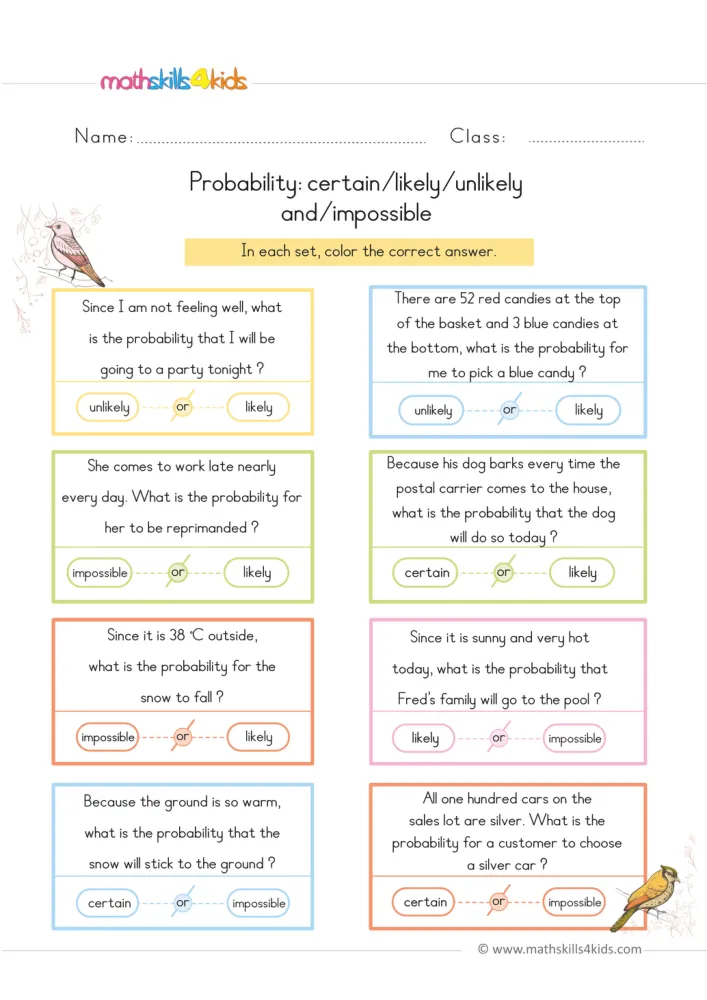
Download the worksheet: 2nd Grade Everyday Events Chance Worksheet: Color the Right Word
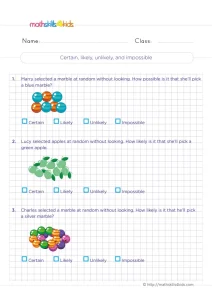 Worksheet3rd Grade Likely and Unlikely Events Worksheet: Marbles and Apples
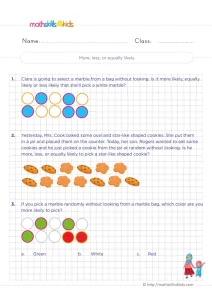 Worksheet2nd Grade More or Less Likely Worksheet: Marbles and Cookies
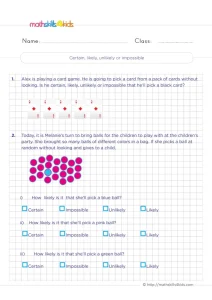 Worksheet2nd Grade Certain or Impossible Worksheet: Cards and Party Balls
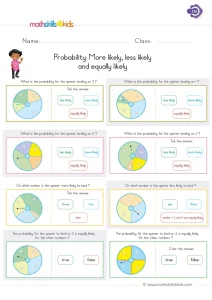 Worksheet2nd Grade Spinner Chances Worksheet: Compare the Sections
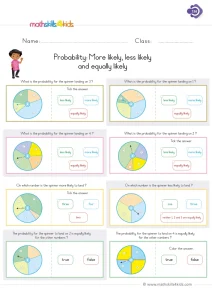 Worksheet1st Grade Spinner Probability Worksheet: More Likely, Less Likely or Equally Likely
A few related activities
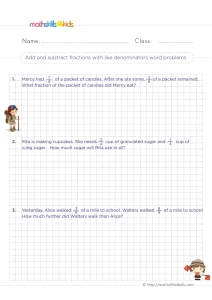 Three short stories about candies, cupcakes and a walk to school. Your child adds or subtracts fractions with…See the activity3rd Grade Divide by 3 Worksheet: Long Division Without Remainders
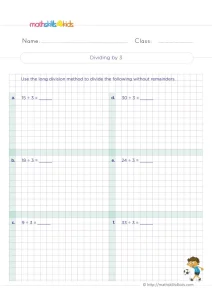 Six numbers from 9 to 33 to divide by 3 with the long division method. Each one is…See the activity3rd Grade Flat and Curved Faces Worksheet: Circles, Squares, Triangles
 A table of five solid shapes, from a cylinder to a triangular prism. Name each one, answer yes…See the activity
